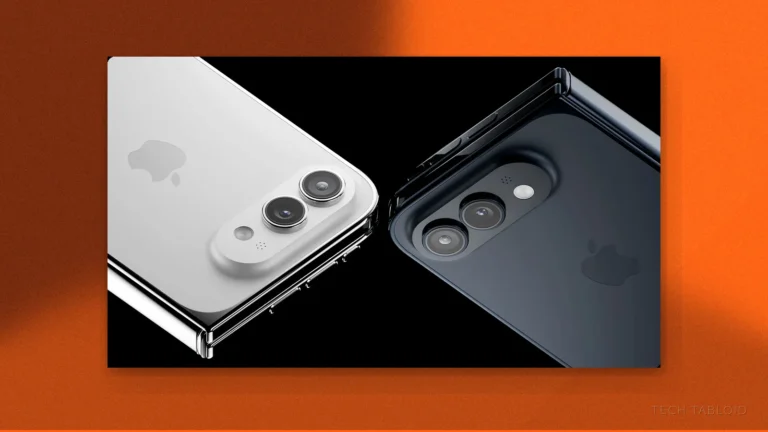
Apple hikes iPhone prices and launches foldable iPhone Duo
Apple lifts flagship iPhone prices while debuting the iPhone Duo, its first foldable phone. The move reshapes premium pricing and tests Apple’s ability to compete in the foldable market.
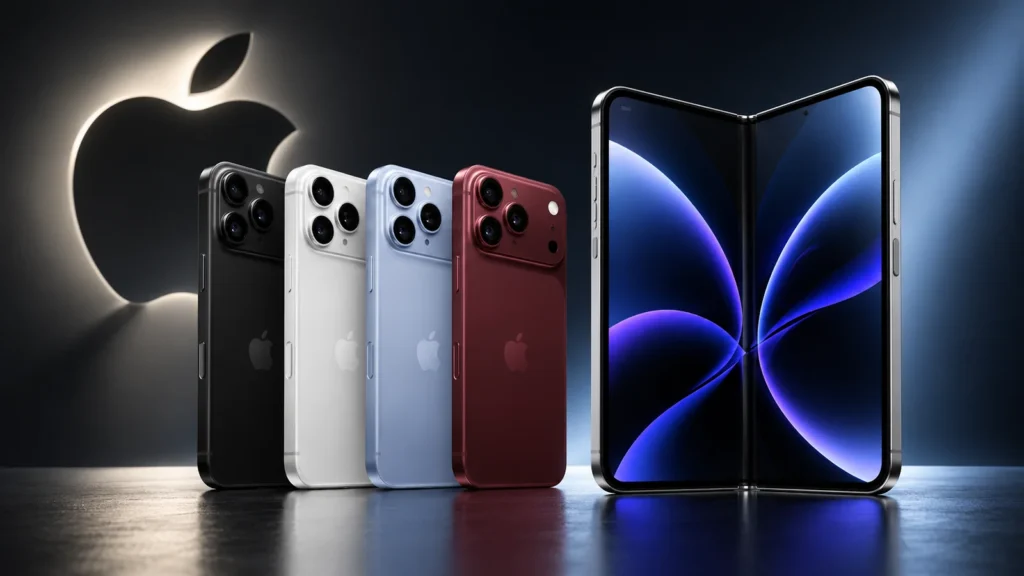
Apple’s September event delivers two starkly different signals for the premium smartphone market. First, the iPhone 18 Pro and Pro Max start at $1,199 and $1,299 respectively, a $100 increase over the previous generation. Second, Apple introduces the iPhone Duo, a titanium‑clad foldable that combines a 7.6‑inch inner display with a 5.4‑inch outer screen, positioning the company squarely against Samsung’s Galaxy Z series and Google’s Pixel Fold.
The price hike extends beyond the newest flagships; Apple raised the cost of older iPhone models as well, signaling a broader shift in its pricing philosophy. At the same time, the iPhone Duo’s specifications—A20 Pro processor, dual‑battery architecture, 3000‑nit peak brightness, and a custom vapor‑chamber thermal system—suggest Apple is willing to invest heavily in hardware innovation to justify higher price points.
Pricing pressure and revenue implications
Apple’s decision to increase flagship pricing follows a pattern of incremental hikes that have kept average selling prices (ASPs) on an upward trajectory for several quarters. While the exact revenue impact of the $100 increase is not disclosed, analysts can extrapolate from Apple’s historical ASP elasticity. A $100 rise on a base of $1,200 represents an 8.3% price lift, which, if demand holds, translates directly into higher gross margin per unit. The broader price adjustments across the lineup also protect Apple’s revenue per user (ARPU) as the market matures and competition intensifies.
From a strategic standpoint, the price increase serves two purposes. It offsets the higher bill‑of‑materials (BOM) costs associated with the iPhone Duo’s foldable display and titanium chassis, and it reinforces Apple’s premium‑only positioning, discouraging price‑sensitive churn to Android competitors. The move aligns with Apple’s historical practice of using hardware upgrades to justify premium pricing, a tactic that has sustained its market‑share stability despite slower overall smartphone growth.
Foldable differentiation: hardware and software integration
The iPhone Duo represents Apple’s first foray into foldable form factors, a market that has been dominated by Samsung’s Galaxy Z Fold/Flip line and Google’s Pixel Fold. Apple’s approach diverges in three key areas: material engineering, hinge design, and software adaptation.
Materially, the Duo employs grade‑5 titanium for its frame, a 3D‑printed hinge cover with a micro‑blasted finish, and a dual‑layer Ceramic Shield system that claims three‑times better scratch resistance than previous iPhone glass. The hinge itself comprises over 100 precision components, a level of mechanical complexity that Apple argues delivers a “smooth, satisfying feel” comparable to a book page turn. These choices aim to address the durability concerns that have plagued earlier foldables, where crease visibility and hinge wear remain common criticisms.
On the software side, iOS 27 is re‑engineered to treat the two displays as a single, continuous canvas. When opened, the system presents two Home Screen pages side‑by‑side, preserving aspect ratio and scaling content proportionally. The Dynamic Island adapts to a vertical orientation, and the status bar morphs into a circular element that nests in the corner, maximizing usable space. Apple also integrates Touch ID into the side button and enables Apple Watch unlocking, ensuring a seamless authentication experience regardless of the device’s state.
The Duo’s camera system further leverages the foldable design. A 48MP Fusion Main sensor, paired with a 2x optical telephoto, benefits from a larger sensor area made possible by the expanded inner display. The under‑display FaceTime camera remains hidden when not in use, preserving the visual continuity of the screen. These capabilities open new use cases—such as multi‑angle video capture and on‑the‑fly composition—that differentiate the Duo from its Android rivals.
Strategic outlook: competitors, ecosystem, and risk factors
Apple’s entry into the foldable segment forces a recalibration of the competitive landscape. Samsung’s Galaxy Z Fold 5, released in early 2026, set a benchmark for durability with an Armor Aluminum frame and a 120Hz inner panel. Google’s Pixel Fold emphasized AI‑driven camera tricks and a lower price point. The iPhone Duo’s premium pricing—expected to exceed $1,500 for the base model—places it at the top of the market, targeting early adopters and enterprise users who value Apple’s ecosystem integration over cost.
From an ecosystem perspective, the Duo benefits from Apple Intelligence and Siri AI, which are tightly coupled with iOS 27’s contextual awareness. The device also promises Apple Pencil support via USB‑C later in the year, extending its utility for note‑taking and sketching—features that could attract professionals accustomed to the iPad Pro’s workflow.
Risk factors remain. First, the foldable market’s total addressable volume is modest; IDC estimates that foldables accounted for less than 2% of global smartphone shipments in 2025. Second, the higher price may limit adoption outside the premium niche, especially as Android manufacturers continue to lower entry‑level foldable prices. Third, durability concerns persist despite Apple’s engineering claims; any early hinge failures could erode consumer confidence and amplify negative sentiment on platforms like Apple’s security conference coverage.
Nevertheless, the iPhone Duo serves as a strategic hedge. By mastering foldable hardware now, Apple positions itself to iterate quickly in subsequent generations, potentially lowering costs and expanding the product line. The move also reinforces Apple’s narrative of relentless innovation, a narrative that supports higher ASPs across its entire smartphone portfolio.
In sum, Apple’s dual strategy—raising flagship prices while launching a technically ambitious foldable—signals confidence in its premium market positioning. The iPhone Duo’s hardware and software integration sets a new benchmark for durability and user experience, while the price hikes protect margins and fund future innovation. The market will judge whether consumers accept the premium foldable price tag, but Apple’s engineering investments suggest it intends to stay in the foldable race for the long term.
Disclosure: Tech Tabloid may earn an affiliate commission from qualifying purchases through Amazon links on this page at no additional cost to you.
Reporting transparency