Tim Cook shields new Apple CEO with White House dinner
Tim Cook’s attendance at a White House dinner serves to insulate Apple’s new CEO, John Ternus, from political controversy. The move highlights how Apple’s executive chairman continues to manage government relations while the company navigates DEI and immigration debates.
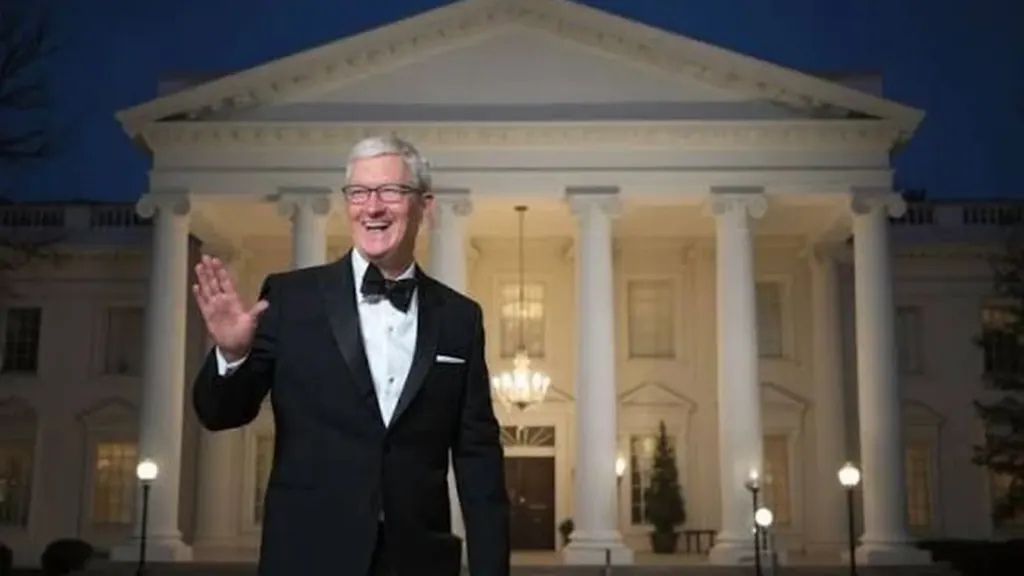
Tim Cook’s presence at a recent White House dinner underscores a calculated effort to keep Apple’s newly appointed chief executive, John Ternus, out of the political cross‑fire that has trailed the company in recent years. By stepping into the diplomatic arena himself, Cook leverages his long‑standing relationship with the administration to defuse potential flashpoints before they reach the boardroom.
Since assuming the title of executive chairman, Cook has retained responsibility for Apple’s government liaison function—a role that extends beyond ceremonial duties. The position gives him direct access to senior officials, allowing Apple to voice concerns on matters ranging from immigration policy to diversity, equity and inclusion (DEI) initiatives without exposing the operational head to the same scrutiny.
John Ternus, who succeeded Cook as CEO, inherits a product pipeline that demands uninterrupted focus. Any public controversy over policy positions could distract senior engineers, delay product launches, or erode investor confidence. Cook’s dinner attendance therefore functions as a protective buffer, preserving Ternus’s bandwidth for the core business.
Cook’s government‑liaison function shields the new CEO
Apple’s history of navigating political sensitivities provides a backdrop for this maneuver. During Cook’s tenure as CEO, the company faced criticism over its stance on immigration reform and the rollout of DEI programs. Public statements from the White House occasionally hinted at tension, prompting Apple to walk a tightrope between corporate values and regulatory expectations.
By personally engaging with the administration, Cook signals a willingness to cooperate while retaining the flexibility to negotiate behind closed doors. The dinner setting offers a low‑key venue for informal dialogue, reducing the likelihood of a public showdown that could force Ternus into a defensive posture.
Strategically, this approach sustains continuity for shareholders and partners. The market rewards stability; a CEO unburdened by political controversy can maintain product momentum, a factor that has historically bolstered Apple’s valuation. Moreover, Cook’s involvement reassures the board that the company’s external affairs remain in experienced hands.
Nevertheless, the tactic is not without critics. Some observers argue that delegating political risk to a single executive creates a perception of opacity. If Apple appears to sidestep contentious issues, it may alienate activist investors and advocacy groups demanding greater corporate accountability.
Governance trade‑offs and stakeholder impact
The protective layer around Ternus also reshapes internal governance dynamics. Cook’s dual role blurs the line between oversight and operational leadership, raising questions about the long‑term distribution of authority within Apple’s senior team. While the arrangement offers short‑term stability, it could complicate succession planning if future CEOs lack a comparable political conduit.
Stakeholders stand to gain from the current configuration. Engineers and designers can concentrate on refining hardware and software, as illustrated by Apple’s recent iCloud+ bundling strategy, which required deep technical focus rather than public policy debate. Investors benefit from reduced volatility, and the board retains a seasoned advocate in Washington.
Conversely, the approach may limit Apple’s ability to shape public policy proactively. By keeping the CEO out of the spotlight, the company forfeits a high‑profile platform that could influence legislation on privacy, antitrust, or environmental standards. The trade‑off between operational focus and policy leadership will become more pronounced as regulatory scrutiny intensifies.
In sum, Cook’s White House engagement reflects a deliberate calculus: protect the new CEO’s operational bandwidth, preserve market confidence, and manage political risk through an experienced liaison. The effectiveness of this strategy will be measurable by Apple’s continued product cadence, the absence of public policy disputes involving Ternus, and the frequency of future executive‑level interactions with government officials.