Mac Threat Landscape Shifts in 2026 as Apple Security Conference Looms
MacOS faces a broader mix of threats in 2026, from credential‑stealing tools to supply‑chain compromises, while the upcoming Objective‑See v9 conference promises new defenses for enterprises.
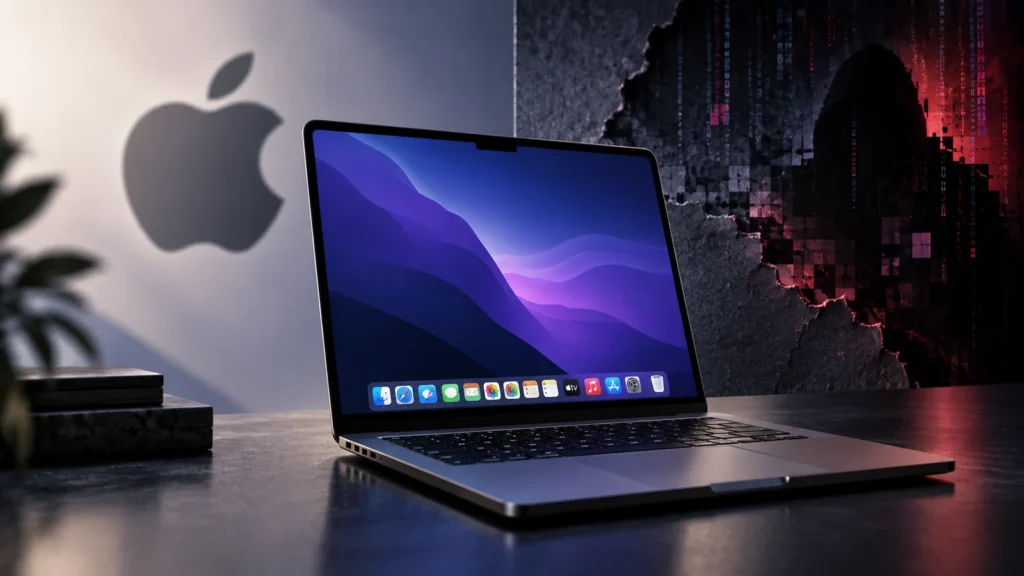
Apple’s desktop and laptop ecosystem has long been perceived as a niche target for cyber‑attackers, but the mid‑2026 threat report from Moonlock Lab, highlighted on the Security Bite podcast, signals a measurable shift. The discussion, hosted by Patrick Wardle of Objective‑See and Kseniia Yamburh of Moonlock Lab, moves beyond the AI‑generated noise that dominated 2024‑25 and points to a more diversified threat portfolio actively exploiting macOS in 2026.
Enterprises that have already embraced Apple devices for their productivity and design advantages now confront a security calculus that mirrors the complexity of Windows environments. The podcast underscores that the rise in macOS‑focused malware is not an isolated phenomenon; it reflects broader attacker strategies that leverage Apple’s growing market share, the increasing prevalence of MDM‑managed fleets, and the maturation of macOS’s own native security controls.
What is actually hitting Macs in 2026?
Moonlock’s report, as described by Yamburh, identifies three dominant trends. First, credential‑stealing tools have become more modular, allowing attackers to embed them within legitimate‑looking installers or update mechanisms. Second, supply‑chain compromises are gaining traction, with threat actors targeting third‑party developer tools and package managers to inject malicious code that reaches end users silently. Third, the resurgence of ad‑ware and unwanted software, now packaged with sophisticated evasion techniques, continues to generate revenue for low‑skill actors while polluting the macOS ecosystem.
These trends differ from the earlier “AI slop” problem discussed in part one of the podcast, where generative‑AI artifacts produced noisy, low‑impact binaries. In 2026, the focus has shifted to operational effectiveness: attackers are refining persistence mechanisms, leveraging Apple’s notarization bypasses, and exploiting the growing reliance on cloud‑based configuration profiles managed through MDM solutions.
Enterprise implications and the Mosyle advantage
For organizations that have deployed Apple devices at scale, the emerging threat landscape raises immediate operational questions. How can security teams maintain visibility across a heterogeneous fleet without sacrificing the user experience that Apple devices promise? Mosyle, the sponsor of the Security Bite podcast, positions its Apple Unified Platform as a response to precisely these challenges. The platform combines automated hardening, next‑generation endpoint detection and response (EDR), AI‑powered zero‑trust policies, and privilege‑management controls—all orchestrated through a single MDM console.
While the podcast’s primary focus is not a product pitch, the mention of Mosyle’s capabilities provides a concrete illustration of how enterprises can close the gap between macOS’s native security features and the advanced tactics outlined in Moonlock’s report. By automating compliance checks and integrating real‑time threat intelligence, a unified platform can reduce the window of exposure that credential‑stealing tools exploit.
Objective‑See v9 preview: shaping the defensive playbook
Patrick Wardle’s preview of Objective‑See v9 adds a forward‑looking dimension to the analysis. The conference, billed as the largest—and only—Apple‑focused security summit, will showcase new research on macOS EDR, zero‑trust networking, and privilege escalation mitigation. Wardle emphasizes that the event will feature live demonstrations of sandbox‑based analysis tools that can dissect malicious binaries without triggering Apple’s notarization checks, a capability that directly counters the supply‑chain tactics highlighted by Moonlock.
Objective‑See v9 also promises a deeper dive into AI‑assisted detection, moving beyond the “AI slop” of earlier years toward models that can correlate telemetry across thousands of macOS endpoints. For security teams, the conference agenda suggests a roadmap for integrating these innovations into existing MDM stacks, whether through native APIs or third‑party extensions like those offered by Mosyle.
Counter‑arguments and potential blind spots
Critics might argue that the macOS threat surface remains comparatively thin, pointing to Apple’s robust code‑signing infrastructure and the relative scarcity of high‑profile macOS ransomware incidents. However, the Moonlock report’s emphasis on credential theft and supply‑chain abuse demonstrates that attackers are adapting to the constraints imposed by Apple’s ecosystem rather than abandoning it.
Another possible counter‑point is the reliance on MDM solutions to enforce security policies. While MDM provides a powerful control plane, it can become a single point of failure if not properly segmented and audited. Organizations must therefore complement MDM with endpoint‑level detection, threat hunting, and regular patch validation—areas that Objective‑See v9 aims to address.
Strategic takeaways for 2026 and beyond
The convergence of Moonlock’s threat intelligence and the upcoming Objective‑See v9 agenda yields three actionable insights for enterprises:
- Prioritize credential‑security controls. Deploy multi‑factor authentication, credential vaulting, and continuous monitoring of privileged account activity across macOS devices.
- Hardening the supply chain. Enforce signed‑only policies for third‑party binaries, validate package manager integrity, and integrate automated scanning of developer toolchains into CI/CD pipelines.
- Leverage unified Apple security platforms. Solutions that combine MDM, AI‑driven EDR, and zero‑trust networking can bridge the gap between Apple’s built‑in protections and the advanced tactics described in the 2026 threat report.
Enterprises that act on these recommendations will be better positioned to mitigate the evolving macOS threat landscape while preserving the productivity gains that Apple devices deliver. The upcoming Objective‑See v9 conference will likely surface additional tactics and tooling, making it a critical event for security leaders focused on Apple environments.
For readers interested in related coverage of enterprise‑focused vulnerabilities, see our recent analysis of the N‑Able RCE flaw, which illustrates how rapid patch cycles intersect with MDM‑driven compliance.
As macOS continues to mature, the balance of risk and reward will hinge on how quickly organizations can adopt comprehensive, Apple‑specific security frameworks. The evidence from Moonlock Lab and the strategic preview from Objective‑See suggest that the next wave of defenses is already taking shape.
Reporting transparency