Apple's iOS 27.2 CarPlay Update Signals Ecosystem Deepening
The inclusion of two new features in iOS 27.2 for Apple CarPlay highlights a consistent strategy of incremental ecosystem expansion. This update serves as a technical anchor for Apple's automotive presence.
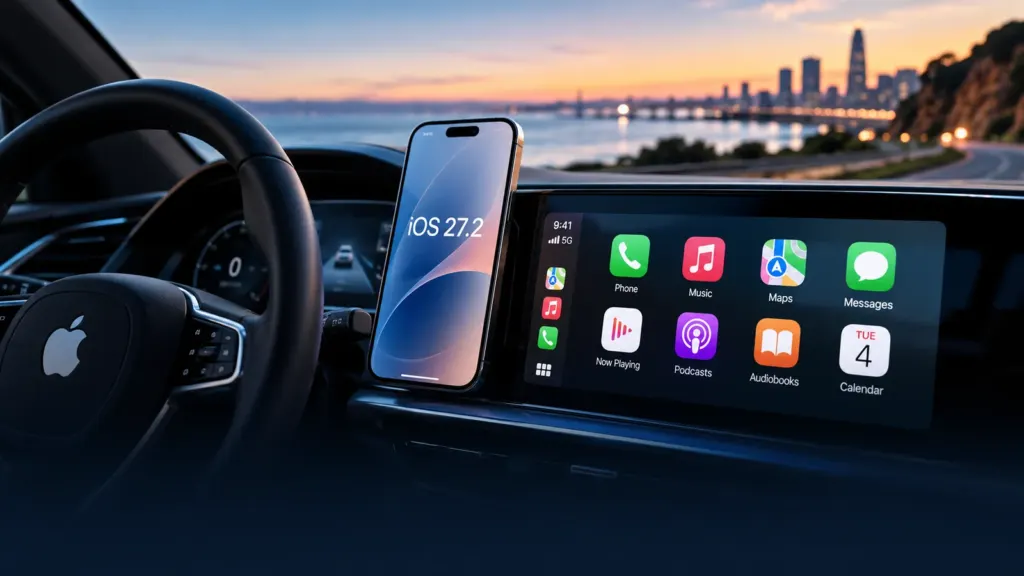
The release of iOS 27.2 introduces two distinct new features to Apple CarPlay, a move that appears modest on the surface but carries significant strategic weight for Apple’s long-term automotive ambitions. While the specific technical details of these features are not yet fully detailed in the initial wire reporting, their inclusion in a minor point release rather than a major version update suggests a focus on refining the existing user experience rather than overhauling the underlying architecture. This approach aligns with Apple’s historical pattern of using incremental updates to solidify its position in the in-car interface market, where reliability and seamless integration are paramount.
CarPlay has evolved from a simple mirroring solution into a critical component of the modern vehicle’s digital cockpit. By embedding new functionalities directly into the operating system update, Apple ensures that these features are available to a broad base of compatible vehicles without requiring hardware changes. This software-centric delivery mechanism allows Apple to iterate quickly on user interface elements and connectivity features, maintaining a competitive edge against Android Auto and proprietary infotainment systems. The decision to bundle these enhancements in iOS 27.2 indicates that Apple views the current CarPlay ecosystem as mature enough to support feature additions that enhance daily utility without disrupting the core stability that drivers have come to expect.
The strategic implication of this update lies in its role as a retention tool. In a market where car owners often retain their vehicles for seven to ten years, the software experience becomes a key differentiator. Apple’s ability to push new features to older vehicles via over-the-air updates extends the perceived lifecycle of the in-car interface. This creates a feedback loop: the more useful CarPlay becomes, the more likely drivers are to remain within the Apple ecosystem for their primary smartphone, thereby reinforcing the commercial viability of the iPhone hardware line. This dynamic is particularly relevant as Apple continues to leverage deep discounts and ecosystem strategies to reinforce its market dominance, as seen in recent coverage of its desktop tier pricing and AI focus.
Incremental Innovation as a Competitive Moat
Apple’s approach to CarPlay development reflects a broader philosophy of incremental innovation that prioritizes user trust over disruptive change. In the automotive sector, where safety and reliability are non-negotiable, this caution is not a weakness but a competitive advantage. By avoiding radical interface changes in minor updates, Apple minimizes the risk of user confusion or safety-related errors. The two new features in iOS 27.2 likely represent refinements to existing workflows, such as improved navigation cues, enhanced audio routing, or better integration with third-party apps. These changes may seem small, but they accumulate over time to create a user experience that feels uniquely polished and responsive.
This strategy contrasts sharply with the approach of some automotive manufacturers, who often rely on large, infrequent software updates that can introduce bugs or compatibility issues. Apple’s ability to deliver stable, feature-rich updates through its established iOS infrastructure provides a level of consistency that is difficult for competitors to match. Furthermore, the integration of CarPlay with other Apple services, such as Siri, Maps, and Music, creates a seamless cross-device experience that enhances the value proposition of the entire ecosystem. This interconnectedness is a key driver of customer loyalty, as users who rely on CarPlay for their daily commutes are less likely to switch to a non-Apple smartphone.
The competitive landscape for in-car interfaces is intensifying, with Android Auto and various proprietary systems vying for driver attention. However, Apple’s first-party control over both the smartphone and the in-car interface allows for a level of optimization that third-party solutions struggle to achieve. The new features in iOS 27.2 are likely designed to exploit this advantage, offering capabilities that are tightly integrated with the iPhone’s hardware and software. This tight integration ensures that CarPlay remains the preferred choice for many drivers, even as alternative options become more sophisticated.
Strategic Implications for Automotive Partnerships
The inclusion of new CarPlay features in iOS 27.2 also has implications for Apple’s relationships with automotive manufacturers. By continuously updating the CarPlay experience, Apple ensures that its technology remains relevant and valuable to carmakers. This, in turn, encourages automakers to continue supporting CarPlay in their new vehicle models, knowing that the platform will evolve to meet changing user expectations. This symbiotic relationship benefits both parties: Apple gains a wider distribution channel for its software, while automakers gain a proven, user-friendly interface that reduces development costs and improves customer satisfaction.
However, this strategy also presents challenges. As automakers develop their own proprietary infotainment systems, the value of CarPlay as a differentiator may diminish. Apple must continue to innovate in ways that justify its presence in the vehicle, ensuring that CarPlay offers capabilities that are not easily replicated by in-house solutions. The two new features in iOS 27.2 are likely part of this ongoing effort to maintain CarPlay’s competitive edge. By focusing on high-utility features that enhance the driving experience, Apple aims to keep CarPlay at the center of the in-car digital ecosystem.
The long-term sustainability of Apple’s automotive strategy depends on its ability to balance incremental innovation with broader platform evolution. As vehicles become more connected and autonomous, the role of the in-car interface will likely expand to include more complex tasks, from managing home automation to coordinating with other smart devices. Apple’s position as a leader in consumer electronics gives it a strong foundation for this expansion, but it must navigate the complex regulatory and technical challenges of the automotive industry. The updates in iOS 27.2 are a small but significant step in this direction, demonstrating Apple’s commitment to refining its automotive presence through software excellence.
Ultimately, the addition of two new features to CarPlay in iOS 27.2 is not just a technical update but a strategic signal. It underscores Apple’s belief in the power of the ecosystem to drive long-term value and customer loyalty. By consistently delivering high-quality software updates, Apple reinforces its position as a key player in the automotive digital space, ensuring that CarPlay remains a central part of the modern driving experience. This approach, grounded in incremental innovation and ecosystem integration, positions Apple well for the future of connected vehicles.