Scientists map human‑cell mouse brains, reshaping disease research
Researchers embed human cortical cells into mouse brains and use multi‑camera tracking to map neural behavior. The breakthrough promises sharper disease models while sparking fresh bioethical scrutiny.
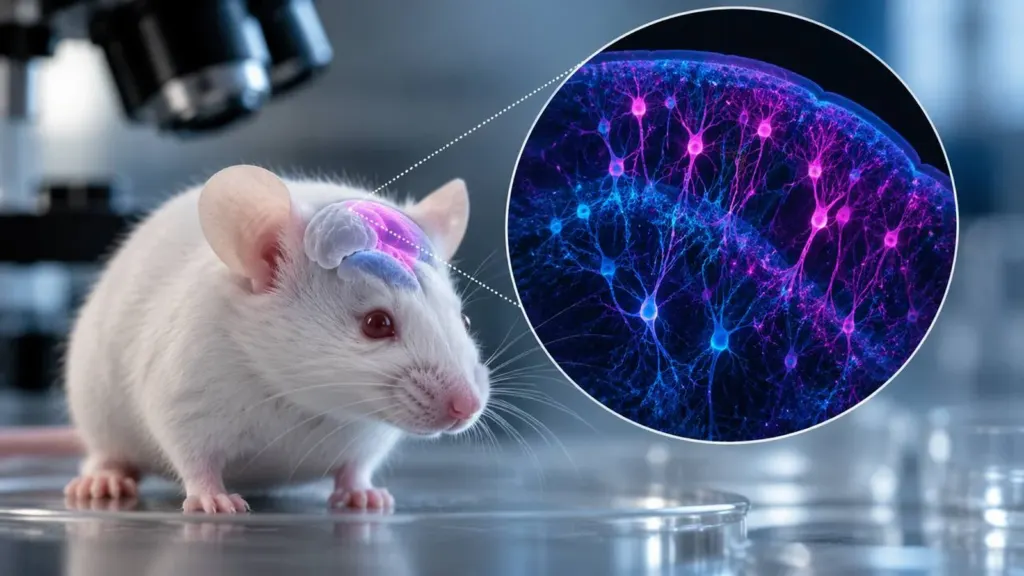
Scientists have engineered a mouse whose cerebral cortex contains a substantial proportion of human neurons, then recorded the animal’s movements with an array of high‑speed cameras while a computer logged position and speed in real time. The experiment, reported in today’s edition of The Download, demonstrates that human‑cell chimeras can be observed in a controlled behavioral arena, providing a new window onto how transplanted human neurons integrate with murine circuitry.
At its core, the work answers a long‑standing limitation in neurobiology: the difficulty of studying human brain cells in vivo. Traditional rodent models rely on mouse genetics that differ markedly from human neurodevelopment, while organoid cultures lack the full physiological context of a living brain. By grafting human cortical progenitors into the mouse brain and then quantifying the animal’s locomotion, researchers generate a hybrid platform that preserves the complexity of an intact nervous system while retaining the experimental tractability of a mouse. The data pipeline—multiple cameras, automated tracking, and speed charting—creates a quantitative behavioral fingerprint that can be correlated with electrophysiological readouts from the human cells.
Beyond the technical achievement, the study raises a cascade of strategic considerations for biotech investors, academic labs, and regulators. The ability to model neurodegenerative diseases, psychiatric disorders, and drug responses in a living organism that carries authentic human neuronal tissue could accelerate target validation and reduce reliance on less predictive in‑vitro assays. At the same time, the ethical terrain surrounding the creation of animals with partially human brains remains unsettled, and policy frameworks have yet to keep pace with the rapid pace of cellular engineering.
Why human‑cell mice matter for disease modeling
The primary advantage of the chimeric mouse platform lies in its translational fidelity. Human neurons derived from induced pluripotent stem cells (iPSCs) retain donor‑specific genetic signatures, including disease‑associated mutations. When these cells mature within a mouse cortex, they experience the same vascular, immune, and synaptic environments that shape neuronal function in vivo. Researchers can therefore observe how patient‑derived cells respond to pharmacological challenges, environmental stressors, or genetic manipulations in a setting that mirrors human physiology more closely than a petri dish.
Quantitative behavioral readouts—such as the speed and trajectory patterns captured by the camera system—serve as phenotypic anchors for underlying neural activity. For example, a mouse engineered with human neurons carrying an Alzheimer’s‑linked APP mutation might display subtle locomotor hesitations or altered exploratory patterns that correlate with amyloid accumulation in the grafted tissue. By linking these observable metrics to molecular readouts (e.g., tau phosphorylation, synaptic protein levels), scientists can construct a multi‑layered disease model that spans genotype, cellular phenotype, and whole‑animal behavior.
From an investment perspective, the platform reduces the time and cost associated with traditional drug discovery pipelines. Companies that previously relied on separate animal studies and human cell assays can now consolidate efforts, potentially shortening the preclinical phase. Venture capital firms have already earmarked funds for firms that specialize in chimeric‑organism platforms, viewing them as a bridge between the high‑risk early‑stage biotech space and the more predictable later‑stage therapeutic development arena.
Regulatory and ethical crossroads for chimeric organisms
While the scientific promise is clear, the regulatory landscape is fragmented. In the United States, the National Institutes of Health (NIH) oversees human‑animal chimera research through the Recombinant DNA Advisory Committee (RAC), but guidance remains largely case‑by‑case. Europe’s European Medicines Agency (EMA) has issued advisory notes, yet member states retain discretion over animal welfare statutes. The lack of a unified global framework creates uncertainty for multinational collaborations and may slow the translation of chimeric models into clinical pipelines.
Ethical concerns focus on the degree of human neural contribution and the potential for altered cognition or consciousness. Although the current mouse model contains human cells only in the cortex—a region associated with higher‑order processing—the extent to which these cells influence perception or experience remains unknown. Bioethicists argue for a precautionary approach, recommending thresholds for human cell proportion and mandatory oversight committees that include neuroscientists, ethicists, and public representatives.
Public perception also plays a role. Media coverage that sensationalizes “human‑brain mice” can generate backlash, influencing policy makers to impose stricter limits. Transparent communication of the scientific goals, safety measures, and humane treatment protocols is therefore essential for maintaining social license. Companies that proactively engage with stakeholders may gain a competitive edge by positioning themselves as responsible innovators.
In summary, the integration of human cortical cells into mouse brains, coupled with precise behavioral tracking, offers a compelling new tool for neuroscience and drug development. The platform’s ability to generate quantifiable, translational data could reshape preclinical research, attract capital, and accelerate therapeutic pipelines. Simultaneously, the ethical and regulatory ambiguities demand coordinated policy development and proactive stakeholder engagement. The trajectory of chimeric mouse research will likely hinge on how quickly the scientific community, regulators, and the public can align on standards that preserve both scientific progress and societal values.