Wayve Gains Waymo CFO as Elisa de Martel Joins
Elisa de Martel departs Waymo to take a senior role at Wayve. The move reshapes talent dynamics in the autonomous‑driving sector.
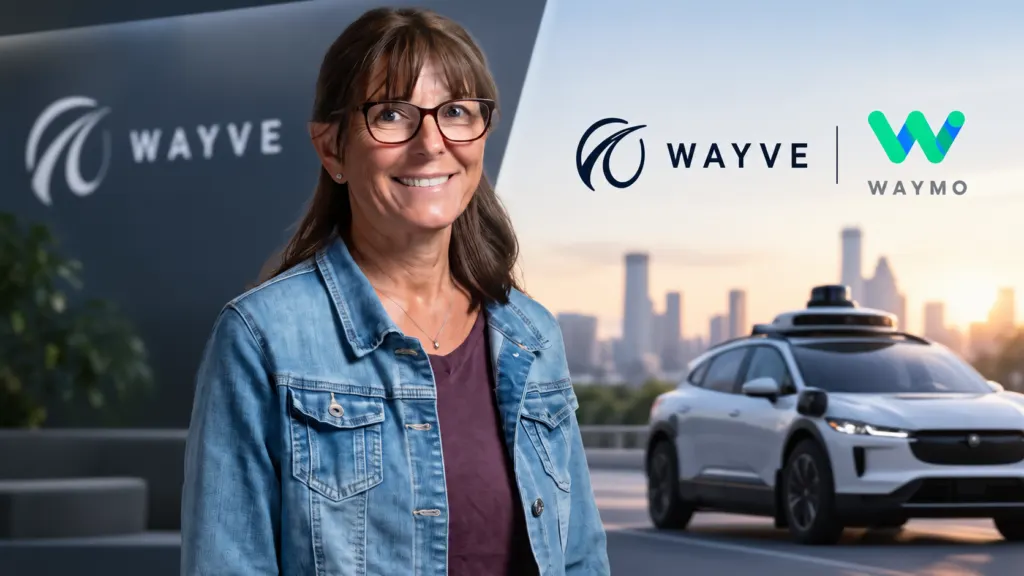
Elisa de Martel, who served as chief financial officer of Alphabet’s Waymo until January, now reports to Wayve’s executive team from a Silicon Valley office. The transition marks a rare cross‑company migration at the senior‑finance level within the autonomous‑vehicle (AV) ecosystem, where talent pipelines typically remain insulated inside the deep‑pocketed research labs of the world’s largest tech firms.
Wayve, a UK‑originated startup that emphasizes end‑to‑end machine‑learning models over high‑definition mapping, has spent the past three years scaling its simulation platform and securing a modest series of venture rounds. By contrast, Waymo operates a commercial robotaxi fleet in select U.S. cities and commands a multi‑billion‑dollar R&D budget. De Martel’s move therefore raises questions about how a leaner organization can leverage the financial rigor and capital‑allocation discipline cultivated at a corporate giant.
From a strategic perspective, the hire signals Wayve’s intent to professionalize its financial operations ahead of a projected expansion of its testing fleet and a possible entry into regulated markets beyond Europe. De Martel’s experience overseeing Waymo’s cost‑control mechanisms—particularly the balancing act between sensor hardware spend and software development—could help Wayve structure more disciplined capital deployment as it pursues larger‑scale pilot programs.
Wayve leverages Waymo finance expertise
Waymo’s CFO office has historically managed a complex portfolio that includes proprietary lidar production, cloud‑based simulation clusters, and a growing driver‑partner network. De Martel’s familiarity with these cost structures equips Wayve to benchmark its own spend against industry standards without inflating its balance sheet. In practice, this could translate into tighter vendor negotiations for sensor components, more granular tracking of simulation compute usage, and a clearer path to unit‑economics that satisfy regulators in emerging AV jurisdictions.
Beyond pure cost discipline, the hire may also improve Wayve’s fundraising narrative. Venture investors increasingly demand transparent financial roadmaps that articulate pathways to profitability, especially as public policy shifts toward stricter safety certification. De Martel’s track record of reporting to Alphabet’s board and navigating SEC disclosures provides Wayve with a seasoned voice that can articulate risk‑adjusted returns to limited partners.
Competitive pressure intensifies as legacy automakers and tech conglomerates double down on autonomous solutions. Companies such as Tesla, Cruise, and Baidu have all announced aggressive timelines for Level 4 deployment. Wayve’s differentiator—its reliance on reinforcement learning to generalize across diverse road conditions—requires massive data ingestion and compute resources. Applying Waymo‑derived financial stewardship could enable Wayve to allocate those resources more efficiently, potentially narrowing the gap between its experimental prototypes and commercially viable fleets.
Nevertheless, the transition is not without friction points. Waymo’s finance culture is embedded within a broader corporate governance framework that includes cross‑functional oversight from Alphabet’s legal and policy teams. Wayve, by contrast, operates with a flatter hierarchy and a more experimental R&D cadence. Integrating rigorous financial controls may clash with the startup’s need for rapid iteration, risking a slowdown in algorithmic development if not balanced carefully.
Another counter‑argument centers on the limited scope of a single CFO appointment. While de Martel can introduce best‑practice reporting and budgeting, the core technology advantage still resides in Wayve’s research talent and its simulation pipeline. If the company cannot translate financial discipline into accelerated sensor integration or faster model training, the strategic benefit may remain marginal.
External market signals provide a partial gauge of the hire’s impact. Wayve’s most recent funding round, closed in late 2025, raised $45 million from a consortium of European venture firms, citing “enhanced financial governance” as a key milestone. Although the exact allocation of those funds remains undisclosed, the statement suggests that investors view the CFO appointment as a catalyst for scaling operations responsibly.
From an industry‑wide perspective, the move underscores a broader trend: autonomous‑vehicle startups are maturing from pure technology labs into financially disciplined enterprises. As regulators in the United States, Europe, and Asia tighten safety standards, the ability to demonstrate sound fiscal management becomes a de‑facto prerequisite for obtaining operating permits. De Martel’s presence at Wayve may therefore serve as a bellwether for other emerging AV firms seeking to emulate Waymo’s governance model.
In the short term, measurable outcomes will likely appear in Wayve’s quarterly financial disclosures, assuming the company adopts a more public reporting cadence. Metrics such as burn rate per simulated mile, capital efficiency ratios, and the proportion of budget allocated to sensor procurement versus software development will provide concrete evidence of de Martel’s influence.
Ultimately, the hire does not guarantee that Wayve will overtake Waymo or its other rivals, but it does equip the startup with a proven framework for scaling responsibly. As the autonomous‑driving sector moves from experimental pilots to regulated commercial services, the ability to balance aggressive technology development with disciplined capital management will become a decisive factor in determining which companies survive the next wave of competition.