Apple Duo’s Dual‑Battery Design Beats Samsung Fold’s Accessory Woes
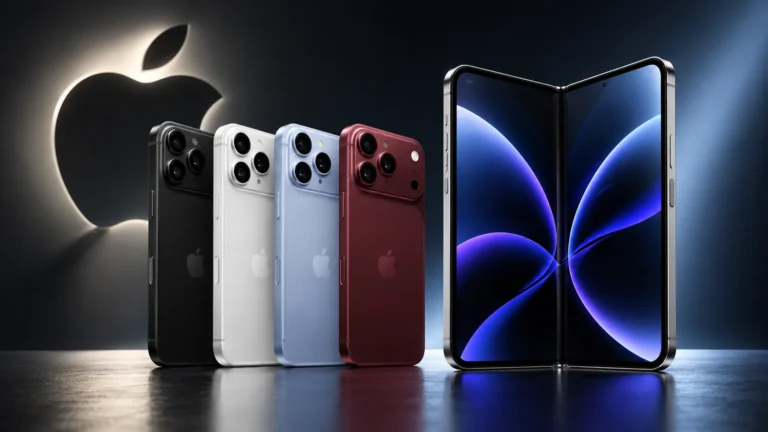
Apple’s iPhone Duo introduces a dual‑battery architecture that directly tackles the accessory‑fit challenges exposing Samsung’s Galaxy Z Fold 8, signaling a strategic shift in the foldable smartphone arena.
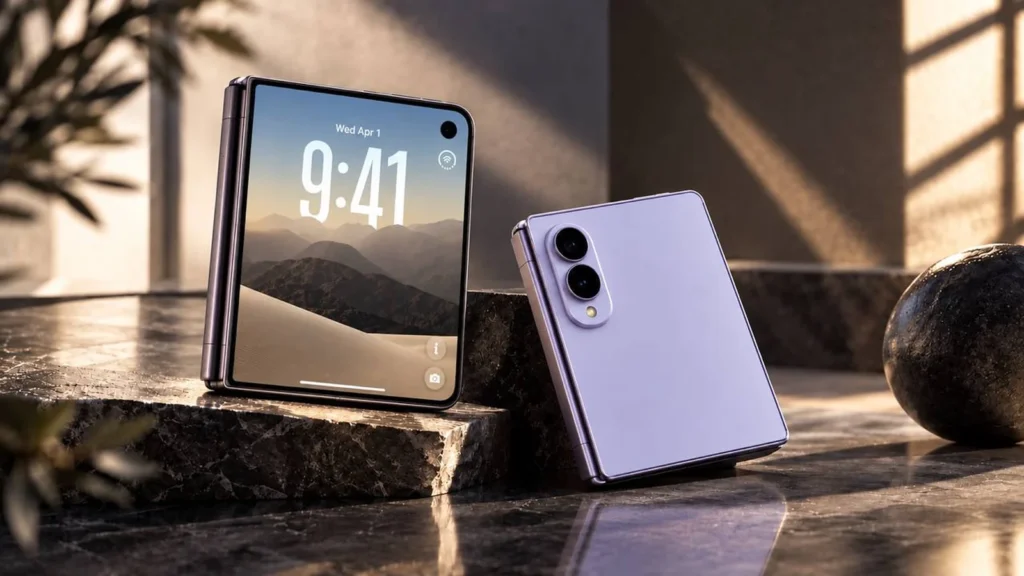
Samsung’s latest flagship, the Galaxy Z Fold 8, continues to showcase a premium foldable experience, yet its form factor creates a persistent ergonomic flaw: magnetic battery banks extend beyond the device’s edge, leaving users with an awkward, dangling accessory. Apple’s newly announced iPhone Duo arrives with a dual‑battery architecture and a custom vapor‑chamber thermal system that not only promises all‑day endurance but also eliminates the need for external magnetic packs. The contrast highlights a strategic divergence in how the two giants address power delivery for large‑screen foldables.
The Z Fold 8’s design relies on a single, thin battery that must stretch across a chassis optimized for a compact folded footprint. As a result, third‑party magnetic power packs—while convenient—cannot sit flush against the device; they protrude, compromising grip and pocketability. The issue is not merely aesthetic. A dangling battery increases the risk of accidental drops and adds friction against clothing, factors that erode the user experience Samsung has cultivated over multiple generations of foldables.
Apple’s Dual‑Battery System
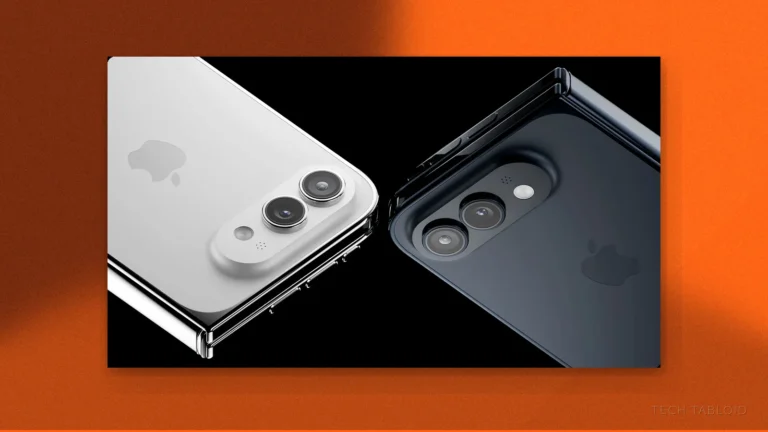
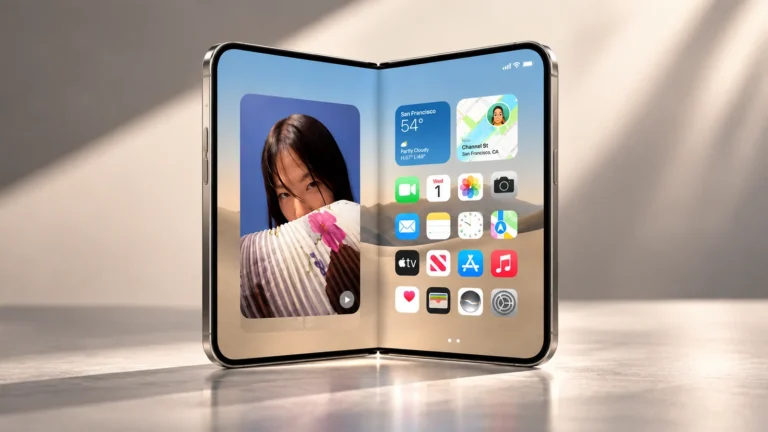
Apple’s iPhone Duo, unveiled in Cupertino, pairs two batteries with a vapor‑chamber thermal management system powered by the A20 Pro chip. The dual‑battery layout distributes weight evenly across the hinge and both halves of the device, preserving a slim profile while delivering “impressive all‑day battery life,” according to Apple’s official release. By integrating power cells directly into the hinge’s support ribs, the Duo sidesteps the need for external packs entirely. The design also leverages a titanium‑reinforced hinge that houses more than 100 components, ensuring that the added battery mass does not compromise durability.
Beyond raw capacity, Apple’s approach integrates software‑level power optimization via iOS 27. The operating system dynamically shifts workloads between the two cells, balancing thermal load and extending peak performance windows. This synergy between hardware and software mirrors Apple’s historical advantage in power efficiency, now extended to the foldable segment.
Foldable Market Impact
The accessory mismatch on the Z Fold 8 creates an opening for Apple to capture users who prioritize seamless portability. Samsung’s ecosystem of magnetic battery banks, while popular, now appears as a stop‑gap rather than a long‑term solution. Apple’s internal battery architecture reduces reliance on third‑party accessories, potentially reshaping the accessory market that has grown around Samsung’s devices.
From a revenue perspective, Apple’s move could compress the ancillary accessory market that Samsung currently monetizes through licensing agreements with battery‑bank manufacturers. If iPhone Duo users no longer need external packs, third‑party vendors may redirect R&D toward other peripherals—such as the upcoming Apple Pencil support announced for later this year—further entrenching Apple’s ecosystem lock‑in.
Moreover, the Duo’s durability claims—grade 5 titanium chassis, Ceramic Shield 2 front glass, IP68 rating—address another pain point for foldables: long‑term wear. Samsung’s recent models have improved hinge robustness, yet the Z Fold 8’s thin form factor still leaves the device vulnerable to stress at the hinge‑to‑body transition, a region where external batteries exacerbate mechanical strain.
The Other Side
Critics may argue that Samsung’s larger battery capacity, combined with its mature ecosystem of magnetic packs, still offers superior raw endurance for power‑hungry users. The Z Fold 8’s single‑cell design can accommodate a higher‑density cell than Apple’s split architecture, potentially delivering longer unplugged usage in theory. However, real‑world testing—still pending—must weigh the convenience loss of a dangling pack against marginal capacity gains.
Another counterpoint concerns price. Apple’s Duo launches at a premium tier, and its dual‑battery system likely contributes to a higher bill‑of‑materials cost. Samsung may retain price‑sensitive consumers who accept the accessory compromise for a lower entry price. Yet Apple’s pre‑order window opens on October 16, with shipments slated for October 23, indicating confidence in market appetite despite the premium positioning.
Future Outlook
The divergence in battery strategy underscores a broader competitive narrative: Apple is leveraging its control over silicon, software, and industrial design to deliver a foldable that feels less like a compromise and more like an evolution of its existing iPhone line. Samsung, while pioneering the foldable form factor, now faces a design challenge that extends beyond screen mechanics to the entire power delivery ecosystem.
For analysts, the key indicator to watch will be accessory sales data in the quarter following the Duo’s launch. A measurable dip in magnetic battery‑bank shipments could signal a shift in consumer preference toward integrated power solutions. Likewise, early adoption rates of the iPhone Duo—tracked through pre‑order volumes and first‑month activation metrics—will reveal whether Apple’s integrated approach resonates enough to offset its higher price point.
In the meantime, Samsung’s engineering teams are likely evaluating a dual‑battery or internal‑module redesign for future generations, a move that would directly address the criticism highlighted in today’s reporting. Until such a redesign materializes, Apple’s iPhone Duo stands as the first foldable that eliminates the external battery dilemma, setting a new benchmark for power integration in the segment.
For a deeper look at Apple’s launch strategy, see the Apple iPhone Duo launch coverage.
Disclosure: Tech Tabloid may earn an affiliate commission from qualifying purchases through Amazon links on this page at no additional cost to you.
Reporting transparency