Senate blocks power‑bill shield, AI data centers face rising costs
The Senate rejected the Ratepayer Protection Act, removing a potential safeguard against soaring electricity bills for AI data centers. The defeat reshapes the regulatory landscape, leaving utilities and developers to navigate cost pressures without federal relief.
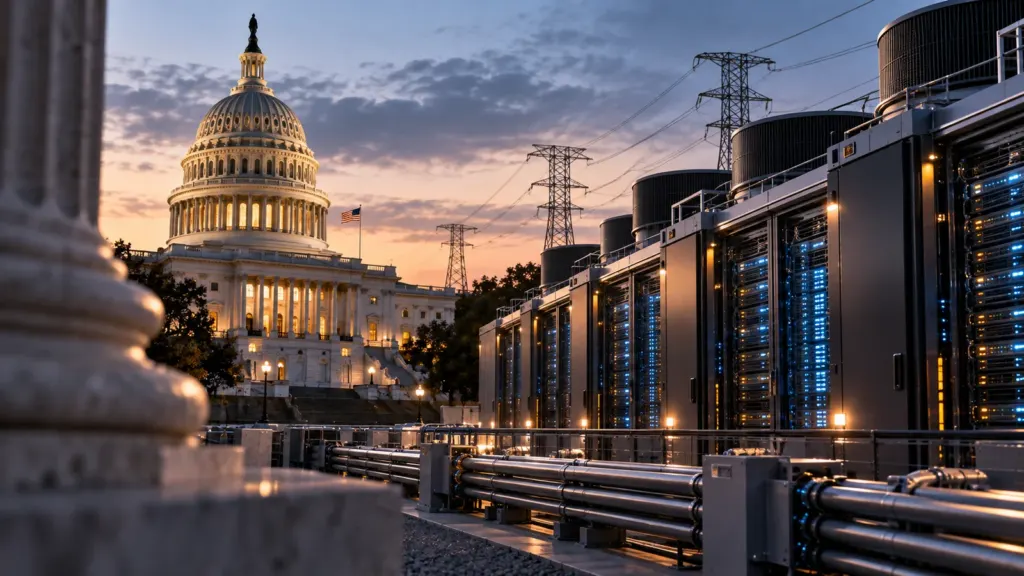
On a 57‑43 vote, the U.S. Senate killed the Ratepayer Protection Act, a bill that would have required regulators to consider imposing incremental grid‑cost charges on data centers whose electricity consumption spikes the power system. The legislation was framed as a consumer‑protection measure, aiming to prevent households from shouldering the hidden price of AI‑driven compute. Its defeat leaves the existing cost‑allocation framework untouched, meaning utilities can continue to spread the full expense of new, high‑intensity loads across all ratepayers.
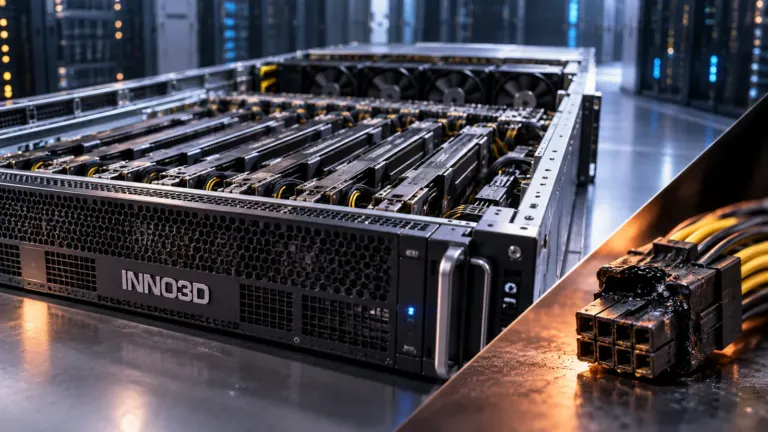
AI data centers are uniquely power‑hungry. Modern large‑language‑model training runs 24/7 on clusters of GPUs that draw megawatts of electricity, often co‑located with cheap, carbon‑intensive power sources to keep operating costs low. The hardware pressure is evident in recent coverage of high‑density GPU servers, where manufacturers such as INNO3D have grappled with power‑delivery reliability issues high‑density GPU servers face. When a single rack can consume as much power as a small town, the marginal cost of adding another rack is not trivial for the grid, especially in regions already strained by renewable‑energy variability.
The Senate’s decision arrives amid a broader climate of regulatory uncertainty. While the Ratepayer Protection Act stalled, other legislative efforts—most notably the Clarity Act governing crypto‑related transactions—also faced setbacks. Crypto M&A activity remains at record levels, but the failure of the Clarity Act to pass has left dealmakers weighing the impact of ambiguous oversight on financing structures. Together, these parallel defeats illustrate a pattern: Congress is reluctant to impose new, industry‑specific cost‑recovery rules without broader consensus, leaving market participants to absorb risk on their own balance sheets.
Regulatory vacuum and grid strain
Without a federal mandate to internalize the incremental grid costs of AI workloads, utilities retain discretion over rate design. In practice, this often translates into a “cost‑of‑service” model where new demand is amortized over the existing customer base. The result can be a modest increase in residential rates, but the magnitude depends on the utility’s cost‑allocation methodology and the regional mix of generation assets. Some states, such as Texas, already experience volatility in wholesale power markets; adding megawatt‑scale AI farms could exacerbate price spikes during peak demand periods.
Industry groups have argued that the bill would have created a disincentive for AI developers to locate in high‑cost regions, potentially pushing them toward jurisdictions with looser regulation or cheaper, less reliable power. The counter‑argument is that transparent cost recovery would encourage more efficient hardware design and better demand‑response participation. In the absence of the Act, the onus falls on utilities and state regulators to address these externalities through existing mechanisms, such as demand‑response programs, time‑of‑use tariffs, or voluntary green‑energy contracts.
Market reaction and financing implications
Investors have taken note of the legislative outcome, but the immediate market reaction has been muted. The data‑center financing market, already accustomed to structuring loans around power‑usage agreements, continues to price in grid‑capacity risk through higher interest spreads for projects that lack clear cost‑recovery pathways. The parallel failure of the Clarity Act has not dampened crypto‑M&A momentum; instead, firms are increasingly relying on private‑placement financing and offshore structures to sidestep U.S. regulatory ambiguity.
This dual environment—where AI infrastructure and crypto finance both operate under a cloud of policy uncertainty—creates a premium on legal and engineering expertise. Companies that can demonstrate robust power‑efficiency metrics or that secure long‑term renewable PPAs (power purchase agreements) may command better financing terms, as lenders view these mitigations as substitutes for the absent legislative shield.
Possible policy routes and industry strategies
While the federal avenue has closed for now, several alternative pathways remain. State legislatures could enact their own cost‑allocation rules, mirroring the intent of the Ratepayer Protection Act on a smaller scale. Some utilities are already piloting “grid‑impact fees” that are billed directly to high‑consumption customers, a model that could be expanded to AI operators if the regulatory climate permits.
On the industry side, AI firms are likely to double down on hardware efficiency. Advances in low‑power GPU architectures, liquid‑cooling solutions, and workload scheduling that aligns with off‑peak grid periods can reduce the incremental cost burden. Moreover, the growing availability of renewable‑energy‑as‑a‑service offerings gives AI operators a way to offset their carbon footprint while potentially negotiating more favorable power rates.
Finally, the broader policy debate may shift toward a more holistic view of energy resilience. As AI workloads become integral to national security and economic competitiveness, lawmakers could revisit the balance between consumer protection and strategic investment, perhaps through targeted subsidies for clean‑energy data centers rather than blanket cost‑recovery mandates.
In the short term, the most concrete indicator of how the grid will absorb AI demand will be the filings that utilities submit to state public‑utility commissions. Those documents, which detail projected load growth and associated cost recovery methods, will reveal whether the industry is moving toward voluntary cost‑allocation mechanisms or waiting for a new federal proposal.