Apple Music Lossless Streams Surge Data Use
Apple Music’s two lossless tiers deliver premium sound but consume significantly more data. The analysis examines the bandwidth trade‑off and its strategic impact on users and Apple.
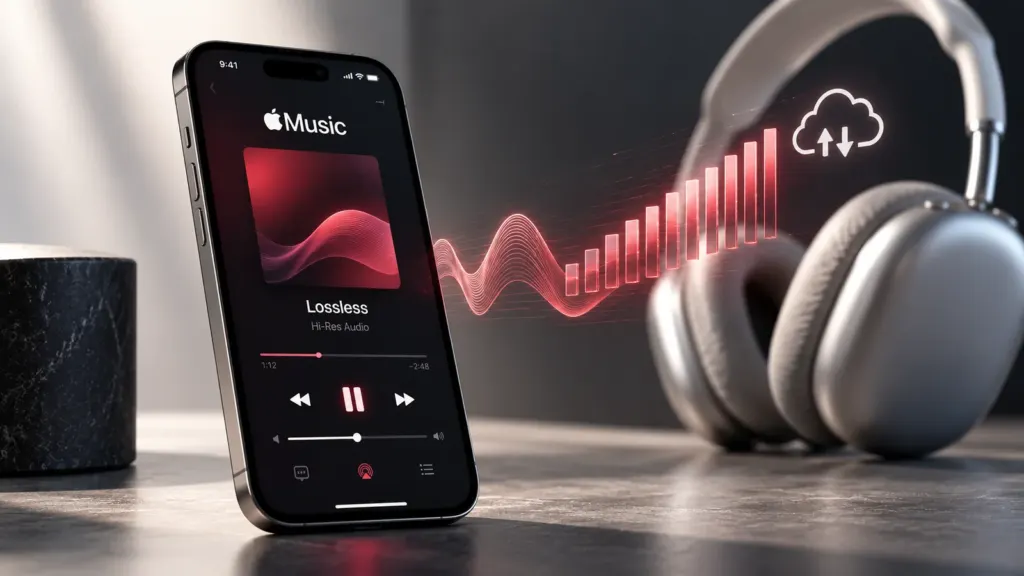
Apple Music now provides two lossless streaming tiers that promise the highest audio fidelity the service can deliver. While the move satisfies a growing audiophile segment, the same source material confirms that these tiers consume significantly more data than the standard compressed streams that dominate most users’ daily listening habits.
Lossless audio preserves the original PCM waveform without the quantization loss introduced by lossy codecs such as AAC. By definition, retaining every sample of the source recording requires a higher bit rate, which translates directly into larger data payloads per minute of playback. The result is a proportional increase in bandwidth demand, a factor that becomes noticeable when users shift from the typical 96‑kbps to 1,411‑kbps or higher streams.
Apple’s own documentation notes that the lossless options represent the maximum audio quality the platform can provide. The two tiers—both classified as lossless—are therefore expected to consume “significantly more data” relative to Apple’s default streaming quality. Although exact figures are not disclosed in the source, the qualitative assessment aligns with industry‑wide observations that lossless streams can require anywhere from five to ten times the data of standard lossy streams.
This data appetite has immediate practical implications for listeners on mobile connections. Many carriers enforce monthly caps ranging from 5 GB to 50 GB, and a single hour of lossless playback can consume a sizable fraction of those limits. Users who primarily rely on cellular data may find themselves throttled or incurring overage fees, prompting a shift back to Wi‑Fi‑only listening for high‑fidelity tracks.
Other streaming platforms have introduced comparable high‑resolution tiers—Spotify’s “HiFi” and Tidal’s “Master” quality—each carrying a similar data penalty. The competitive landscape suggests that Apple is not alone in courting the audiophile niche, but the broader market still favors the convenience of lower‑bitrate streams for everyday use. The shared challenge across services is balancing the desire for pristine sound against the reality of limited network resources.
Data cost versus audio fidelity
The trade‑off mirrors classic storage decisions explored in our recent SSD vs HDD cost‑benefit analysis. Just as users weigh the higher price of SSDs against faster performance, listeners must now weigh the higher data cost of lossless audio against the audible benefits. For many, the incremental improvement in sound quality may not justify the extra megabytes, especially when streaming on a limited plan.
From a strategic perspective, Apple’s lossless tiers serve multiple purposes. First, they reinforce the premium positioning of Apple Music within the broader ecosystem, encouraging users to stay within the Apple hardware and software loop where high‑resolution playback is most feasible. Second, the offering differentiates Apple from rivals that still rely solely on lossy codecs, potentially attracting a niche but lucrative segment of audiophiles willing to pay for higher‑tier subscriptions or larger data plans.
Strategic implications for Apple and users
However, the upside is tempered by a clear counter‑argument: the majority of listeners may not perceive a substantial difference between high‑quality lossy streams and true lossless audio, especially on consumer‑grade headphones or in noisy environments. If the perceived benefit does not outweigh the data cost, adoption could remain limited to a small, dedicated user base.
Apple mitigates this risk by exposing detailed data‑usage statistics in iOS Settings, allowing users to monitor the impact of lossless streaming in real time. The visibility of these metrics empowers consumers to make informed choices—opting for lossless only when connected to unrestricted Wi‑Fi or when the listening context warrants it.
Looking ahead, the industry may see a gradual normalization of higher‑bitrate streams as network infrastructure improves and data caps expand. Until then, Apple’s lossless tiers function as a premium add‑on that tests the market’s willingness to pay for fidelity at the expense of bandwidth. The measurable indicator of success will be the proportion of lossless streams in overall Apple Music traffic, a metric that Apple can track through its analytics dashboard.
In sum, Apple Music’s lossless options broaden the service’s appeal but introduce a concrete data cost that users must manage. The decision to adopt lossless streaming will hinge on individual bandwidth constraints, listening environments, and the perceived value of audio perfection. As the streaming ecosystem continues to evolve, the balance between sound quality and data efficiency will remain a defining factor for both providers and consumers.