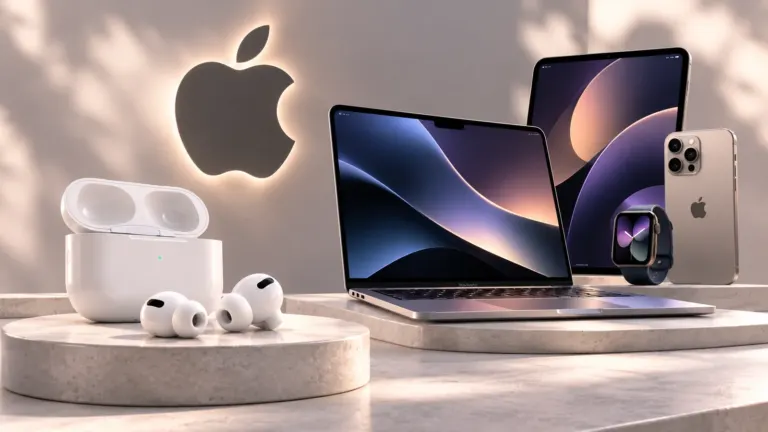
Apple slashes MacBook Air M5 price as new Macs debut
Apple reduces the 13‑inch MacBook Air M5 to $1,099 on Prime Day and launches new Mac mini and Mac Studio models, signaling a coordinated shift in pricing and performance focus. The moves reveal how Apple balances premium AI capabilities with broader market pressures.
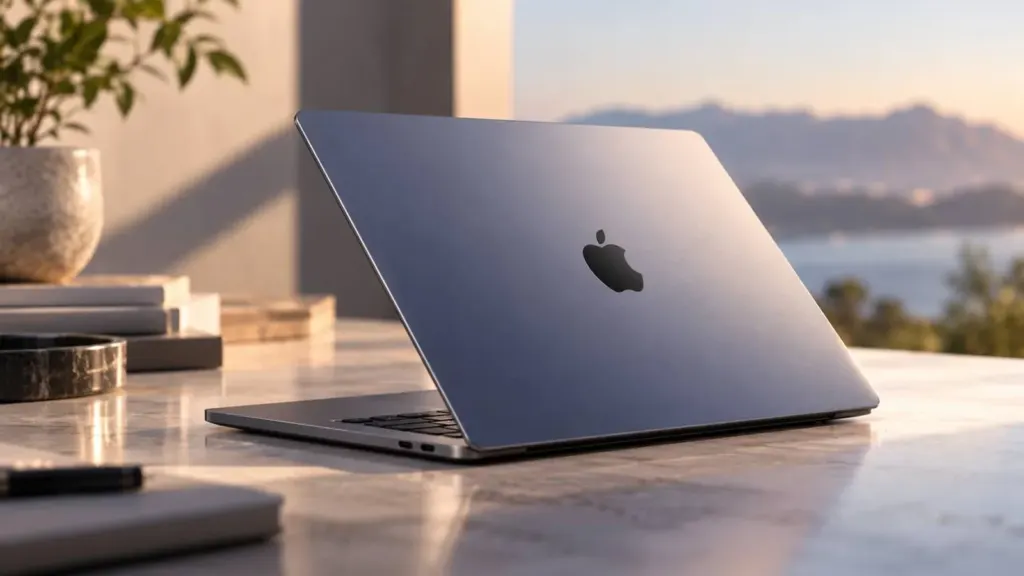
Apple’s October Prime Day promotion trims the price of the 13‑inch MacBook Air M5 by $200, bringing the base configuration—13.6‑inch display, M5 chip, 512 GB SSD—to $1,099 on Amazon. The discount arrives just as Apple rolls out the latest Mac mini and Mac Studio desktops, each powered by the next‑generation Apple silicon lineup (M6, M5 Pro, M5 Max, and M5 Ultra). Together, the price cut and the new desktop announcements form a coherent, if aggressive, response to a market that increasingly values on‑device AI performance and price elasticity across consumer, education, and professional segments.
The discounted MacBook Air M5 retains the same silicon architecture introduced in June, but its $1,099 price point now undercuts the $1,299 baseline that Apple set after the June price increase. At the same time, Apple continues to market the $699 MacBook Neo, a lower‑spec model that targets budget‑conscious buyers. The Air’s M5 chip delivers a noticeable uplift over the Neo’s processor, offering up to 2 × faster graphics and roughly 30 % higher CPU throughput according to Apple’s own performance claims. For users who need a thin‑and‑light laptop with a 512 GB SSD and a more capable AI engine, the price reduction narrows the value gap between the Air and the Neo, potentially shifting demand toward the higher‑margin Air model.
Apple’s desktop refresh adds two distinct tiers. The Mac mini now ships with either the M6 or the M5 Pro. The entry‑level M6 model starts at $899 and promises up to four‑fold AI performance gains, double the graphics bandwidth, and a 40 % CPU speed increase over the prior generation. Configurations can be upgraded to 32 GB unified memory and feature Wi‑Fi 7, Bluetooth 6, and 2.5 Gb Ethernet (with an optional 10 Gb option). The M5 Pro variant, priced at $1,699, scales the CPU to 18 cores and the GPU to 20 cores, supporting up to 64 GB memory and 307 GB/s bandwidth—specs aimed at video editors, game developers, and other pros who need sustained throughput.
At the top end, the Mac Studio arrives with two performance‑focused options. The M5 Max model starts at $2,499 and delivers an 18‑core CPU, up to a 40‑core GPU, and up to 128 GB unified memory. The flagship M5 Ultra, priced at $5,499, pushes the envelope with a 36‑core CPU, an 80‑core GPU, and a massive 512 GB of memory, enabling real‑time 8K color grading, complex VFX rendering, and on‑device large‑language‑model inference. Both Studio configurations include Thunderbolt 5 with up to 120 Gb/s transfer rates and support for up to eight external displays, positioning the Studio as a compact alternative to high‑end workstations.
Pricing strategy under pressure
Apple’s $200 discount on the Air aligns with a broader pricing narrative that began with a June price hike across the Mac lineup. By offering a limited‑time reduction during Prime Day, Apple effectively counters the perception of price creep while leveraging Amazon’s high‑traffic sales event to reach price‑sensitive shoppers. The discount also serves as a tactical move to stimulate demand ahead of the holiday season, a period historically strong for laptop sales. Crucially, the price cut does not extend to the newly announced Mac mini or Mac Studio, whose starting prices remain at $899 and $2,499 respectively. This bifurcated approach suggests Apple is protecting its premium desktop margins while using the Air’s discount to drive volume in the portable segment.
Apple’s emphasis on AI performance across the new silicon family further clarifies its pricing calculus. The marketing copy highlights “up to 4 × faster AI performance” for the M6 Mac mini and “up to 4.3 × faster AI performance” for the M5 Ultra Studio. By quantifying AI gains, Apple differentiates its products from competitors that rely on generic CPU or GPU benchmarks. The AI narrative also resonates with developers building agentic workflows, a growing segment that values on‑device inference for privacy and latency reasons. The Air’s M5 chip, while not the newest silicon, still benefits from the same neural‑engine architecture, making the $1,099 price point a compelling entry for users who want AI‑enhanced productivity without paying the premium of the latest M6 or M5 Pro chips.
Competitive context and consumer choices
In the broader PC market, Microsoft’s Surface lineup and Dell’s XPS series continue to push thin‑and‑light designs with comparable price points. However, Apple’s integration of custom silicon, macOS 27, and the emerging Apple Intelligence suite creates a differentiated value proposition that is difficult to replicate on x86 platforms. The Mac mini’s compact form factor and the Studio’s desktop power also compete directly with Intel‑based workstations from HP and Lenovo, especially in creative industries where GPU‑intensive workloads dominate. Apple’s pricing, while still above many Windows alternatives, is justified by the unified memory architecture and the tight hardware‑software integration that reduces system‑level overhead.
One counter‑argument remains: the $1,099 Air still sits above many high‑spec Windows ultrabooks, and the $699 Neo offers a cheaper entry point for students. The Air’s discount narrows the gap but does not eliminate it. Moreover, the Mac mini’s base $899 price, though competitive for an Apple desktop, may still deter small‑business owners who can source comparable performance from a custom‑built PC for less. The Studio’s premium pricing, especially the $5,499 Ultra, targets a niche of high‑end creators who can afford the cost or who are already entrenched in the Apple ecosystem.
Apple’s education pricing, highlighted in the Mac mini announcement (starting at $799 for qualifying students), adds another layer of strategic pricing. By offering a lower entry price for the M6 Mac mini, Apple aims to capture the academic market, where bulk purchases can drive long‑term platform loyalty. The simultaneous discount on the Air during a consumer‑focused sales event creates a two‑pronged push: one toward individual consumers, the other toward institutional buyers.
Overall, the coordinated price reduction and hardware refresh signal that Apple is actively managing the tension between premium branding and market‑driven price sensitivity. The company leverages its silicon roadmap to justify higher price tiers for power users while using limited‑time discounts to keep its mainstream laptops attractive. The real test will be reflected in sales data from the upcoming holiday quarter, education‑sector order volumes, and the adoption rate of on‑device AI workloads that Apple’s marketing emphasizes.
Disclosure: Tech Tabloid may earn an affiliate commission from qualifying purchases through Amazon links on this page at no additional cost to you.