Steam Frame Leak Shows New VR Design Choices and Market Signals
A leaked Linus Tech Tips video gives the first hands‑on look at Valve's Steam Frame headset, exposing its accessories, battery strategy, and launch timing. The analysis evaluates how these details reshape the VR hardware landscape.
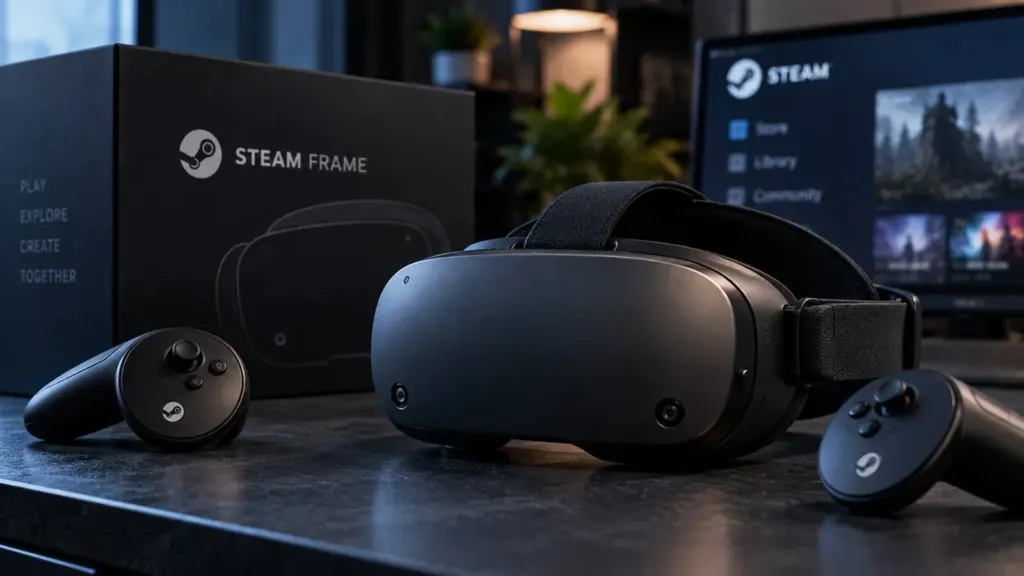
When Linus Media Group’s ShortCircuit channel mistakenly published a 30‑minute first‑impressions video of Valve’s upcoming Steam Frame, the VR community received a rare glimpse of a product that has been shrouded in embargoes. The clip, live for only a few minutes before removal, still circulates across social platforms, offering concrete evidence of the headset’s box contents, fit, and range‑test performance. While Valve has not disclosed a final price, the leak supplies enough hardware detail to assess the strategic direction of its next‑generation VR system.
The video walks viewers through the unboxing experience, showing a sleek headset that appears marginally lighter than the Valve Index, a set of controllers, and a separate Ergonomics Accessories Kit priced at $60. The kit includes an extra headset strap and additional controller straps, suggesting Valve anticipates a demand for customizable comfort solutions. Notably, the controllers employ replaceable AA batteries rather than the built‑in rechargeable packs that defined the Index, a decision that could lower entry barriers for users who prefer quick swaps over charging cycles.
Beyond the physical design, the leak confirms that Valve continues to refine its software stack. A stable SteamVR update rolled out in recent weeks, and backend package changes on Steam hint at imminent launch preparations. An insider previously mentioned September 14 as a possible release date, aligning with the timing of the leaked video. Although the exact launch day remains unconfirmed, the convergence of software readiness and hardware exposure points to a launch window that may materialize within days.
Battery design shifts the VR controller paradigm
Valve’s move to replaceable batteries marks a departure from its own Index philosophy, which emphasized integrated rechargeable cells to reduce cable clutter. Replaceable batteries offer immediate convenience: users can swap depleted cells without waiting for a charging dock, a benefit that aligns with the usage patterns of mobile VR platforms such as Meta Quest 3 and the recently announced Apple Vision Pro. The latter employs a dual‑battery system that extends session length while keeping the device lightweight. For a comparative look at how battery architecture influences ergonomics, see Apple Duo’s dual‑battery design.
From a supply‑chain perspective, the choice also mitigates potential bottlenecks associated with lithium‑ion cell production, a sector that has faced periodic shortages. By relying on ubiquitous AA cells, Valve can leverage existing distribution networks, potentially lowering manufacturing costs and simplifying inventory management for retailers.
The ergonomic accessories kit, priced at $60, further underscores Valve’s focus on comfort as a differentiator. The inclusion of extra straps suggests that Valve anticipates a range of head shapes and sizes, a lesson learned from the Index’s mixed reception regarding fit. By monetizing these accessories separately, Valve creates an ancillary revenue stream while allowing users to tailor the headset to their preferences without inflating the base price.
Pricing remains opaque. The leak does not reveal a headline cost, and Valve has yet to issue an official statement. However, the $60 accessory price provides a reference point for estimating the total cost of ownership. If Valve positions the Steam Frame as a premium offering, the base price could sit between $500 and $700, comparable to the Index’s $999 bundle but potentially lower due to the battery design and modular accessories.
Competitive dynamics intensify as Meta pushes its Quest line toward higher fidelity, and Apple’s Vision Pro targets enterprise and creative professionals. Valve’s historical strength lies in its deep integration with Steam, the world’s largest PC gaming platform. The leaked video demonstrates a headset that appears optimized for PC‑tethered experiences, with a range test that showcases precise tracking over a sizable play area. This focus could cement Valve’s role as the premier high‑performance PC VR solution, provided the price remains attractive to the enthusiast market.
Market analysts have long debated whether Valve can sustain a hardware business alongside its dominant software distribution model. The Steam Frame’s modular approach—selling accessories separately and opting for replaceable batteries—suggests a strategy to maximize margin while keeping the core device competitively priced. If the launch proceeds as early as mid‑September, Valve could capture a surge of holiday‑season interest, especially among gamers who have upgraded their rigs for ray‑tracing and high‑refresh‑rate monitors.
Potential drawbacks merit consideration. The reliance on replaceable batteries may introduce variability in user experience, as battery quality can affect controller latency and tracking fidelity. Moreover, the accessory‑first pricing model could be perceived as nickel‑and‑diming, alienating consumers who expect an all‑in‑one package. Valve’s reputation for transparent communication will be tested as it balances modularity with perceived value.
From a developer standpoint, the SteamVR update accompanying the leak signals that Valve is preparing its ecosystem for the new hardware. Enhanced driver support, refined hand‑tracking APIs, and expanded room‑scale capabilities indicate that Valve aims to lower the barrier for developers to ship titles that fully exploit the Steam Frame’s capabilities. This could stimulate a wave of new content, reinforcing the headset’s appeal beyond the existing library of Index‑compatible games.
In summary, the accidental leak provides enough concrete data to infer Valve’s strategic priorities: a focus on ergonomic customization, a shift toward replaceable power solutions, and a software ecosystem primed for launch. While the final price remains undisclosed, the accessory pricing and hardware choices suggest a calibrated attempt to balance premium performance with broader market accessibility. The next few days will reveal whether Valve’s timing aligns with the hinted September 14 window, and whether the Steam Frame can secure a decisive foothold in a VR market that is increasingly crowded yet still yearning for a high‑fidelity PC tethered experience.
Disclosure: Tech Tabloid may earn an affiliate commission from qualifying purchases through Amazon links on this page at no additional cost to you.