Gigabyte trims RTX 5070 supply, prices surge
Gigabyte reduces RTX 5070 stock by up to 30%, pushing prices higher across the RTX 50 series. The analysis examines why supply is tightening and who stands to benefit.
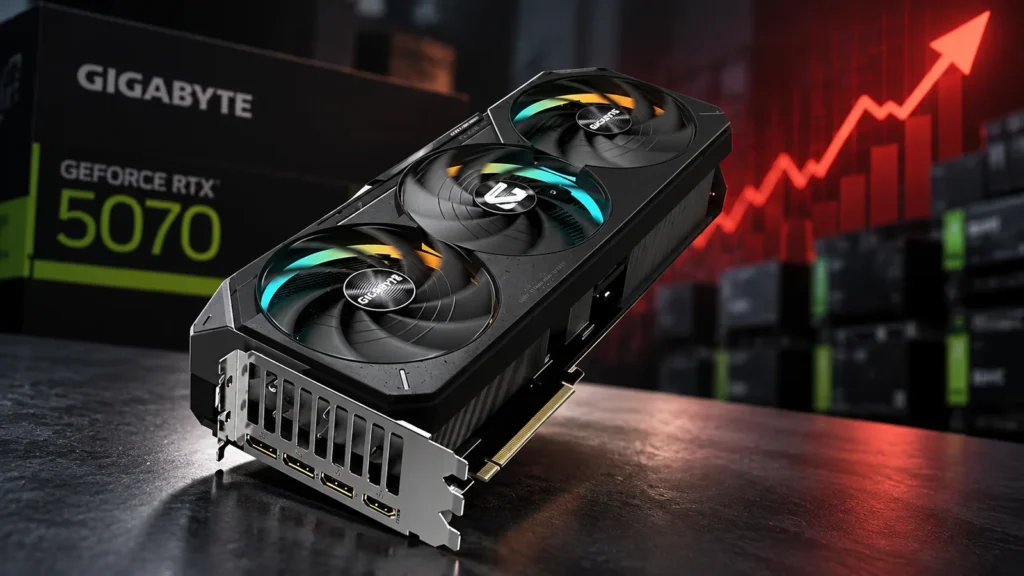
Gigabyte has announced a substantial reduction in its inventory of the RTX 5070 graphics cards, cutting supply by as much as 30 percent. The move follows a broader trend among NVIDIA board partners, including ASUS, GALAX, MSI and Inno3D, which have all raised prices on most RTX 50 series models amid what they describe as “insufficient” supply.
ChannelGate’s latest wire reports confirm that the supply curtailment began this month and that price adjustments are already visible on major e‑commerce platforms. While the exact pricing numbers vary by SKU and region, the consensus is a single‑digit to low‑double‑digit percentage increase over pre‑cut levels. The situation reflects a confluence of factors: lingering semiconductor fab capacity constraints, heightened demand from both gamers and AI‑accelerated workloads, and strategic inventory management by AIBs seeking to protect margins.
Why the supply pinch matters
The RTX 50 series represents NVIDIA’s current flagship line, targeting high‑end gaming, content creation, and emerging generative‑AI workloads. A 30 percent reduction in Gigabyte’s stock translates to fewer units available for the mid‑tier segment that the RTX 5070 occupies. Because Gigabyte is one of the larger AIBs in terms of volume, its inventory decisions ripple through the entire market. Retailers that rely on Gigabyte shipments must either source from other partners—often at higher price points—or reduce shelf stock, which can depress overall market velocity.
From a supply‑chain perspective, the shortage underscores the limited flexibility of the current fab ecosystem. NVIDIA’s reference designs are produced on TSMC’s 5nm and 4nm nodes, both of which operate near full capacity to meet demand for data‑center GPUs, automotive chips, and consumer products. AIBs therefore compete for wafer allocations, and any shift in priority can quickly manifest as inventory gaps downstream.
Pricing pressure and margin dynamics
Higher list prices benefit AIBs that have already positioned themselves as premium brands. ASUS and GALAX, for example, have historically leveraged limited‑edition SKUs and factory‑overclocked variants to command price premiums. By reducing supply, Gigabyte indirectly supports these higher‑margin strategies, as consumers facing scarcity may accept elevated costs to secure a card.
However, the price hikes also risk accelerating a shift toward older generations. The RTX 4080 and 4090, while more expensive in absolute terms, may appear more cost‑effective when the RTX 5070’s price premium narrows the performance‑per‑dollar gap. Retail analysts have noted a modest uptick in inventory turnover for the previous‑generation cards, suggesting that price elasticity remains a significant factor for the enthusiast segment.
Who stands to gain
Beyond the AIBs that can price‑set, two groups benefit from the current dynamics. First, secondary‑market sellers—particularly those operating on platforms like eBay and regional classifieds—can capture arbitrage opportunities as retail prices climb. Second, manufacturers of alternative GPUs, such as AMD’s Radeon line, may see a spill‑over of demand from gamers and creators looking for immediate availability.
AMD’s recent launch of the RX 7900 XT series, positioned slightly below the RTX 5070 in performance, offers a viable substitute for price‑sensitive buyers. While the Radeon cards lack the same AI‑accelerated tensor cores, they deliver comparable rasterization performance for most gaming workloads, making them an attractive fallback when NVIDIA cards become scarce.
Potential counter‑forces
The supply squeeze is not without possible mitigations. NVIDIA’s announced partnership with a second fab—potentially Samsung’s 3nm process—could increase wafer output later in the year, easing pressure on AIB inventories. Additionally, Gigabyte may adjust its allocation strategy if reseller feedback indicates a risk of lost sales to competing brands.
Another counter‑force is the emerging trend of “chip‑let” modular GPU designs, which could allow manufacturers to assemble higher‑end GPUs from smaller, more readily available components. While still in early development, such architectures could decouple performance scaling from monolithic die yields, offering a longer‑term buffer against fab capacity limits.
Strategic implications for the market
Stakeholders should monitor three concrete indicators over the next quarter: (1) the weekly inventory levels reported by major distributors, (2) price changes on flagship SKUs across all AIBs, and (3) the resale price differential between new and used RTX 5070 units. A sustained widening of the resale premium would signal persistent scarcity, while a rapid normalization could indicate that fab capacity is catching up.
For system integrators and boutique builders, the prudent approach is to diversify component sourcing—mixing RTX 5070 units from multiple AIBs with select Radeon alternatives—to hedge against localized stockouts. Consumers planning upgrades should consider locking in current pricing or exploring pre‑order options where available, as the market is likely to remain volatile until the supply chain stabilizes.
In sum, Gigabyte’s 30 percent supply cut for the RTX 5070 serves as a bellwether for the broader RTX 50 series market. The immediate effect is higher retail prices and a shift in buying behavior, while the longer‑term outcome will depend on fab capacity expansions and the competitive response from AMD and emerging GPU architectures.
Disclosure: Tech Tabloid may earn an affiliate commission from qualifying purchases through Amazon links on this page at no additional cost to you.
Reporting transparency