Anthropic eyes antibiotic breakthrough ahead of IPO
Anthropic is set to reveal a novel antibiotic class targeting resistant bacteria ahead of its IPO, positioning the company at the intersection of AI and biotech. The analysis examines how this potential breakthrough could affect market dynamics, regulatory scrutiny, and the firm’s valuation.
The World Health Organization continues to list antimicrobial resistance (AMR) among the most urgent health challenges of the 21st century. In that context, a credible wire report indicates that Anthropic, the AI‑focused startup that is preparing for an initial public offering, will announce the discovery of a new class of antibiotics designed to combat resistant bacterial strains. The timing—just before the IPO—suggests a strategic move to bolster the company’s valuation and diversify its technology portfolio beyond generative AI.
Anthropic’s core business has centered on large‑language models and safety‑aligned AI research. The firm has previously drawn attention for its internal risk assessments, including a public statement that AI systems could pose a 10% existential risk Anthropic’s AI research. The rumored antibiotic venture would therefore represent a significant pivot, leveraging the company’s computational expertise to accelerate drug discovery pipelines.
Strategic rationale behind the timing
Announcing a breakthrough drug class immediately before an IPO can serve multiple strategic purposes. First, it adds a high‑impact, non‑AI asset to the prospectus, potentially attracting investors who are wary of AI‑centric valuations. Second, the prospect of a market‑ready antimicrobial solution aligns with public‑health priorities, which could ease regulatory scrutiny and generate favorable media coverage. Finally, the discovery could open pathways to strategic partnerships with established pharmaceutical firms, providing a route to scale manufacturing and distribution that Anthropic cannot achieve alone.
From a financial perspective, the inclusion of a novel antibiotic pipeline could shift the company’s revenue segmentation model. While current projections focus on AI licensing and cloud services, a successful drug candidate could introduce a biopharma revenue stream that typically commands higher multiples due to the scarcity of effective AMR treatments. If the drug progresses to clinical trials within the next 12‑18 months, Anthropic could qualify for orphan‑drug incentives, further enhancing its cash‑flow outlook.
Market and regulatory landscape for new antibiotics
The global market for antibiotics resistant to multi‑drug‑resistant (MDR) pathogens is projected to exceed $70 billion by 2030, according to industry analysts. However, the pathway from discovery to market is fraught with regulatory hurdles. The U.S. Food and Drug Administration (FDA) and the European Medicines Agency (EMA) have instituted accelerated approval pathways for drugs that address unmet medical needs, but these routes still require robust pre‑clinical data and Phase I safety trials.
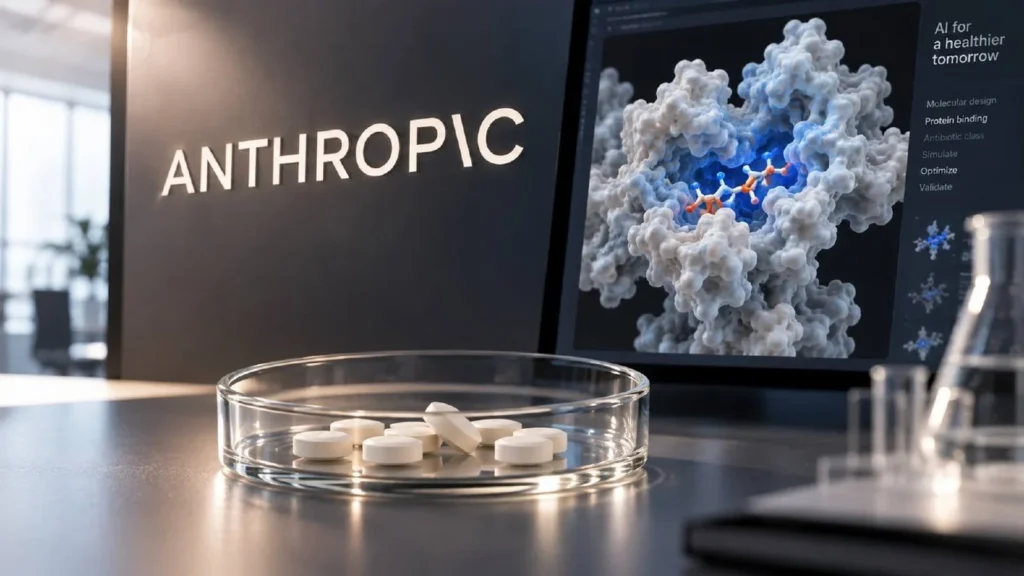
Anthropic’s AI‑driven discovery platform could shorten the early‑stage research timeline by predicting molecular interactions and optimizing lead compounds in silico. If the company can demonstrate that its computational methods reduce the typical 3‑5 year pre‑clinical phase to under two years, regulators may view the approach favorably, especially given the WHO’s call for innovative solutions to AMR.
Competitive advantages and pressure points
The primary competitive advantage lies in Anthropic’s ability to apply large‑scale transformer models to protein‑folding and ligand‑binding predictions—capabilities that have traditionally been the domain of specialized biotech firms. By integrating AI at the earliest stages of drug design, Anthropic could generate a larger pool of candidate molecules, increasing the probability of identifying a viable antibiotic.
Nevertheless, pressure points remain. Established biotech companies such as GSK and Merck have deep pipelines and extensive clinical experience, which could outpace a newcomer in later‑stage development. Moreover, the AI‑centric approach may raise skepticism among investors who question whether computational predictions can reliably translate into clinically effective drugs. The lack of a track record in biotech could also affect the pricing of the IPO, as underwriters may discount the offering to account for execution risk.
Counter‑arguments and risk assessment
Critics argue that the rumor of an antibiotic breakthrough may be a narrative device to inflate Anthropic’s valuation ahead of the IPO. The wire report does not provide concrete data on the drug’s mechanism of action, pre‑clinical efficacy, or safety profile. Without peer‑reviewed publications or regulatory filings, the claim remains speculative.
Another risk stems from the broader market environment. In 2026, biotech IPOs have faced heightened scrutiny due to recent high‑profile failures in gene‑therapy trials. Investors may demand more evidence before committing capital to a dual‑focus company that straddles AI and drug discovery. Additionally, the global supply chain for antibiotic manufacturing is still recovering from pandemic‑induced disruptions, which could delay scale‑up even if the drug proves effective.
Implications for stakeholders
If Anthropic proceeds with the announcement as reported, several stakeholder groups will be affected. For investors, the added biotech angle could diversify risk but also introduce valuation volatility tied to clinical milestones. For the scientific community, a successful AI‑driven antibiotic could validate computational drug design as a viable pathway for addressing AMR, potentially spurring further investment in similar platforms.
Regulators may view the move as an opportunity to collaborate with a tech‑savvy firm on novel approval frameworks, especially if Anthropic shares its AI models and data pipelines. Finally, patients suffering from MDR infections could benefit from a new therapeutic class, assuming the drug advances through trials and reaches the market.
In sum, the rumored antibiotic discovery positions Anthropic at a crossroads between AI innovation and biotech impact. The strategic timing of the announcement—aligned with the upcoming IPO—suggests a deliberate effort to reshape the company’s narrative and attract a broader investor base. While the potential upside is significant, the lack of concrete data and the inherent challenges of drug development temper expectations. Stakeholders will need to monitor forthcoming filings, pre‑clinical results, and regulatory communications to assess whether the promise translates into measurable outcomes.
Reporting transparency