Tesla teases October 1 Roadster reveal, eyes halo boost
Tesla plans to unveil the second‑generation Roadster on Oct 1 2026, positioning the hypercar as a flagship to boost brand prestige. The reveal could pressure rivals and test consumer appetite for ultra‑high‑performance EVs.
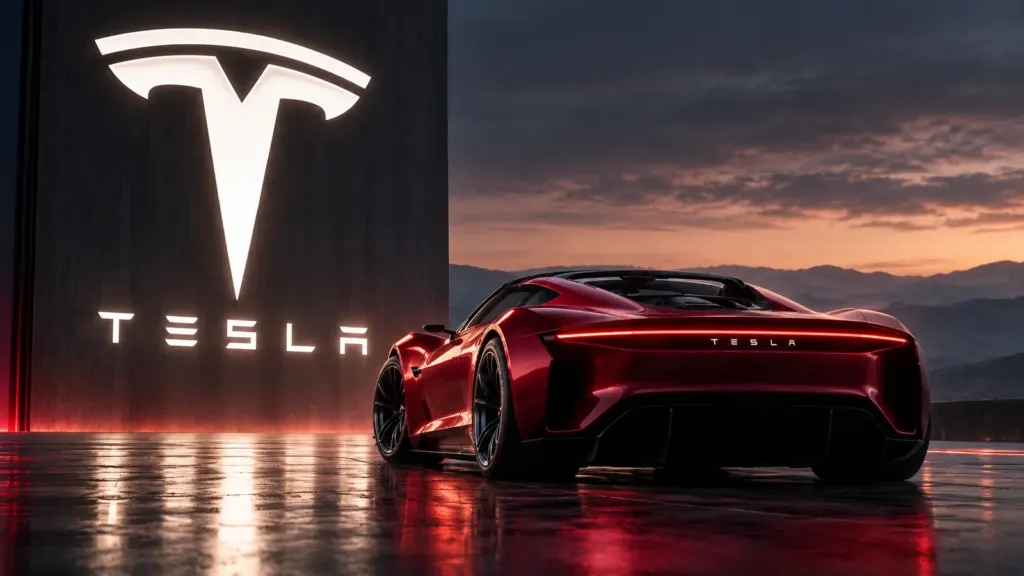
On Friday, Tesla posted a stark teaser image that reads “Go for launch” over a silhouette of its upcoming electric hypercar, with the date “10.01” emblazoned across the frame. The visual cue marks the company’s first public hint that it will unveil the second‑generation Roadster on October 1, nine years after the original prototype first appeared in 2017. The original Roadster, announced in November 2017, was positioned as a halo vehicle meant to showcase the performance potential of electric drivetrains. The new teaser suggests that Tesla intends to repeat that strategy, using the Roadster to reinforce its brand narrative and to signal technical progress.
The strategic thesis underlying the upcoming reveal is clear: the Roadster functions as a halo product that elevates Tesla’s overall portfolio, attracts affluent buyers, and creates aspirational pull for its more mainstream models. By delivering a vehicle that promises sub‑2‑second 0‑60 times and a top speed exceeding 250 mph—claims that have circulated in prior speculation—Tesla can reinforce its reputation for pushing the limits of electric performance. The halo effect also serves a financing purpose; high‑margin, low‑volume models generate cash flow that can subsidize the scaling of mass‑market platforms such as Model Y and the forthcoming Cybertruck.
Market dynamics reinforce the timing of the tease. Global electric‑vehicle registrations have risen to over 15 million units in 2025, and premium EV sales now account for roughly 12 % of that total. Competitors such as Porsche (Taycan), Lucid (Air), and Rivian (R1S) have all introduced high‑performance models that challenge Tesla’s dominance in the luxury segment. The Roadster’s launch could therefore be read as a pre‑emptive move to re‑assert Tesla’s leadership in performance‑oriented EVs before rivals expand their own high‑speed offerings.
Market context and competitive landscape
Within the premium EV niche, battery energy density and power‑train efficiency remain decisive factors. Tesla’s vertical integration of battery production—through its Megafactory network—offers a potential cost advantage, while its proprietary software stack provides over‑the‑air performance tuning that rivals cannot match. The company’s Supercharger ecosystem further differentiates the Roadster, promising fast‑charging capabilities that could reduce range‑anxiety for owners of a vehicle whose advertised 620‑mile range would otherwise be a headline claim.
Nevertheless, the Roadster faces pressure points that could blunt its impact. Pricing has never been disclosed, but prior statements suggested a base price north of $200,000, placing it in a niche where buyer expectations for build quality and after‑sales support are exacting. Production capacity is another variable; Tesla’s history of delayed rollouts—most notably the original Roadster’s postponement from a 2020 target to an indefinite timeline—creates uncertainty about whether the new model will reach customers on schedule. Moreover, the broader market is seeing a shift toward electric SUVs, a segment that commands higher volumes than low‑volume sports cars.
Despite these challenges, the Roadster’s launch could generate tangible benefits for Tesla’s ecosystem. A successful reveal that delivers credible performance numbers would likely stimulate pre‑orders for the vehicle, providing early cash inflow. The publicity surrounding a high‑profile hypercar also tends to lift brand perception, which can translate into increased demand for Tesla’s more affordable models. Additionally, any new battery chemistry or thermal‑management technology demonstrated on the Roadster could trickle down to the company’s mass‑market lineup, improving range and charging speed across the board.
The strongest counter‑argument rests on the risk of further delays eroding credibility. Tesla’s pattern of announcing ambitious timelines—such as the 2020 Roadster launch that never materialized—has cultivated skepticism among analysts and consumers. If the October 1 event fails to deliver concrete specifications or a clear production roadmap, the halo effect could reverse, casting doubt on Tesla’s ability to execute on high‑performance promises. Competitors could exploit this gap by accelerating their own performance‑focused releases, thereby narrowing the perceived advantage Tesla hopes to claim.
Ultimately, the October 1 reveal serves as a litmus test for Tesla’s halo strategy. The event will be the first public source of performance metrics, pricing, and production cadence for the second‑generation Roadster. Observers should monitor three concrete indicators: the announced 0‑60 mph acceleration figure, the disclosed base price, and the stated start‑of‑production timeline. These data points will determine whether the Roadster can function as a genuine brand amplifier or merely a promotional placeholder.