
Intel Unveils Crescent Island: Liquid‑Cooled AI Accelerator Hits 480GB
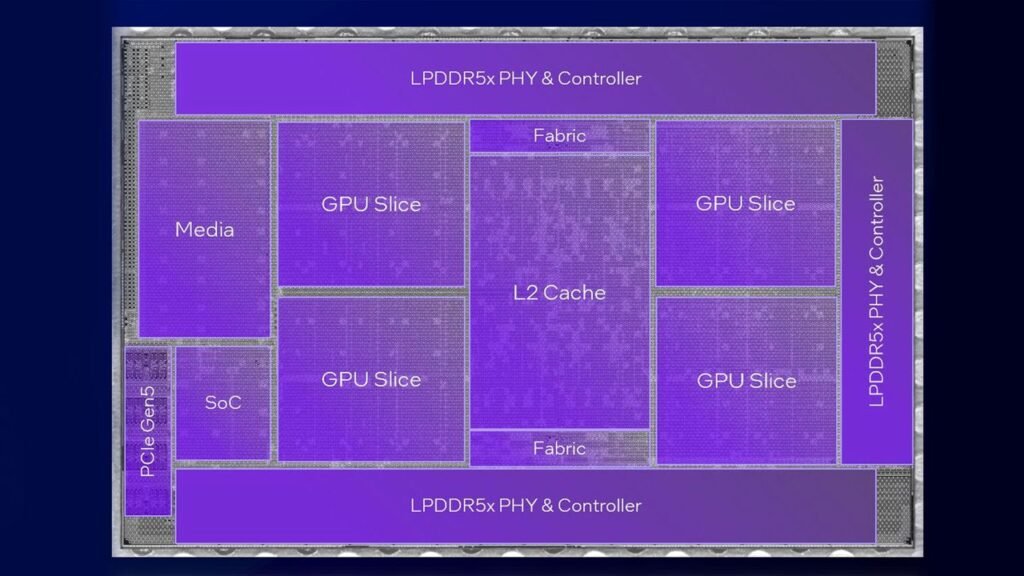
At Hot Chips 2026, Intel rolled out its liquid‑cooled Crescent Island accelerator, packing 480GB of HBM4 memory into a 350‑W design. The Xe3P architecture promises new benchmarks for inference‑centric AI.
The Xe3P Revolution
Intel’s latest AI chip, dubbed Crescent Island, is built on the company’s next‑generation Xe3P architecture. The design marks a pivot toward inference workloads, a shift that aligns with the growing demand for real‑time AI in data‑center environments. Unlike the broader Xe architecture that powers both graphics and compute, Xe3P is tightly coupled with AI primitives, allowing for deeper XMX engines that accelerate matrix‑vector operations.
Liquid Cooling and HBM4
One of the most eye‑catching aspects of Crescent Island is its liquid‑cooled silicon package. Intel claims the cooling solution keeps the die temperature below 70°C under full load, a critical factor for sustaining sustained inference throughput. Paired with high‑bandwidth memory, the accelerator boasts a staggering 480 GB of HBM4. The memory is integrated directly onto the die, reducing latency and providing the bandwidth required for large‑scale transformer models.
Power Efficiency Breakthrough
Efficiency is the name of the game. Crescent Island achieves its 480 GB memory capacity while consuming just 350 W, a dramatic improvement over previous inference engines. The combination of deeper XMX cores and a refined power delivery network means the chip can deliver higher FLOPS per watt, a metric that data‑center operators obsess over. The result is a design that can fit into existing 2U racks without adding significant cooling overhead.
Competitive Landscape
While Intel’s announcement dominated the session, it was not the only highlight. SambaNova’s SN50 RDU was also showcased, featuring a custom RDU architecture aimed at low‑latency inference. However, the SN50’s memory and power figures were not disclosed during the presentation, making direct comparisons difficult. Still, the industry buzz suggests that SN50 targets a slightly different niche, focusing on edge‑to‑cloud workflows rather than large‑scale data‑center inference.
What It Means for Data Centers
For operators, the Crescent Island chip promises a clear upgrade path. The liquid‑cooled design can be integrated into existing data‑center infrastructure with minimal modifications. The 480 GB memory pool means that a single node can handle multiple transformer instances without off‑loading to host RAM, cutting down on I/O bottlenecks. Moreover, the 350 W power envelope keeps the total cost of ownership in check, especially when compared to GPUs that often exceed 500 W for similar workloads.
| Feature | Crescent Island | SN50 RDU |
|---|---|---|
| HBM4 Memory | 480 GB | Data not disclosed |
| Power Consumption | 350 W | Data not disclosed |
| Architecture | Xe3P (AI‑centric XMX) | Custom RDU |
Tech Tabloid Desk
Editorial & Intelligence DeskThe Tech Tabloid Editorial Desk delivers breaking scoops, architectural deep-dives, hardware benchmarks, and verified analysis across artificial intelligence, semiconductors, cybersecurity, and global venture capital.