
U.S. Barriers Stall Chinese Drones, Yet Production Soars
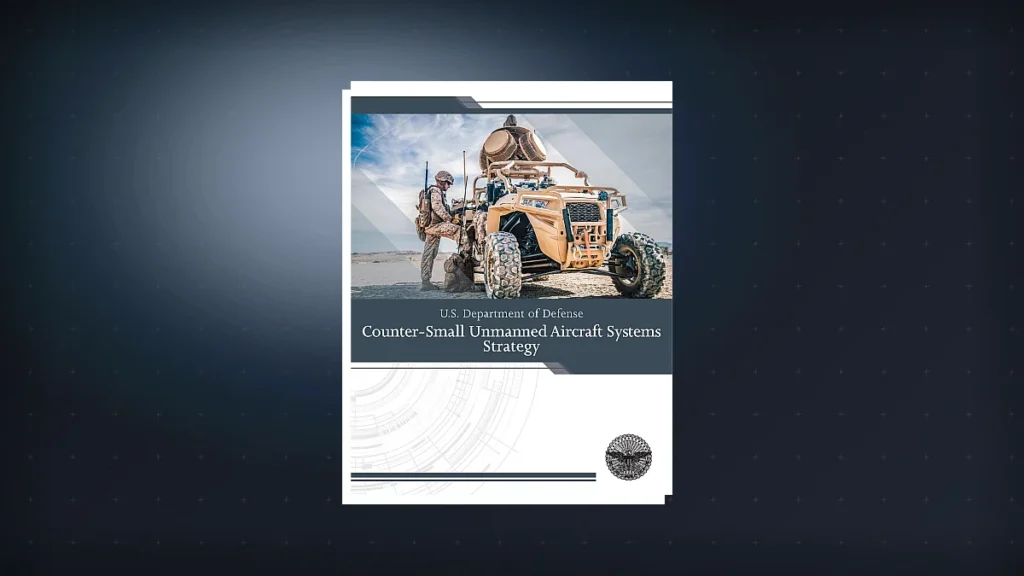
U.S. export controls are choking Chinese drones and robots, yet China's sheer production capacity means the market simply shifts, keeping the tech race alive.
The New U.S. Export Shield
In the last two years the United States has expanded its Entity List and added a dozen Chinese drone and robotics firms to a tightening web of export controls. The policy aims to block critical components—semiconductors, AI chips, and high‑precision sensors—from reaching manufacturers deemed a national‑security risk. By mid‑2026 the list includes DJI’s industrial arm, Autel Robotics, and several lesser‑known AI‑driven robot startups.
How the barriers work
American firms must obtain a license before selling any component that falls under the Commerce Control List to listed entities. The Bureau of Industry and Security (BIS) has also mandated that U.S. foundries halt wafer shipments for AI‑accelerated vision processors used in autonomous navigation. The ripple effect is a supply‑chain choke that forces Chinese OEMs to source from non‑U.S. fabs or redesign around restricted IP.
China’s Manufacturing Juggernaut
Even as the United States builds walls, Chinese factories keep churning. According to IDC, Chinese drone manufacturers collectively shipped roughly five million units in 2025, a mix of consumer quadcopters and enterprise‑grade platforms. The same year, the International Federation of Robotics reported that Chinese firms produced about 420,000 of the 600,000 industrial robots delivered worldwide—roughly 70 % of the market.
Scale over sophistication
China’s advantage is not a single breakthrough chip but the ability to mass‑produce at volumes that dwarf U.S. competitors. Companies like DJI have diversified supply chains, moving critical silicon purchases to Taiwan and South Korea, while leveraging domestic fabs for lower‑tier components. The result is a resilient ecosystem that can absorb U.S. restrictions without a single production line grinding to a halt.
What the Numbers Reveal
| Metric | U.S. Policy Impact | Chinese Production Reality |
|---|---|---|
| Listed firms | 12 (as of 2026) | ~150 active drone OEMs |
| Annual drone shipments | ~0.8 M (U.S.‑origin drones) | 5 M (China) |
| Industrial robot units | ~180 K (global, non‑Chinese) | 420 K (China) |
Implications for Developers and Enterprises
For software developers building AI vision stacks, the U.S. barrier forces a redesign of hardware dependencies. Many turn to alternative GPU vendors in Europe or to domestically produced ASICs that are not subject to export bans. Enterprises that rely on drone‑based inspection or warehouse automation face a choice: re‑engine solutions around non‑U.S. hardware or accept higher latency and cost from indirect supply routes.
Startups that once sourced cheap Chinese frames now negotiate longer lead times with Southeast Asian manufacturers. The net effect is a modest price uptick—averaging 8 % for mid‑range enterprise drones—but a significant shift in the geographic distribution of the supply chain.
Policy vs Production: The Real Battle
The clash is less about technology and more about scale. U.S. policymakers can block specific chips, but they cannot shrink the massive factories that pump out millions of airframes each year. As long as Chinese firms can replace a restricted component with a domestically sourced equivalent, the export‑control wall becomes a speed bump rather than a roadblock.
Analysts warn that the next phase may involve coordinated multilateral controls, targeting not just U.S. components but also allied semiconductor hubs. Until such a coalition forms, China’s manufacturing depth will keep the global drone and robotics market fluid, with the United States watching from the sidelines.
Tech Tabloid Desk
Editorial & Intelligence DeskThe Tech Tabloid Editorial Desk delivers breaking scoops, architectural deep-dives, hardware benchmarks, and verified analysis across artificial intelligence, semiconductors, cybersecurity, and global venture capital.