
OpenAI Strikes Back: Seeks Dismissal of Apple Trade‑Secret Lawsuit
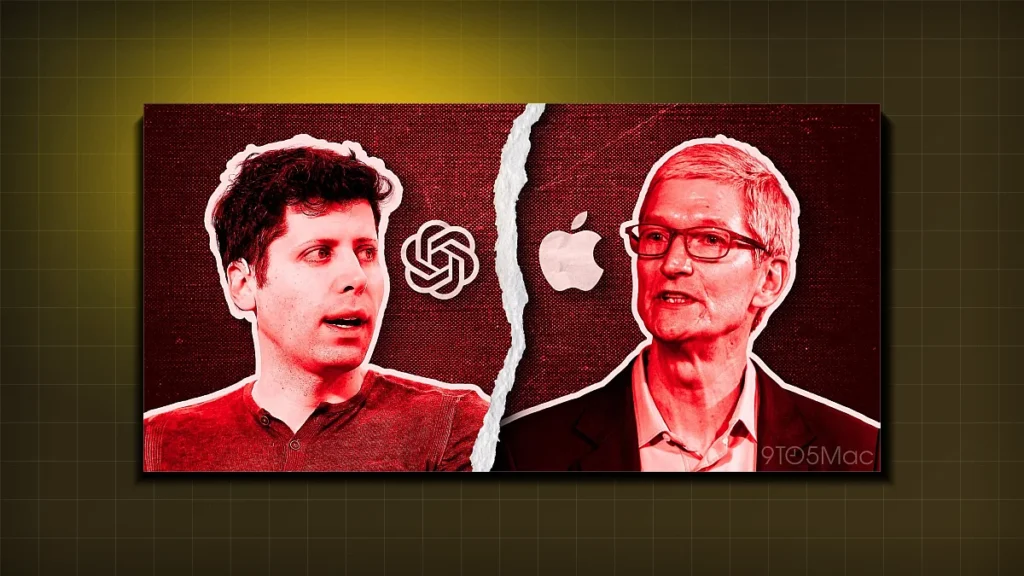
OpenAI has filed a new petition demanding that Apple’s trade‑secret lawsuit be tossed with prejudice, intensifying a legal showdown that could reshape AI‑industry litigation.
In a decisive legal maneuver filed this week, OpenAI, along with co‑defendants Chang Liu, Tang Tan, and io Products, renewed its push to have Apple’s trade‑secret misappropriation complaint dismissed with prejudice. The filing, lodged in the U.S. District Court for the Northern District of California, signals that OpenAI is not merely defending a single allegation but is aiming to end the case permanently.
Why the Lawsuit Matters Beyond Two Companies
Apple’s complaint alleges that OpenAI improperly accessed proprietary information related to Apple’s on‑device AI initiatives. If the case were to proceed, it could set a precedent for how large tech firms protect internal AI research and how third‑party AI providers interact with ecosystem partners.
Legal Anatomy: The Core Allegations
Apple’s filing accuses OpenAI of:
- Unauthorized access to Apple‑internal documentation describing next‑generation neural‑engine architectures.
- Reverse‑engineering of proprietary APIs that power Apple’s on‑device language models.
- Using the allegedly stolen insights to accelerate OpenAI’s own model training pipelines.
OpenAI counters that the data in question is publicly available through research papers, conference presentations, and open‑source repositories, and that any overlap is coincidental or stems from industry‑wide best practices.
Strategic Stakes for OpenAI
Beyond the immediate legal costs, a dismissal with prejudice would prevent Apple from re‑filing the same claim, effectively shielding OpenAI from a protracted courtroom battle that could distract engineers and delay product rollouts. The move also sends a signal to the broader AI ecosystem: that OpenAI intends to defend its research methodology aggressively.
Potential Ripple Effects
Should the court grant the dismissal, legal scholars predict a chilling effect on future trade‑secret suits in the AI space. Companies may become more cautious about asserting broad trade‑secret claims over technologies that are, by nature, incremental and collaborative. Conversely, a denial could embolden firms like Apple to pursue more aggressive litigation, prompting AI developers to tighten internal security protocols.
| Party | Allegation | Relief Sought |
|---|---|---|
| Apple | Misappropriation of proprietary AI research | Injunction & damages |
| OpenAI (et al.) | Dismissal of trade‑secret claim | Dismissal with prejudice |
Industry Reactions and Analyst Takeaways
While the filing itself contains no direct quotes, industry observers note that the timing aligns with OpenAI’s recent rollout of its next‑generation multimodal model, which leverages on‑device acceleration—a capability Apple is also racing to perfect. Analysts caution that the legal battle could become a proxy war over who controls the next wave of edge‑AI computing.
Developer Community Perspective
Open‑source contributors and independent developers have expressed concern that high‑profile lawsuits may stifle collaborative research. Forums such as Hacker News and the AI Alignment subreddit have been buzzing with speculation about how the case could influence open‑source licensing and data‑sharing norms.
In the absence of a court ruling, both companies are likely to continue their parallel tracks: Apple will double down on its on‑device AI stack, while OpenAI will push its cloud‑centric services forward, leveraging the legal shield it hopes to secure.
Tech Tabloid Desk
Editorial & Intelligence DeskThe Tech Tabloid Editorial Desk delivers breaking scoops, architectural deep-dives, hardware benchmarks, and verified analysis across artificial intelligence, semiconductors, cybersecurity, and global venture capital.