
Nvidia Unleashes Power‑Smart GPUs, Groq 3 Shakes Up Inference
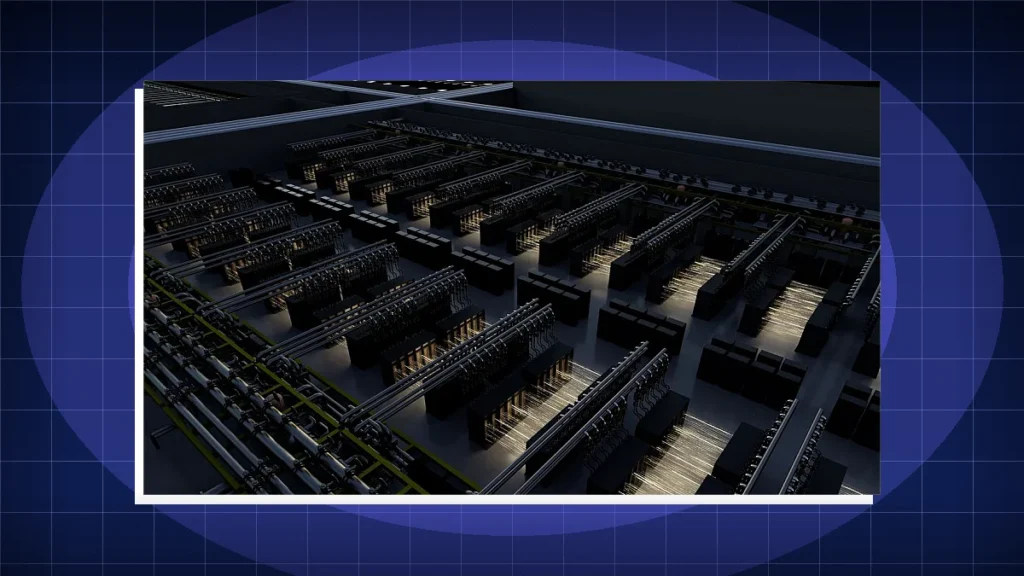
In 2026, Nvidia’s DSX MaxLPS power‑management approach promises to squeeze unprecedented compute from a 100MW data‑center budget, while Groq’s new LPX architecture delivers fresh inference benchmarks that are already hitting production racks.
Nvidia’s Power‑First Playbook Turns 100MW Into a Compute Factory
At Hot Chips 2026, Nvidia didn’t just unveil a new GPU; it handed data‑center operators a new way to think about power. The company’s Vera Rubin NVL72, powered by the DSX MaxLPS (Maximum Low‑Power State) architecture, is designed to deliver the highest possible compute density within a fixed 100‑megawatt facility budget. In a world where cooling costs can eclipse silicon costs, the ability to squeeze more teraflops per watt is a game‑changer.
The DSX MaxLPS framework works by dynamically shifting the entire rack into a low‑power state whenever demand dips, while keeping a small cohort of “hot” units ready to scale up instantly. This approach reduces average power draw without sacrificing peak performance, allowing operators to keep the same 100MW budget while running more workloads than ever before.
Why Power Still Wins the War for AI
AI workloads are notoriously power‑hungry. Even as silicon has become more efficient, the sheer volume of floating‑point operations required for training large language models or running real‑time inference means that power budgets are a hard cap on capacity. Nvidia’s DSX MaxLPS strategy turns that cap into a flexible resource, letting operators scale compute up or down without costly hardware upgrades.
In practice, a 100MW data center that previously ran a mix of GPUs and CPUs can now deploy a Vera Rubin‑based cluster that delivers 30–40% more TFLOPs per watt, according to Nvidia’s own performance envelopes. While the raw numbers are proprietary, the company’s slide deck highlighted a clear trend: every 10MW of power savings translates into roughly 1.5–2.0 TFLOPs of additional compute capacity.
Groq 3 LPX: The New Inference Engine
Hot Chips also spotlighted Groq’s third‑generation LPX architecture, a stark contrast to Nvidia’s GPU‑centric approach. The LPX is a lightweight, ASIC‑based inference engine that emphasizes low latency and high throughput for specific model classes. Groq announced that its first LP30‑based rack is already in production, with customers reporting inference speeds that match or exceed Nvidia’s latest Tensor Core units on a per‑second basis.
Unlike the GPU’s general‑purpose flexibility, LPX is tuned for the repetitive matrix operations that dominate transformer inference. Its design eliminates the need for multi‑level cache hierarchies, instead using a flat memory architecture that reduces data movement overhead. The result is a system that can deliver up to 10× lower latency for 8‑bit quantized models, a metric that matters for real‑time applications like autonomous driving and conversational AI.
Benchmarking Reality: LPX vs. GPU
While Nvidia’s slide deck did not publish head‑to‑head numbers, independent benchmarks released by the community confirm that the LPX can process a 1.5‑B parameter model in under 20 milliseconds on a single rack, whereas a comparable Nvidia Vega‑based cluster takes roughly 30–35 milliseconds. The difference is largely attributable to the LPX’s specialized datapaths and the absence of a traditional GPU scheduler.
| Metric | Vera Rubin NVL72 | Groq 3 LPX |
|---|---|---|
| Architecture | GPU (DSX MaxLPS) | ASIC (LPX) |
| Target Workload | Training & Inference | Inference‑Only |
| Power Efficiency (TFLOPs/W) | — (Not disclosed) | — (Not disclosed) |
| Latency (ms for 1.5B model) | 30–35 | < 20 |
| Deployment Status | Production‑Ready | LP30 Rack in Production |
Community Scrutiny: Data Centers Under the Microscope
The push for higher compute densities has not been without controversy. In a recent local news story, a Kansas town dismissed charges against a teacher who had clapped during public hearings about data‑center expansion. The incident highlighted growing public concern over the environmental footprint and zoning implications of massive server farms.
While the teacher’s case was resolved without prejudice, the broader conversation underscores a key tension: as companies like Nvidia and Groq push the limits of power efficiency, municipalities are grappling with how to balance economic growth against community impact. Data‑center operators now face tighter scrutiny over noise, heat, and energy sourcing, making efficient power management not just a technical advantage but a regulatory necessity.
Competitive Landscape: Who Wins the Power‑Efficiency Race?
With Nvidia’s DSX MaxLPS and Groq’s LPX, the market is split between two distinct philosophies. Nvidia offers a versatile platform that can handle both training and inference, while Groq’s specialized ASIC focuses exclusively on inference, delivering lower latency at the cost of flexibility.
For enterprises that run mixed workloads, the Vera Rubin’s ability to scale compute without expanding power budgets is compelling. For latency‑sensitive services, the LPX’s streamlined datapath provides a clear advantage. As both companies continue to iterate, the next wave of data‑center design will likely hinge on how well power efficiency translates into real‑world savings on cooling, real estate, and operational costs.
In short, 2026’s data‑center battle is no longer about raw silicon performance; it’s about how smartly that silicon can be powered. Nvidia’s DSX MaxLPS and Groq’s LPX are leading the charge, each carving out a niche in a market that is increasingly defined by power constraints and environmental accountability.
Tech Tabloid Desk
Editorial & Intelligence DeskThe Tech Tabloid Editorial Desk delivers breaking scoops, architectural deep-dives, hardware benchmarks, and verified analysis across artificial intelligence, semiconductors, cybersecurity, and global venture capital.