
Kansas Teacher’s Clap Sparks Data‑Center Debate, Charges Dropped
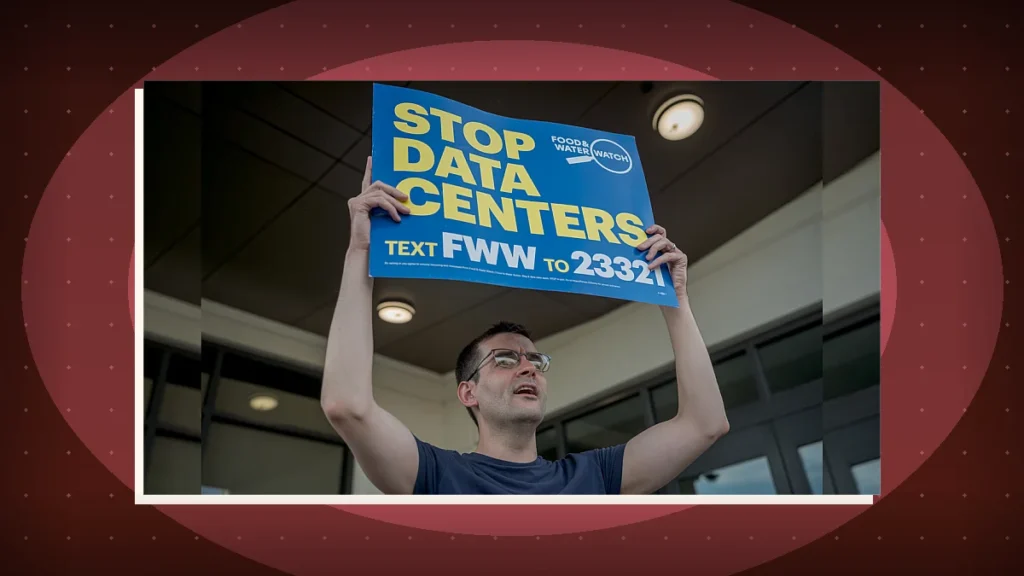
Teacher Lux Claridge was arrested for a single clap during a public hearing on a new data center, but the city dismissed the disorderly conduct charge without prejudice, spotlighting the clash between tech infrastructure and local voices.
When Lux Claridge, a high‑school computer science teacher in a small Kansas town, clapped during a municipal hearing on a proposed data‑center project, the sound of applause turned into a courtroom echo. The city’s municipal court filed a disorderly conduct charge, only to dismiss it weeks later “without prejudice” and forward the case to the county prosecutor. The episode has become a flashpoint in the broader conversation about how rapidly expanding data‑center infrastructure intersects with community governance.
From Clap to Courtroom: What Actually Happened
On June 12, 2026, the town council convened to discuss a 150‑acre data‑center campus slated for construction by a regional cloud provider. The agenda listed the project’s projected power draw—approximately 120 MW—and its promise of 1,200 new jobs. Residents were invited to voice concerns, and Claridge, who teaches networking fundamentals, stood up to ask a technical question about the facility’s cooling redundancy. After his question, he clapped to acknowledge the council’s response. A deputy sheriff, interpreting the applause as disruptive, placed Claridge under arrest for disorderly conduct.
Legal Mechanics: Dismissal “Without Prejudice”
Municipal court records show the charge was filed under Kansas Statute 21‑5601, which criminalizes “behaving in a disorderly manner” in public. On August 20, 2026, the city’s attorney filed a motion to dismiss, citing insufficient evidence that Claridge’s clap constituted a breach of peace. The dismissal “without prejudice” means the case can be re‑filed if new evidence emerges, and the file has been transferred to the Shawnee County District Attorney for review.
The Data‑Center Boom in the Heartland
Kansas has emerged as a magnet for data‑center developers thanks to its low electricity rates—averaging 6.2 cents per kilowatt‑hour in 2025—and abundant wind‑generated power. The state now hosts roughly 35 operational facilities, a 40 % increase from 2022. Each megawatt of capacity typically requires 1.2 MW of cooling infrastructure, translating to substantial water and land use.
Technical Footprint: Power, Cooling, and Latency
Modern hyperscale data centers rely on a three‑tier redundancy model (N+1) for power and cooling. A 120 MW facility like the one proposed in Claridge’s town would need:
- Four 30 MW diesel generators for backup power.
- Chilled water loops delivering up to 150 MW of thermal removal.
- Direct fiber connections delivering sub‑5‑ms latency to major Midwest internet exchange points.
| Metric | Typical Data Center | Average Commercial Building |
|---|---|---|
| Power Consumption | 100–150 MW | 0.5–2 MW |
| Cooling Load | 1.2× Power | 0.8× Power |
| Land Footprint | 150–200 acres | 5–10 acres |
Community Concerns: More Than Just Noise
Local activists argue that the promised economic benefits often mask externalities: increased strain on the regional grid, potential water scarcity for evaporative cooling, and the erosion of local decision‑making power. Claridge’s question highlighted the lack of publicly available redundancy schematics, a transparency gap that many municipalities face when negotiating with cloud giants.
Policy Landscape: Municipal Authority vs. State Incentives
Kansas law permits cities to offer tax abatements and expedited permitting for data‑center projects, yet state statutes limit the ability of local governments to impose environmental impact reviews. This tension creates a regulatory gray zone where developers can push forward with minimal local oversight, prompting civic pushback that sometimes manifests in symbolic gestures—like a single clap.
Implications of the Dismissal
The city’s decision to drop the charge, even without prejudice, sends a nuanced signal. On one hand, it acknowledges that the legal system should not be weaponized against peaceful expression. On the other, the open‑ended nature of the dismissal leaves room for future prosecution, potentially chilling community participation in future hearings.
Precedent for Tech‑Policy Engagement
Legal scholars note that similar cases in Texas (2023) and Oregon (2024) resulted in permanent dismissals, reinforcing the principle that civic engagement—even in the form of applause—remains protected speech. Claridge’s case could become a reference point for municipalities across the Midwest that are grappling with the rapid rollout of edge‑computing hubs.
Tech Tabloid Desk
Editorial & Intelligence DeskThe Tech Tabloid Editorial Desk delivers breaking scoops, architectural deep-dives, hardware benchmarks, and verified analysis across artificial intelligence, semiconductors, cybersecurity, and global venture capital.