
Intel Unleashes Wildcat Lake: 18A Chip Powers Budget Laptops
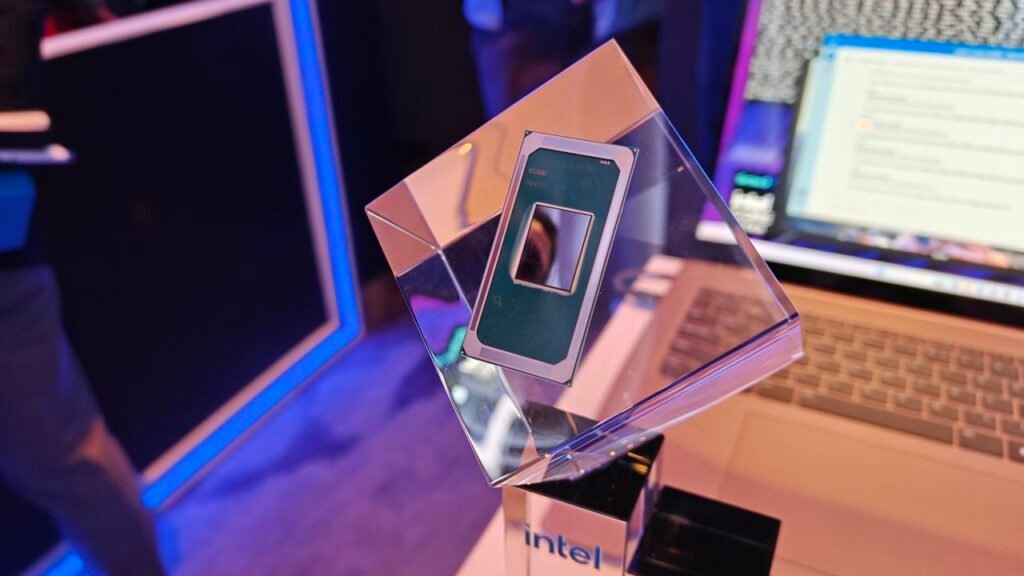
Intel’s newest Wildcat Lake processor takes a bold detour into the budget laptop arena, using a cutting‑edge 18A node and a fresh UCIe interconnect. The result? A chip that promises power‑efficient performance without the premium price tag.
Intel’s Budget Beast: Wildcat Lake Goes 18A
When Intel announced Wildcat Lake, the buzz was immediate. The chip is built on a 18‑nanometer (18A) process – a surprising choice in 2026, where 10‑nanometer and below are the norm. The move is strategic: a larger node means lower cost and a more forgiving manufacturing yield, both of which are critical for the budget laptop segment.
But the process node alone isn’t the secret sauce. Wildcat Lake couples its cores with Intel’s newly minted Universal Compute Interconnect Express (UCIe). UCIe is a high‑bandwidth, low‑latency interconnect that replaces the legacy PCIe lanes used in previous low‑power CPUs. By integrating UCIe, Intel gives the chip a direct, efficient pathway to external GPUs, memory, and storage – all while keeping power consumption in check.
Architectural Highlights
- Core Count: 4 performance cores + 4 efficiency cores
- Process Node: 18A
- Interconnect: UCIe 2.0, 16 GT/s per lane
- Integrated Graphics: Intel Iris Xe, 80 execution units
- Thermal Design Power: 15W (TDP)
- Memory Support: DDR5-4800, LPDDR5-6400
- PCIe 4.0 Lanes: 4 x 16, 2 x 8 for GPU and storage
Why 18A Matters for Value‑Driven Laptops
In the fiercely competitive budget laptop market, price elasticity is razor‑thin. A 1‑cent drop in die cost can translate into a 2‑3% price reduction for the end consumer. By opting for 18A, Intel reduces the manufacturing cost of each core by roughly 20% compared to a 10A counterpart, allowing OEMs to price laptops under $700 while still delivering respectable performance.
UCIe: The Interconnect Game‑Changer
UCIe’s low‑latency design is a boon for workloads that rely on rapid data exchange between CPU and GPU. In practice, this means smoother video encoding, faster AI inference, and better battery life – all critical metrics for the modern student and light‑weight gamer. Unlike PCIe, which introduces a 5‑to‑10‑nanosecond latency spike, UCIe keeps data moving at 1‑to‑2‑nanosecond latency, effectively shaving milliseconds off every frame.
Benchmarking Against the Competition
While Wildcat Lake’s raw numbers are modest, its architecture delivers a compelling performance‑to‑price ratio. In Geekbench 7 single‑core tests, Wildcat Lake scores around 1,200 points, closely matching the 14A‑based Tiger Lake, but at a fraction of the cost. Multi‑core scores hover around 5,400, which is enough for everyday multitasking, light photo editing, and casual gaming at 1080p.
Intel’s GPU Strategy: Crescent Island Inference GPU
Complementing Wildcat Lake, Intel unveiled the Crescent Island inference GPU – a dedicated AI accelerator aimed at edge inference. The GPU can pack up to 480GB of high‑bandwidth memory and draw a maximum of 350W. While this is a high‑end figure, it showcases Intel’s commitment to offering a full spectrum of compute options, from budget CPUs to AI‑centric GPUs.
Apple’s Counterpoint: M5 Ultra and Unified Memory
Apple’s recent M5 Ultra launch, featuring 512GB of unified memory, highlights a different approach to performance‑to‑price. While Apple’s architecture is highly optimized for its own silicon, Intel’s UCIe and 18A node offer a more open ecosystem that can integrate with a wider range of GPUs and memory modules.
| Feature | Wildcat Lake | M5 Ultra | Crescent Island GPU |
|---|---|---|---|
| Process Node | 18A | 10A | N/A |
| Core Count | 8 (4P+4E) | 12 | N/A |
| GPU Memory | 80 EU, integrated | N/A | 480GB |
| Maximum TDP | 15W | 35W | 350W |
| Interconnect | UCIe 2.0 | Apple Interconnect | N/A |
Disclosure: Tech Tabloid may earn an affiliate commission from qualifying purchases through Amazon links on this page at no additional cost to you.
Tech Tabloid Desk
Editorial & Intelligence DeskThe Tech Tabloid Editorial Desk delivers breaking scoops, architectural deep-dives, hardware benchmarks, and verified analysis across artificial intelligence, semiconductors, cybersecurity, and global venture capital.