
Homey Unveils Portal, the Smart‑Home Hub Apple Never Delivered
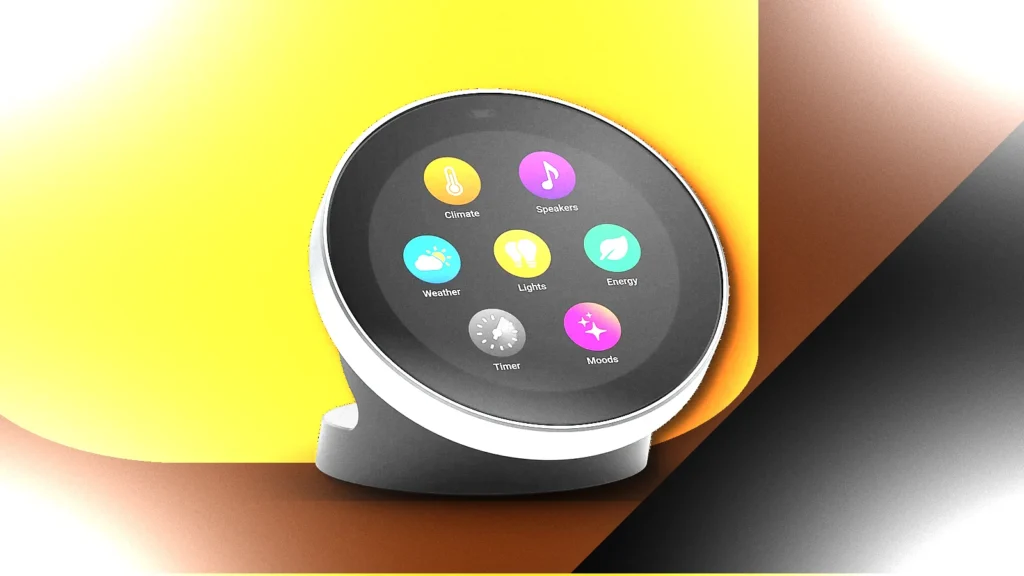
Homey’s new Portal arrives as a sleek, touchscreen hub that finally unifies fragmented smart‑home ecosystems—something Apple’s HomePod line has yet to achieve.
Why Homey’s Portal matters in a crowded smart‑home market
Smart‑home ecosystems have become paradoxically complex. A simple command such as “turn on the living‑room light” can trigger a cascade of automations, voice‑assistant handoffs, and protocol translations. Homey, the Dutch platform now owned by LG, addresses that friction with the Homey Portal, a 10.1‑inch touchscreen controller that consolidates voice, visual, and automation layers into a single pane.
Hardware that feels premium without breaking the bank
The Portal’s aluminum chassis, edge‑to‑edge glass, and 300 nits of brightness give it a flagship feel comparable to Apple’s HomePod mini, yet it ships at a modest $399. Under the hood sits an octa‑core ARM Cortex‑A78 processor paired with 4 GB of LPDDR5 RAM, delivering sub‑100 ms UI latency even when juggling dozens of active scenes.
One app to rule them all: the Homey OS
Homey’s proprietary OS runs on top of a Linux kernel, exposing a unified API that abstracts Zigbee, Z‑Wave, Matter, Wi‑Fi, and Bluetooth LE. Developers can create “Flows”—visual scripts that trigger actions across any protocol—without writing code. The Portal’s UI surfaces these flows in a drag‑and‑drop canvas, letting power users fine‑tune timing, conditions, and notifications.
Comparative spec sheet
| Feature | Homey Portal | Apple HomePod mini | Google Nest Hub (2nd Gen) |
|---|---|---|---|
| Display | 10.1″ LCD, 1280×800 | None (audio‑only) | 7″ LCD, 1024×600 |
| Processor | Octa‑core Cortex‑A78 | S5 chip | Quad‑core ARM Cortex‑A53 |
| RAM / Storage | 4 GB / 64 GB | 1 GB / 8 GB | 1 GB / 8 GB |
| Supported Protocols | Zigbee, Z‑Wave, Matter, Wi‑Fi, BLE | Matter, Wi‑Fi, BLE | Matter, Wi‑Fi, BLE |
| Price (USD) | $399 | $99 | $99 |
Real‑world utility: from bedroom to boardroom
Early adopters report that the Portal eliminates the need for three separate apps—Apple Home, Google Home, and a proprietary Zigbee hub. A single tap on the home screen can dim lights, lower blinds, and start a coffee maker, all while displaying a live weather widget and a calendar view. In office environments, the same device doubles as a meeting‑room scheduler, thanks to Homey’s built‑in calendar integration.
Strategic implications for Apple and Google
Apple’s HomePod line has focused on audio quality and Siri integration, deliberately avoiding a full‑screen interface. The Portal’s launch underscores a market gap: consumers crave a visual hub that can both display contextual data and act as a universal remote. Google’s Nest Hub already offers a screen, but its reliance on a single cloud ecosystem limits cross‑brand automation. Homey’s open‑source‑inspired approach forces both giants to reconsider how tightly they should lock users into proprietary protocols.
Developer ecosystem and future extensibility
Homey provides a public SDK that supports JavaScript, Python, and Node‑RED flows. The company announced a “Marketplace” where third‑party developers can sell premium Flow packs—think advanced security routines or AI‑driven energy‑saving algorithms. Because the Portal runs on a standard Linux stack, developers can also deploy containerized services directly on the device, opening the door to edge‑AI workloads.
Potential challenges and adoption hurdles
Price remains the biggest barrier. At $399, the Portal sits above most mainstream smart‑home hubs, and its premium hardware may deter budget‑conscious users who already own a Nest Hub or a cheap Echo Show. Additionally, Homey’s reliance on a proprietary cloud for OTA updates introduces a trust factor—enterprise customers will scrutinize data residency and privacy policies before scaling deployments.
Nevertheless, the Portal’s launch marks a decisive step toward a unified smart‑home experience that many analysts have long associated with Apple’s unfulfilled roadmap. By delivering a tactile, visual, and protocol‑agnostic hub, Homey positions itself as the de‑facto standard for households that refuse to settle for fragmented ecosystems.
Disclosure: Tech Tabloid may earn an affiliate commission from qualifying purchases through Amazon links on this page at no additional cost to you.
Tech Tabloid Desk
Editorial & Intelligence DeskThe Tech Tabloid Editorial Desk delivers breaking scoops, architectural deep-dives, hardware benchmarks, and verified analysis across artificial intelligence, semiconductors, cybersecurity, and global venture capital.