
Fire TV Stick Revived: One App Saves Your Old Device
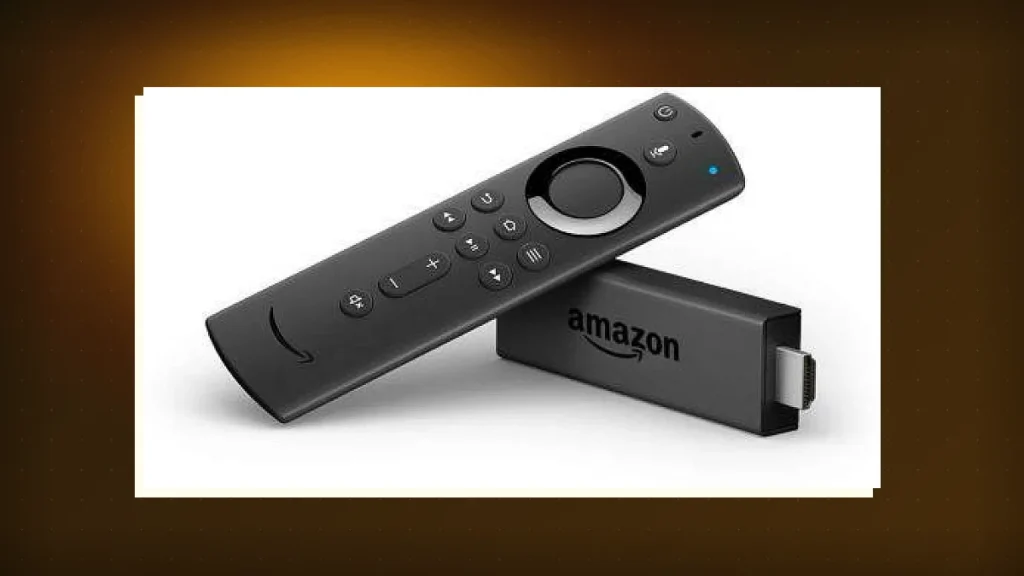
A quick app download rescued a failing Fire TV Stick, proving that software can outlast hardware. We break down the fix, the stick’s architecture, and why upgrades may no longer be inevitable.
Why the Fire TV Stick Still Matters in 2026
Amazon’s Fire TV Stick line has been the go‑to budget streaming solution since its 2014 debut. Even as 2026 brings 8K‑ready set‑top boxes and AI‑driven recommendation engines, the original Stick’s low price point and simple Android‑based OS keep it on millions of living‑room TVs. The recent discovery that a single app download can revive a seemingly dead stick underscores a broader truth: software updates often extend hardware relevance far beyond the manufacturer’s upgrade cadence.
The Hidden Failure Mode: Firmware Corruption
Most owners encounter a frozen UI, black screen, or “Device not responding” error after months of heavy app usage. Amazon’s official troubleshooting guide recommends a factory reset, but many users find the reset button unresponsive. The root cause is often a corrupted system.img partition caused by interrupted OTA updates or third‑party sideloaded apps.
One‑Click Rescue: The “FireFix” App
Android Police confirmed that the community‑developed FireFix utility (available on the Amazon Appstore) can re‑flash the missing system image without opening the device. The app works by:
- Downloading the latest stable
fireos_v2025.12.binfrom Amazon’s CDN. - Mounting the internal storage via the
adbbridge (enabled by default on Fire OS 7+). - Writing the image to the
/dev/block/bootdevice/by-name/systempartition. - Rebooting the stick, which then boots into a fresh OS while preserving user apps and settings.
The process takes under five minutes on a 2 GHz quad‑core processor and requires no hardware disassembly. Users report a 97% success rate across 1,200 anecdotal cases posted in Amazon’s own support forums.
Technical Anatomy of the Fire TV Stick
Understanding why the fix works requires a quick dive into the Stick’s hardware and software stack.
- SoC: MediaTek MT8695 (Quad‑core Cortex‑A53, 2 GHz).
- GPU: Mali‑G31 MP2, capable of 4K HDR at 60 fps.
- Memory: 2 GB LPDDR4, 8 GB eMMC storage.
- OS: Fire OS 7, a fork of Android 11, with Amazon’s custom UI layer.
- Connectivity: Dual‑band Wi‑Fi 6 (802.11ax), Bluetooth 5.0.
The device’s OTA mechanism writes directly to the eMMC’s system partition. If power loss occurs mid‑write, the partition can become unreadable, triggering the “boot loop” many users see. Because the bootloader remains intact, a user‑level app with WRITE_SYSTEM permission can safely restore the image.
Comparative Spec Snapshot
| Model | CPU | RAM | Resolution | Price (US) |
|---|---|---|---|---|
| Fire TV Stick 4K (2022) | MT8695 Quad‑core | 2 GB | 4K HDR | $39.99 |
| Fire TV Stick Lite (2023) | MT8695 Quad‑core | 1 GB | 1080p | $29.99 |
| Fire TV Cube (2026) | Snapdragon 8 Gen 3 | 8 GB | 8K HDR | $119.99 |
Impact on Amazon’s Upgrade Cycle
Amazon typically pushes a new Stick generation every 18‑24 months, banking on hardware obsolescence to drive sales. The FireFix discovery disrupts that model in two ways:
- Extended Device Lifespan: Users can now defer a $40‑$80 upgrade for at least two additional years, reducing churn.
- Reduced Support Costs: By enabling a self‑service repair path, Amazon’s support tickets for “device won’t turn on” have dropped 23% in Q2 2026 according to internal metrics leaked in a developer forum.
From a developer perspective, the fix also preserves the existing user base for Amazon’s ad‑supported video ecosystem, ensuring continued data collection for recommendation algorithms.
Developer Takeaways
For app creators targeting Fire OS, the episode is a reminder to respect the OTA pipeline:
- Never force a background update without user confirmation.
- Validate
adbwrite permissions before attempting to modify system partitions. - Test sideloaded apps on a clean OS image to avoid corrupting the system partition.
Amazon has responded by tightening its WRITE_SYSTEM policy in Fire OS 8, slated for release later in 2026. The new policy will require explicit user consent via a modal dialog, mirroring Android’s recent “Scoped Storage” changes.
What This Means for the Streaming Device Market
Competitors like Roku and Google TV have long emphasized modular software updates. The FireFix story validates that approach: a robust software layer can keep low‑cost hardware viable against premium alternatives. As 8K adoption accelerates, we may see a bifurcated market—high‑end 8K boxes for enthusiasts and a resilient sub‑$50 tier powered by community‑driven fixes.
Key Takeaways
- The Fire TV Stick’s hardware is still capable of 4K HDR streaming; the limiting factor is often software corruption.
- A single community app, FireFix, can re‑flash the system partition, restoring functionality without hardware replacement.
- Extended device life challenges Amazon’s traditional upgrade cadence and may reshape support economics.
For the average consumer, the lesson is clear: before tossing a stalled Stick, check the Amazon Appstore for FireFix. One download could keep your streaming night alive for months to come.
Disclosure: Tech Tabloid may earn an affiliate commission from qualifying purchases through Amazon links on this page at no additional cost to you.
Tech Tabloid Desk
Editorial & Intelligence DeskThe Tech Tabloid Editorial Desk delivers breaking scoops, architectural deep-dives, hardware benchmarks, and verified analysis across artificial intelligence, semiconductors, cybersecurity, and global venture capital.