
Dreame’s Rocket Car Dream Crashes After Funding Vanishes
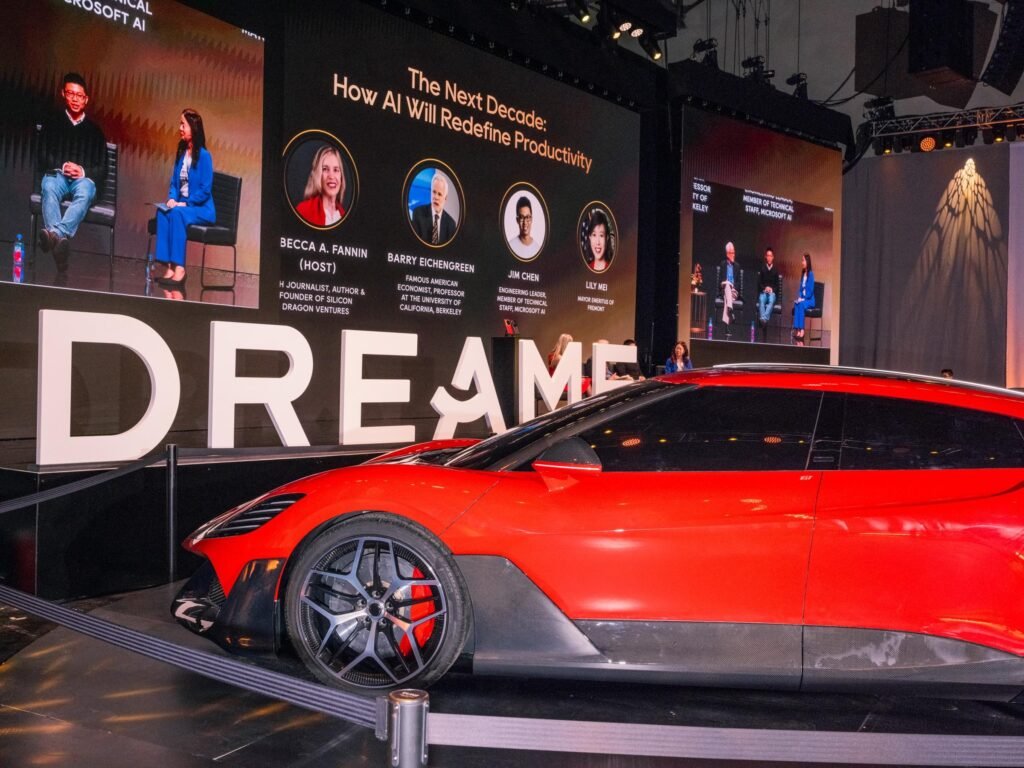
Dreame’s ambitious rocket‑powered car project is dead after government funding dried up, leaving only a handful of staff behind. The collapse underscores the volatility of high‑risk tech ventures in China’s automotive scene.
From Vacuum to Velocity: Dreame’s Bold Leap
Dreame, best known for its consumer vacuum robots, set its sights on the skies—literally—by launching an automotive venture called Project Starry Sky. The company’s goal was to build a rocket‑powered supercar that could break speed records while showcasing cutting‑edge propulsion technology. The ambition was clear: turn a household‑cleaning brand into a global tech powerhouse.
Project Starry Sky: Numbers That Tell a Story
The numbers paint a stark picture. At its peak, Project Starry Sky employed more than a thousand engineers, designers, and support staff. Today, only a handful of legal and human‑resources personnel remain on the payroll, tasked with winding down the division and managing the legal fallout.
Why the Rocket Dream Fell Flat
According to CarNewsChina, the project’s funding came primarily from a government grant aimed at fostering high‑tech innovation in the automotive sector. As the grant period expired and the state shifted its focus toward electric vehicle (EV) subsidies, the financial lifeline that powered Starry Sky evaporated. Without continued capital, the company could no longer sustain the high‑cost research and development required for a rocket‑powered platform.
Industry analysts note that rocket propulsion for road‑legal vehicles is an exceptionally niche niche, demanding not only extraordinary engineering but also regulatory clearance. The combination of limited market demand and the absence of a robust funding stream made the project unsustainable.
Technical Vision vs. Market Reality
While the public never saw a prototype, leaked design documents suggest that the vehicle would have relied on a small solid‑fuel rocket motor mounted behind a carbon‑fiber chassis. Engineers aimed for a top speed of 300 mph and a range of roughly 200 miles on a single charge, leveraging an advanced battery pack to power auxiliary systems. The concept also promised autonomous driving capabilities, integrating LIDAR and AI‑based perception modules that Dreame had been developing for its vacuum line.
However, the technical hurdles were immense. Solid‑fuel rockets require precise ignition control and safety protocols that are difficult to manage in a consumer‑grade vehicle. Moreover, the weight penalty of rocket components would have severely limited payload capacity and overall efficiency.
Competitive Landscape: A Rocket Car’s Place Among Supercars
When compared to existing hypercars such as the Bugatti Chiron or the Rimac C_Two, the proposed Dreame model would have been a radical departure. While those vehicles rely on high‑output internal combustion engines or electric motors, Dreame’s rocket propulsion would have set a new benchmark for acceleration. Yet, the market for such niche performance vehicles is already saturated, and consumer demand favors sustainable propulsion over sheer speed.
In a recent discussion on TorqueCafe, automotive enthusiasts noted that the absence of a proven prototype made it difficult for Dreame to secure partnerships or pre‑orders. Without a demonstrable product, investors and suppliers were reluctant to commit additional resources.
Implications for Chinese Tech and the Automotive Ecosystem
- Government funding models for high‑tech ventures are highly contingent on policy priorities.
- Cross‑industry diversification carries significant risk when core competencies are not fully aligned.
- Technological ambition must be matched with a realistic go‑to‑market strategy.
The collapse of Project Starry Sky serves as a cautionary tale for Chinese startups seeking to leap from consumer electronics into automotive manufacturing. While the allure of creating a “rocket car” is undeniable, the practical challenges—regulatory, financial, and engineering—are formidable.
Disclosure: Tech Tabloid may earn an affiliate commission from qualifying purchases through Amazon links on this page at no additional cost to you.
Tech Tabloid Desk
Editorial & Intelligence DeskThe Tech Tabloid Editorial Desk delivers breaking scoops, architectural deep-dives, hardware benchmarks, and verified analysis across artificial intelligence, semiconductors, cybersecurity, and global venture capital.