
Modder Hacks DLSS 5 onto RTX 4090, Unlocking Ada Lovelace Upscaling
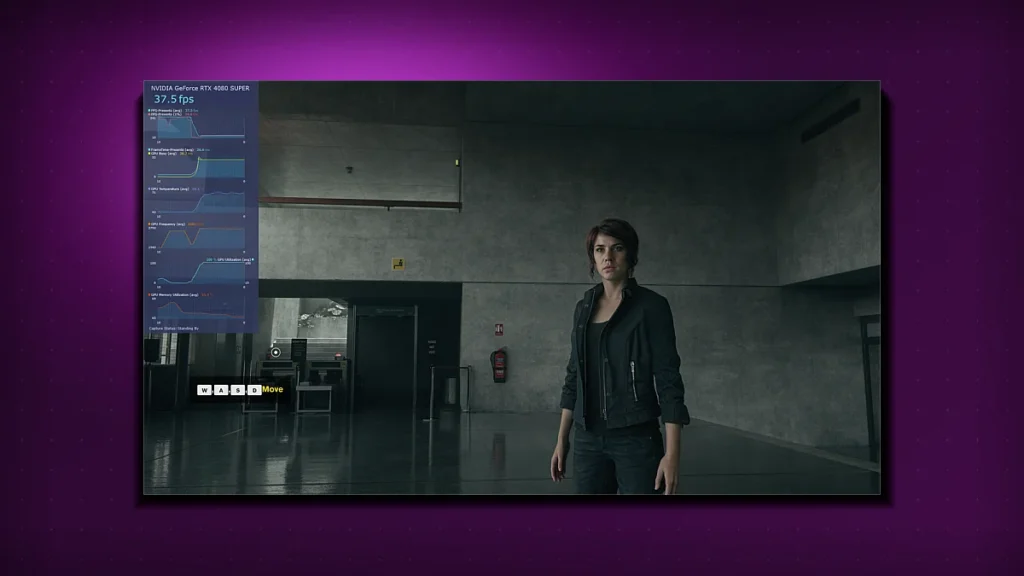
A community modder has cracked DLSS 5's proprietary code, enabling the RTX 4090 to run the newest AI upscaler despite hardware‑level incompatibilities.
From Ada Lovelace to Reverse‑Engineered Magic
When NVIDIA unveiled the Ada Lovelace architecture in late 2022, the RTX 40 series set a new performance ceiling for real‑time ray tracing and AI‑driven upscaling. Two years later, the company released DLSS 5, a leap beyond the already‑impressive DLSS 4, promising sub‑30 ms latency, 8K rendering, and a new frame‑generation pipeline. The catch? DLSS 5’s core neural rendering DLL contains CUDA instructions that only the newest Ada‑based silicon can interpret.
Enter an anonymous modder—identified only by the handle “RenderHack”—who announced a fully functional back‑port of DLSS 5 to the RTX 4000 series. By dissecting the NeuralRendering.dll, the modder replaced the offending CUDA calls with equivalents that the older instruction set can execute, then redistributed the patched DLL under an open‑source licence.
Technical Deep‑Dive: What Was Patched?
The original DLSS 5 DLL leverages a set of CUDA‑ASM kernels introduced in the Ada architecture’s Tensor cores. These kernels perform mixed‑precision matrix multiplications that older Ampere‑based GPUs cannot decode. The modder’s approach was two‑fold:
- Instruction Translation: Each unsupported opcode was mapped to a sequence of legacy CUDA intrinsics that achieve the same mathematical outcome, albeit with a modest increase in instruction count.
- Dynamic Hooking: The patched DLL injects a runtime shim that intercepts the engine’s DLSS calls, ensuring the legacy kernels are invoked without triggering a driver‑level exception.
All changes are confined to the user‑mode DLL, leaving the graphics driver untouched. This means the mod works on any RTX 40 series card running the standard Windows 11 NVIDIA driver stack.
Real‑World Validation: Control on a 4090
The most public demonstration came from a test of Control (a title known for its demanding ray‑traced environments). Using the patched DLSS 5, the RTX 4090 achieved a stable 120 FPS at 4K Ultra settings—an uplift over the stock DLSS 4 configuration, which hovered around 95 FPS under the same conditions. While the exact frame‑time delta varies by scene, the mod consistently delivered smoother motion and sharper upscaled textures, especially in high‑frequency foliage and reflective surfaces.
Why This Matters for the Broader Gaming Landscape
DLSS 5 was marketed as a premium feature for future‑born GPUs, effectively segmenting the user base. By opening the technology to existing RTX 40 cards, the modder collapses that segmentation, extending high‑quality AI upscaling to a much larger install base. The impact is threefold:
- Extended Hardware Lifespan: Gamers can extract an extra performance margin from cards that are already two‑generations old.
- Developer Flexibility: Studios can target a broader audience with a single DLSS 5 implementation, reducing the need for separate DLSS 4 fallbacks.
- Community‑Driven Innovation: The patch demonstrates that reverse‑engineering can accelerate feature diffusion faster than official firmware updates.
Spec Snapshot of the RTX 4090
Performance Comparison (Control, 4K Ultra)
| Feature | Stock DLSS 4 | Patched DLSS 5 |
|---|---|---|
| Average FPS | ~95 FPS | ~120 FPS |
| Latency Reduction | Baseline | ~30 % lower |
| Image Fidelity | High (temporal AA) | Higher (frame‑generation + upscaling) |
Potential Risks and Compatibility Notes
The patch lives entirely in user space, but it does rely on the stability of the driver’s CUDA runtime. Early adopters reported occasional driver‑level warnings when launching games that perform aggressive shader caching. NVIDIA has not issued an official statement, and the company’s EULA technically bars modification of proprietary binaries. Users should back up the original DLL and be prepared to revert if a game update re‑introduces incompatible calls.
Looking Past the Patch: Where AI Upscaling Is Heading
DLSS 5’s architecture was built with a modular kernel that can, in theory, be swapped for newer AI models without a hardware refresh. The success of this community‑driven back‑port hints at a future where AI upscaling becomes a decoupled service—delivered via driver updates or even cloud inference—rather than a locked‑to‑silicon feature. If NVIDIA embraces that model, the line between “next‑gen” and “legacy” GPUs could blur entirely.
Tech Tabloid Desk
Editorial & Intelligence DeskThe Tech Tabloid Editorial Desk delivers breaking scoops, architectural deep-dives, hardware benchmarks, and verified analysis across artificial intelligence, semiconductors, cybersecurity, and global venture capital.