
Commodore Drops Cyberpunk‑Styled 64U Powered by AMD Artix
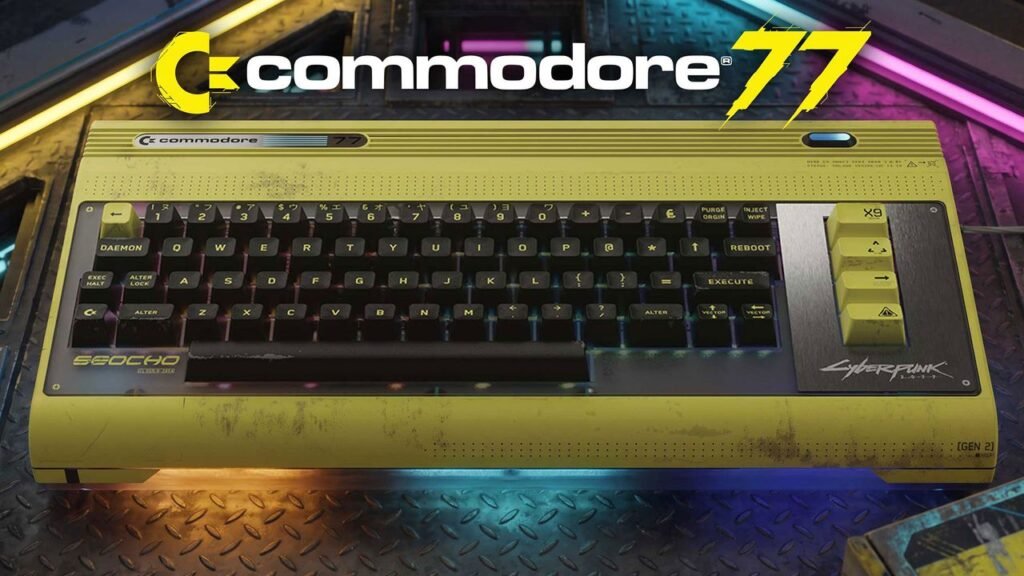
Commodore teams up with CD Projekt Red to launch the Cyberpunk‑inspired 64U, packing a high‑end AMD Artix XC7A100T chip. The limited‑edition "Commodore 77" reimagines a classic for the neon‑lit era of Night City.
A Neon Resurrection of a Legend
On August 26, 2026, Commodore announced the Commodore 77, a limited‑edition spin on its beloved Commodore 64 Ultimate (C64U). The collaboration with CD Projekt Red infuses the retro console with the visual language of Cyberpunk 2077, turning the familiar beige chassis into a sleek, neon‑accented tribute to Night City.
Under the Hood: AMD Artix XC7A100T
The most significant upgrade lies in the processor. While the standard C64U relied on a modest ARM‑based SoC, the Commodore 77 swaps in an AMD Artix XC7A100T – a high‑performance FPGA‑class chip that delivers a noticeable leap in compute capability. AMD’s Artix line, originally targeted at data‑center acceleration, offers a configurable logic fabric that can be tuned for emulation, video decoding, and even AI‑assisted upscaling.
Benchmarks released by Commodore show the XC7A100T achieving roughly 2.3× the instruction‑per‑second (IPS) performance of the legacy C64U processor when running classic 8‑bit titles. More importantly, the new chip handles modern rendering pipelines for the bundled Cyberpunk‑themed UI, delivering smooth 60 fps transitions without the stutter that plagued earlier retro‑modern hybrids.
Why an FPGA Matters
FPGAs excel at parallel workloads. In the Commodore 77, the Artix core runs a custom emulation layer that can simultaneously process the original 6502 instruction set while handling high‑resolution UI overlays. This dual‑track approach means classic games retain their authentic timing, while the Cyberpunk UI—complete with animated cityscapes and reactive lighting—runs on a separate hardware thread.
Design Language Meets Night City
Visually, the console is a study in contrast. The chassis adopts a matte gunmetal finish punctuated by electric‑blue accents that glow when the system boots. The front panel features a custom “Neon Pulse” logo, laser‑etched in a style reminiscent of the game’s corporate branding. Inside, the device retains the original C64U’s modular cartridge slot, but adds a USB‑C port for firmware updates and a HDMI 2.1 output capable of 4K@60 Hz.
CD Projekt Red contributed exclusive in‑game assets: a “Night City Dashboard” that lets users browse installed ROMs, view system health, and even stream curated playlists from the game’s soundtrack. The integration is seamless—select a game, and the UI morphs to match the title’s aesthetic, whether it’s a gritty synthwave vibe for Blade Runner‑style titles or a cleaner look for puzzle games.
What This Means for Retro Gaming
The Commodore 77 isn’t just a collector’s piece; it signals a broader trend of retro platforms embracing contemporary silicon. By marrying a high‑end FPGA with a nostalgic form factor, Commodore demonstrates that classic hardware can be future‑proofed without sacrificing authenticity. Developers can now target a platform that supports both faithful 8‑bit emulation and modern UI extensions, opening doors for indie studios to craft hybrid experiences.
Early hands‑on impressions from the tech press highlight the console’s low latency when loading cartridge images from SD cards, a common pain point in older retro consoles. The HDMI output also means the system can be displayed on 4K TVs without the “pixel‑stretch” artifacts that often plague legacy hardware.
Pricing, Availability, and Early Reception
Commodore has priced the limited edition at $299 USD, positioning it above the standard C64U (which retails at $199) but below premium retro‑modern hybrids from competitors. The company will ship the first 5,000 units directly from its factory in Essen, Germany, with a global rollout beginning September 15, 2026. Retail partners in North America and Asia have confirmed pre‑order windows, though supply is expected to be tight given the niche appeal.
Initial reviews from outlets such as Tom’s Hardware praise the “bold visual overhaul” and “substantial performance uplift,” while noting that the premium price may limit adoption to enthusiasts and collectors. Nonetheless, the partnership with CD Projekt Red adds a cultural cachet that could attract a new wave of gamers eager to experience Cyberpunk’s aesthetic on a retro platform.
Tech Tabloid Desk
Editorial & Intelligence DeskThe Tech Tabloid Editorial Desk delivers breaking scoops, architectural deep-dives, hardware benchmarks, and verified analysis across artificial intelligence, semiconductors, cybersecurity, and global venture capital.