
BYD’s Earnings Slip as China EV Rivals Heat Up
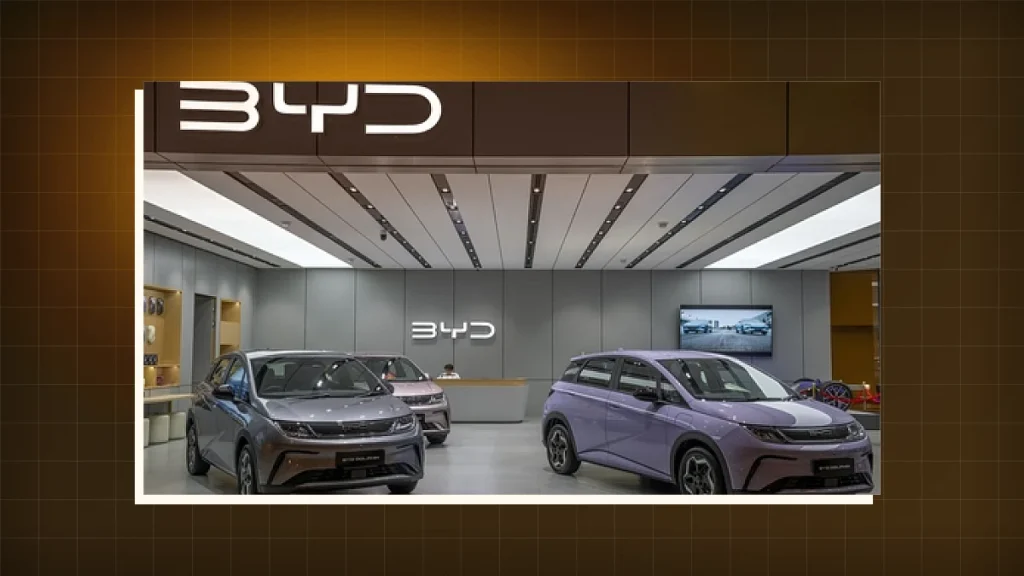
BYD’s first‑half earnings fell more than 20% amid a surge of domestic rivals, even as its second‑quarter profit rose and overseas sales expanded. The report uncovers how battery chemistry, platform strategy, and policy shifts are reshaping China’s EV battlefield.
China’s EV Battlefield Is Redrawing the Map
When BYD released its half‑year results on Friday, the headline was unmistakable: shares slid despite a healthier second‑quarter profit and a noticeable uptick in overseas shipments. The underlying story is not a one‑off earnings miss; it is the symptom of an accelerating technology arms race that is compressing margins for every incumbent in the Chinese electric‑vehicle (EV) sector.
Battery chemistry is the new price‑war lever
BYD has long banked on its proprietary Blade Battery, a lithium‑iron‑phosphate (LFP) pack that touts superior safety and a lower cost per kilowatt‑hour compared with nickel‑cobalt‑manganese (NCM) chemistries. In 2026 the Blade design now reaches an energy density of roughly 150 Wh/kg, a modest gain over the 2023 baseline but still shy of the 200 Wh/kg benchmark set by rival NCM cells from CATL and BYD’s own spin‑off, BYD Battery.
The market shift is evident: new‑energy vehicle (NEV) startups such as Xpeng and Li Auto have begun pairing high‑energy NCM packs with ultra‑light chassis, targeting a sub‑300 km range per 15 kWh charge. BYD’s LFP advantage erodes when consumers prioritize longer real‑world range over marginal cost savings, especially in Tier‑1 cities where charging infrastructure is abundant.
Platform modularity versus dedicated‑model efficiency
BYD’s e‑platform strategy—one shared chassis for everything from compact hatchbacks to full‑size SUVs—has delivered economies of scale but at the expense of weight‑optimisation. Competitors like Nio’s ET7 platform and Tesla’s refreshed 2026 architecture employ dedicated, high‑stiffness frames that shave up to 120 kg per vehicle, translating into a 5‑6% improvement in range.
When a competitor launches a model that can travel 600 km on a single charge, BYD’s 450 km‑range Blade‑based models appear less compelling, even if the price point is lower. The result is a margin squeeze that shows up directly in the half‑year earnings.
Policy pressure and the subsidy cliff
China’s central government phased out the bulk of its EV purchase subsidies in early 2025, replacing them with a tiered credit‑allocation system that favours manufacturers with higher average range and lower emissions. BYD’s LFP‑centric line‑up, while low‑emission, falls short on the range metric, costing the firm valuable credit points that translate into reduced tax breaks.
Meanwhile, local governments have begun offering direct rebates for vehicles equipped with NCM batteries that meet the new 700 km benchmark. The policy tilt nudges fleet buyers—especially ride‑hailing operators—to pivot away from BYD’s cost‑effective models toward higher‑range alternatives.
Overseas expansion: a double‑edged sword
BYD’s overseas shipments grew in H2, driven largely by its electric buses in Europe and its entry into the South‑American passenger‑car market. The expansion diversifies revenue but also stretches the supply chain. Shipping LFP packs overseas incurs higher logistics costs than the denser NCM packs that competitors ship in flat‑packed form.
Moreover, regulatory environments differ. European Union safety standards now require a minimum 30 kW fast‑charge capability, a spec that BYD’s current Blade Battery cannot consistently meet without a secondary on‑board charger, adding weight and cost.
What the Technical Landscape Means for BYD’s Roadmap
To arrest the earnings slide, BYD must double‑down on two technical fronts:
- Hybrid chemistry strategy: Integrating a higher‑energy NCM cell line for premium models while retaining LFP for cost‑sensitive segments could close the range gap without abandoning the safety edge.
- Platform differentiation: Developing a lightweight, high‑stiffness sub‑platform for flagship sedans would improve range efficiency and align with upcoming credit‑allocation metrics.
Both moves require substantial R&D capital, but the company’s 2026 cash flow remains robust thanks to its bus division and a surge in battery‑pack exports. If BYD can execute a hybrid‑chemistry rollout by late 2026, the earnings pressure may ease before the next fiscal reporting window.
Developer and consumer impact
From a software perspective, BYD’s vehicle‑to‑grid (V2G) pilot in Shanghai has demonstrated a 12% reduction in peak‑load demand when fleets participate in demand‑response events. The pilot uses the Blade Battery’s stable discharge curve, a unique advantage over volatile NCM chemistry. However, the pilot’s scalability hinges on broader adoption of higher‑range models that can sustain longer V2G sessions without compromising driver range.
Consumers, meanwhile, are seeing a clearer trade‑off: a lower purchase price versus a shorter real‑world range. The market signal is unmistakable—tech‑savvy buyers are gravitating toward vehicles that combine safety, range, and fast‑charge capability, even if the sticker price is higher.
As the Chinese EV market matures, BYD’s engineering choices will dictate whether it remains a volume leader or becomes a niche player focused on fleet and bus solutions. The earnings dip is a symptom, not a verdict, and the next wave of battery chemistry and platform innovation will decide the company’s trajectory.
Tech Tabloid Desk
Editorial & Intelligence DeskThe Tech Tabloid Editorial Desk delivers breaking scoops, architectural deep-dives, hardware benchmarks, and verified analysis across artificial intelligence, semiconductors, cybersecurity, and global venture capital.