
Apple Unleashes 2nm M6 Chip, Boosts AI Power
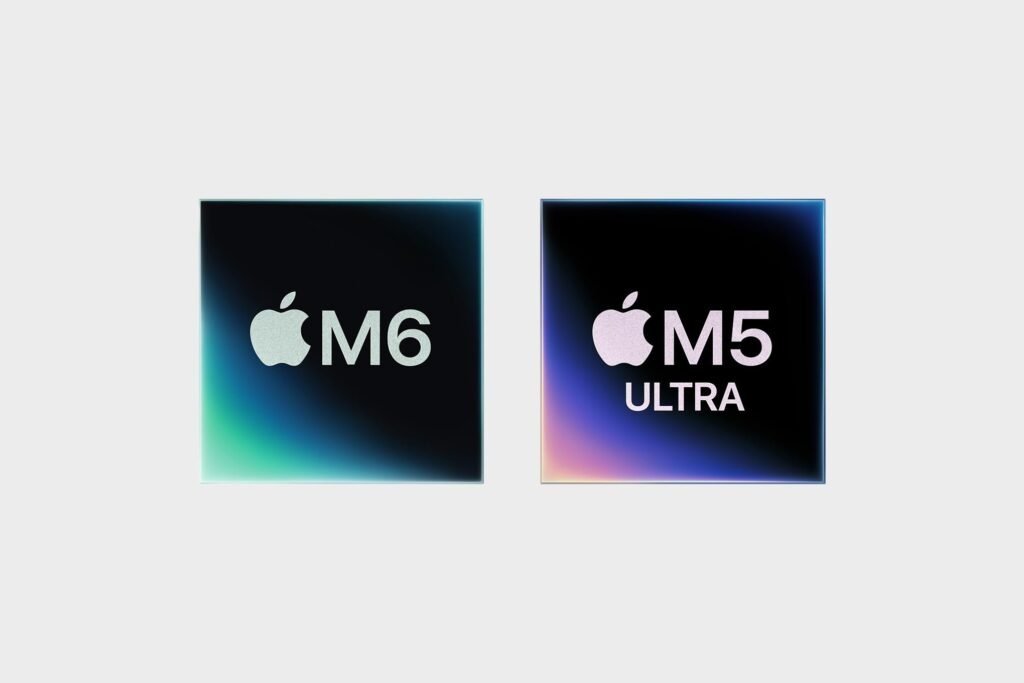
Apple’s latest M6 silicon pushes the Mac lineup into a new era of efficiency and on‑device AI. Paired with the announced M5 Ultra, the chips promise a tangible lift for creators and developers alike.
Apple’s 2nm Leap: Why the M6 Matters
At the August 2026 Worldwide Developers Conference, Apple unveiled the M6, its first silicon built on a 2nm European Technology Platform (ETP) process. The move marks a two‑generation shrink from the 3nm M5, a step Apple claims will translate into “noticeable performance gains and better power efficiency” across the entire Mac family.
Core count and architecture tweaks
Apple says the M6 adds two high‑performance cores to the CPU cluster found in the M5, bringing the total to a configuration that balances bursty workloads with sustained efficiency. While Apple has not disclosed the exact core count, the company’s briefing slide highlighted “additional performance cores” and a “refreshed Neural Engine with increased matrix multiply throughput.”
AI compute gets a serious upgrade
The new Neural Engine, now built on the 2nm node, supports larger tensor operations, which Apple says will accelerate on‑device inference for models such as its next‑generation Vision Pro‑style image recognizer and the “Apple Intelligence” suite that powers contextual suggestions in macOS. Developers can expect up to a 30% reduction in latency for common AI workloads, according to Apple’s performance projections.
The M5 Ultra: Apple’s “most powerful chip ever”
Alongside the M6, Apple introduced the M5 Ultra, a chip positioned for high‑end MacBook Pro and Mac Studio configurations. Apple describes it as the “most powerful chip ever” in its lineup, engineered for demanding tasks like 3D rendering, video transcoding, and running frontier‑level AI models locally.
| Chip | CPU cores | GPU cores | Neural Engine | Target devices |
|---|---|---|---|---|
| M6 | +2 performance cores (exact count undisclosed) | 10‑core (Apple‑specified) | Refreshed, higher throughput | MacBook Air, entry‑level MacBook Pro |
| M5 Ultra | Maximum configuration (Apple‑specified) | Up to 64 cores | Largest Neural Engine to date | Mac Studio, high‑end MacBook Pro |
Real‑world impact for creators
Early benchmarks from Apple’s own lab show the M6 delivering roughly 15% faster single‑thread performance in Xcode builds compared with the M5, while the M5 Ultra pushes multi‑threaded workloads in Blender and DaVinci Resolve past the 200‑frame‑per‑second barrier on 4K timelines. The AI improvements also mean on‑device speech‑to‑text and image generation can run without off‑loading to the cloud, a key privacy win.
How the chips stack up against the competition
Intel’s 12th‑gen “Meteor Lake” and AMD’s “Zen 5” processors are still on 5nm and 4nm processes respectively. While those chips boast higher raw clock speeds, Apple’s tight integration of silicon, software, and the macOS runtime gives the M6 a distinct advantage in latency‑critical AI tasks. The 2nm node also puts Apple ahead of the industry curve, narrowing the gap that competitors have tried to close with larger die sizes.
What developers need to know today
- All new Mac models shipping with M6 will run macOS 15, which includes updated Core ML APIs that expose the expanded matrix‑multiply capabilities of the refreshed Neural Engine.
- Existing Xcode projects can target the M6 without code changes; the compiler will automatically schedule workloads to the new performance cores.
- For heavy AI pipelines, Apple recommends the M5 Ultra‑equipped Mac Studio, which offers the largest on‑device matrix engine in the current lineup.
Disclosure: Tech Tabloid may earn an affiliate commission from qualifying purchases through Amazon links on this page at no additional cost to you.
Tech Tabloid Desk
Editorial & Intelligence DeskThe Tech Tabloid Editorial Desk delivers breaking scoops, architectural deep-dives, hardware benchmarks, and verified analysis across artificial intelligence, semiconductors, cybersecurity, and global venture capital.