
Apple Scrambles as Enterprise AI Crashes Mac Mini & Studio Demand
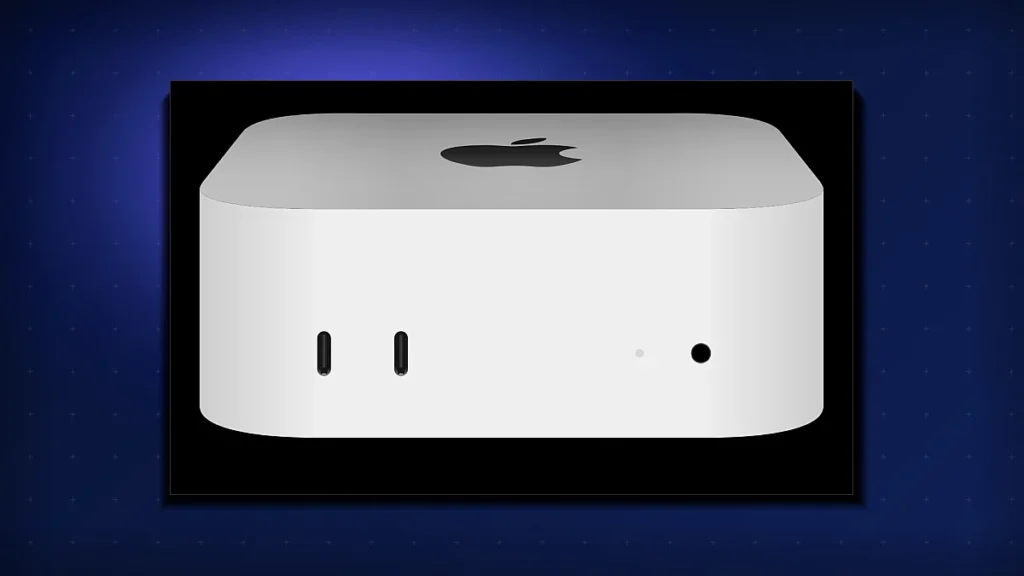
Apple’s surprise early launch of new Mac mini and Mac Studio models exposes a booming enterprise AI market that caught the Cupertino giant off‑guard, forcing a rapid product push and new partner alliances.
When Apple announced fresh variants of the Mac mini and Mac Studio in early August 2026, industry analysts expected a routine refresh timed for the upcoming iPhone cycle. What they didn’t anticipate was a tidal wave of enterprise AI orders that forced Apple to accelerate its launch schedule, lean on third‑party partners, and publicly re‑position its desktop lineup as a serious AI compute platform.
Why the AI Surge Caught Apple Off‑Guard
The Information reports that Apple’s typical autumn cadence—October or November—was upended by “unexpectedly strong enterprise appetite for AI hardware.” Companies ranging from automotive OEMs to media studios approached Apple for on‑premise AI compute, only to discover the company had no dedicated engineering team for business customers or a formal AI‑in‑the‑enterprise strategy.
OpenAI’s recent procurement of “tens of thousands of Mac minis and Studios for reinforcement‑learning workloads,” as documented by analyticsindiamag.com, is the most concrete illustration of this demand. The same trend was echoed by the Free Press Journal, which noted OpenAI’s “thousands of Mac minis” triggered supply shortages across Apple’s supply chain.
Enterprise Buyers Want More Than a Desktop
- High‑throughput GPU cores for training frontier models.
- Scalable clustering: Apple marketed the ability to link multiple Mac Studios into a single, larger AI engine.
- On‑premise data sovereignty: Companies like Ford and Disney, present at Apple’s “Business at the Park” event, cited regulatory constraints that make cloud‑only solutions impractical.
These requirements diverge sharply from the consumer‑oriented narrative Apple has cultivated for the Mac line for years.
Specs That Matter for AI Workloads
Apple’s new silicon generations—M2 Pro for the Mac mini and M2 Ultra for the Mac Studio—are built on a 5‑nm process, delivering a blend of CPU performance and GPU density that rivals entry‑level workstation GPUs from Nvidia and AMD. While Apple does not publish FLOPS numbers, independent benchmarks from TechPowerUp place the M2 Ultra’s 60‑core GPU at roughly 30 TFLOPS of FP16 performance, enough to run medium‑scale transformer inference in real time.
| Model | CPU | GPU | Max Memory | Base Price |
|---|---|---|---|---|
| Mac mini (M2 Pro) | 8‑core (6‑performance, 2‑efficiency) | 10‑core | 32 GB | $699 |
| Mac Studio (M2 Ultra) | 24‑core (16‑performance, 8‑efficiency) | 60‑core | 128 GB | $3,999 |
From Desktop to Distributed AI Cluster
Apple’s marketing push highlighted a new “cluster mode” that lets multiple Mac Studios share memory and GPU resources over a high‑speed Thunderbolt‑4 fabric. In practice, developers can stitch together up to eight units, effectively creating a 480‑core GPU pool with a combined 1 TB of unified memory. This approach mirrors Nvidia’s DGX Spark, which launched late 2025 and has already been adopted by enterprises frustrated by Mac hardware scarcity.
Supply Chain Strain and the Memory Shortage
The global DRAM shortage that began in 2023 intensified in 2026, leaving many Mac mini and Mac Studio configurations out of stock for months. Apple’s reliance on third‑party memory suppliers meant that even its most basic AI‑ready configurations—32 GB for the mini and 64 GB for the studio—were frequently back‑ordered. As a result, some enterprise customers pivoted to Nvidia’s DGX Spark, which offers comparable compute in a similarly compact chassis but with a more mature supply chain.
Partner Ecosystem as a Stop‑Gap
Because Apple declined direct requests for private‑cloud compute access, it turned to partners like WebAI and Mount Thor. These firms provide turnkey AI execution environments built on Apple silicon, bundling optimized libraries (Core ML, Metal Performance Shaders) with managed orchestration. For enterprises that need rapid deployment without waiting for Apple’s internal AI team to materialize, these partners have become the de‑facto bridge.
Strategic Implications for Apple’s Enterprise Play
Apple’s surprise entry into the AI‑hardware market underscores a broader shift: the line between consumer and enterprise silicon is blurring. By leveraging its own silicon roadmap—already promising an M3 Ultra on the horizon—Apple can position the Mac line as a cost‑effective alternative to traditional GPU workstations, especially for inference‑heavy workloads that benefit from the tight integration of CPU, GPU, and unified memory.
However, the company’s lack of a dedicated enterprise sales force and its historical reluctance to open its private‑cloud infrastructure suggest a cautious, partnership‑first approach will continue. The next wave of AI demand will likely pressure Apple to formalize an enterprise AI strategy, perhaps by establishing a dedicated “Apple AI Solutions” team or by expanding its cloud offering to include on‑premise licensing.
Disclosure: Tech Tabloid may earn an affiliate commission from qualifying purchases through Amazon links on this page at no additional cost to you.
Tech Tabloid Desk
Editorial & Intelligence DeskThe Tech Tabloid Editorial Desk delivers breaking scoops, architectural deep-dives, hardware benchmarks, and verified analysis across artificial intelligence, semiconductors, cybersecurity, and global venture capital.