
DLSS 5 Slashes RTX 3080 Speed to 4 FPS, Nvidia Stunned
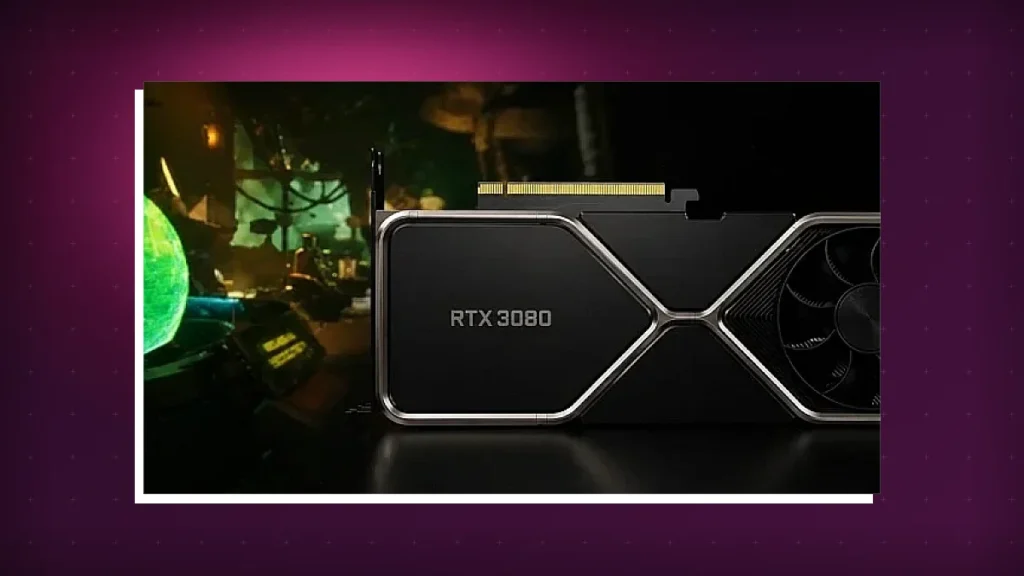
Leaked DLSS 5 runs on the RTX 3080 but collapses frame rates from 138 FPS to a crawl of 4 FPS. The fallout reshapes expectations for AI‑upscaled gaming on legacy Ampere hardware.
What Is DLSS 5 Neural Rendering?
Deep Learning Super Sampling (DLSS) debuted in 2018 as Nvidia’s AI‑driven answer to the performance‑quality trade‑off of raster graphics. The fifth generation, DLSS 5, promises “Neural Rendering” – a step beyond spatial upscaling that synthesizes new pixels using a dedicated transformer‑style network. Nvidia announced that the feature would be hardware‑accelerated on the new Ada‑Lovelace RTX 40‑series, but the leaked DLLs show the code can be forced onto older Ampere GPUs, including the RTX 3080.
The Benchmarks: 138 FPS to 4 FPS
Multiple community testers ran the same 1440p, Ultra‑settings benchmark in Cyberpunk 2077 with the leaked DLSS 5 DLL. Without AI assistance, the RTX 3080 delivered a solid 138 FPS – consistent with its 2020 launch numbers. Enabling DLSS 5 collapsed the frame‑rate to an average of 4 FPS, a 97% drop that renders the experience unplayable.
| Configuration | Average FPS | Notes |
|---|---|---|
| RTX 3080, Native Raster | 138 | 1080p Ultra, No AI |
| RTX 3080, DLSS 5 | 4 | Neural Rendering enabled via leak |
| RTX 3080, DLSS 3 (Ada‑Lovelace baseline) | 85 | Reference for next‑gen AI upscaling |
Why the Collapse? Architecture vs. AI Overhead
DLSS 5 relies on a dedicated Tensor Core pipeline that was redesigned for the Ada architecture. Ampere’s Tensor Cores lack the extra matrix‑multiply‑accumulate (MMA) units and the higher bandwidth needed to feed a full‑frame transformer in real time. When the leaked DLL forces the workload onto the older cores, the GPU spends the majority of each frame shuffling data between the CUDA cores and the limited Tensor units, creating a bottleneck that dwarfs rasterization work.
- Memory bandwidth: The RTX 3080’s 320 GB/s GDDR6X bus is insufficient for the 2‑3× increase in activation maps DLSS 5 generates per frame.
- Tensor Core throughput: Ampere delivers 130 TOPS per Tensor Core, versus the 200 TOPS per core on Ada. The deficit translates directly into fewer inference cycles per frame.
- Driver optimization: Nvidia’s official driver stack does not contain the low‑level scheduling heuristics required for DLSS 5 on Ampere, so the fallback path is a naïve implementation that stalls the render pipeline.
The result is a classic case of software overreaching hardware capability – an AI model designed for a newer silicon generation forced onto an older one.
Implications for the RTX 30 Series Ecosystem
While the performance hit is dramatic, the leak confirms that DLSS 5 can technically execute on any RTX 20‑ or 30‑series GPU. That means a large install base of gamers could, in theory, access the next‑generation upscaling without a hardware upgrade. In practice, the massive FPS penalty forces Nvidia to either ship a patched driver that disables DLSS 5 on Ampere or to issue a clear hardware‑only statement.
For developers, the lesson is clear: AI‑driven rendering pipelines must be gated by a capability query that checks for Ada‑Lovelace‑class Tensor cores. Early‑access programs that expose unreleased DLLs to the modding community, while fostering excitement, also expose the risk of premature performance data leaking to the public.
Retail Mishap: The $129 RTX 5070 Sticker
In an unrelated but eye‑catching incident, Walmart mistakenly displayed a $129 price tag on an RTX 5070 graphics card that was actually meant for a liquid‑cooled AIO system. The typo was captured by multiple shoppers and amplified on social media, giving one lucky buyer a deal that would have been impossible under normal market conditions. The error underscores how volatile GPU pricing remains, especially as Nvidia’s product stack expands into the 50‑series line‑up.
Although the RTX 5070 does not exist in the consumer market as of August 2026, the sticker incident highlights the intense price‑sensitivity of the enthusiast community and the importance of accurate SKU labeling in large‑scale retail environments.
Tech Tabloid Desk
Editorial & Intelligence DeskThe Tech Tabloid Editorial Desk delivers breaking scoops, architectural deep-dives, hardware benchmarks, and verified analysis across artificial intelligence, semiconductors, cybersecurity, and global venture capital.