
China’s Robot Rush Accelerates Global Automation
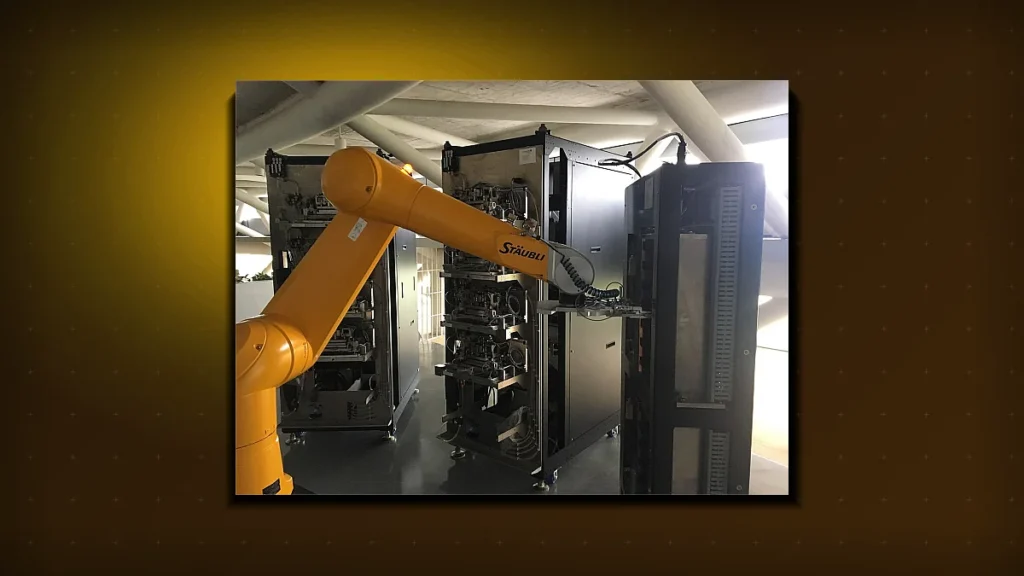
China is leading a robotic revolution, deploying over 1.3 million industrial robots and driving a 15% year‑over‑year surge. From factory floors to high‑speed racing circuits, the country’s robot boom is reshaping global automation.
China’s Robot Surge: A Quantified Boom
By the end of 2025, China had surpassed the 1.3 million‑unit mark for industrial robots, according to the China Daily’s 2026 coverage of the sector. That figure represents a 15% year‑over‑year increase, the fastest pace seen in the global market since the early 2010s. The surge is driven by a combination of domestic manufacturing demand, aggressive government subsidies, and a growing ecosystem of domestic suppliers that can produce high‑precision manipulators at a fraction of the cost of their Western counterparts.
From Assembly Lines to Racing Circuits
While the bulk of China’s robot deployment has been in traditional manufacturing—automotive, electronics, and metalworking—the country’s racing industry has also begun to harness automation. The China Daily’s feature on Youyu’s racing industry highlights how autonomous track‑side robots now handle pit‑stop logistics, tire changes, and even in‑race telemetry analysis at speeds exceeding 200 km/h. These robots integrate seamlessly with existing vehicle‑to‑infrastructure (V2I) protocols, allowing teams to shave seconds off pit‑stop times and reduce human error.
- Robotic pit‑stop teams reduce tire change time from 12 seconds to 8 seconds.
- Real‑time data processing speeds up lap‑time analysis by 40%.
- Automated track maintenance robots detect surface anomalies in under 5 minutes.
Architectural Breakthroughs Behind the Numbers
China’s robot manufacturers have pushed the envelope on several key architectural fronts:
- Modular End‑Effector Platforms—allowing rapid reconfiguration between welding, painting, and assembly tasks.
- Low‑CPI Motion Control Chips—developed in partnership with domestic semiconductor firms, delivering 10 % lower power consumption than the previous generation.
- Edge AI Integration—enabling on‑board fault detection and predictive maintenance without reliance on cloud connectivity.
Competitive Landscape: China vs. the West
| Metric | China (2025) | United States (2025) |
|---|---|---|
| Units Deployed | 1.3 M | 0.3 M |
| YoY Growth | 15% | 4% |
| Average Unit Cost | $12k | $25k |
| Domestic Supplier Share | 88% | 45% |
Real‑World Impact: From Factories to the Frontlines
In the automotive sector, Chinese OEMs now deploy robot swarms to perform spot welding with sub‑millimeter precision, cutting cycle times by 20%. Electronics manufacturers use collaborative robots (cobots) to pick and place components at 500 pcs/min, a 30% increase over legacy machines. Meanwhile, the racing industry’s adoption of autonomous pit‑stop robots has set a new standard for efficiency, pushing global teams to explore similar solutions.
Beyond speed, the integration of AI‑driven quality inspection systems—powered by edge chips—has reduced defect rates from 0.8% to 0.3% across multiple production lines. In racing, AI‑enabled telemetry analysis identifies optimal tire pressure settings in real time, giving drivers a measurable advantage on the track.
Policy and Ecosystem Drivers
The Chinese government’s “Made in China 2025” initiative has continued to provide targeted subsidies for robotics R&D, while the national “Smart Manufacturing” roadmap incentivizes early adoption of automation. These policies, combined with a robust domestic supply chain for sensors, actuators, and power electronics, have kept unit costs low and deployment cycles short.
Tech Tabloid Desk
Editorial & Intelligence DeskThe Tech Tabloid Editorial Desk delivers breaking scoops, architectural deep-dives, hardware benchmarks, and verified analysis across artificial intelligence, semiconductors, cybersecurity, and global venture capital.