
Solar System Hoards Thousands of Alien Space Rocks
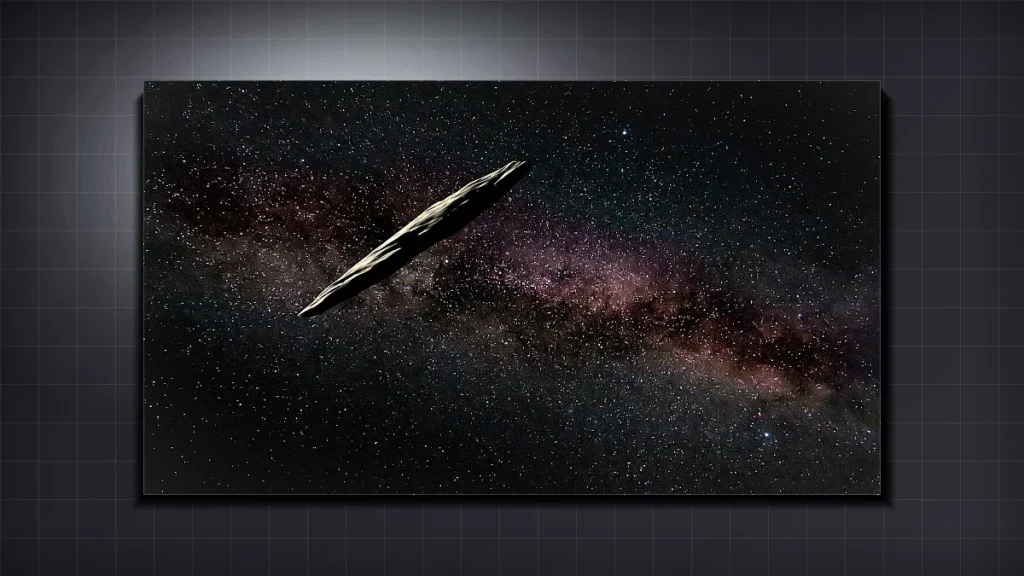
A new study suggests the Sun has snagged thousands of alien rocks during close stellar fly‑bys, turning our backyard into a hidden interstellar graveyard.
When Stars Pass, the Sun Picks Up Cosmic Souvenirs
Recent research published this week proposes that the Sun, during its galactic wanderings, has likely brushed past neighboring stars closely enough to snare a swarm of tiny interstellar wanderers. The study estimates that thousands of small objects—the size of a modest house or smaller—now orbit the Sun as silent witnesses to ancient stellar encounters.
What Makes an Object ‘Interstellar’?
Interstellar objects (ISOs) are bodies that formed around other stars and later escaped their native systems. Their trajectories are hyperbolic relative to the Sun, meaning they are not bound by solar gravity. The two confirmed ISOs—‘Oumuamua in 2017 and comet 2I/Borisov in 2019—arrived on such unbound paths, flashing past Earth before disappearing into the void.
How Did the Sun Capture Them?
Gravitational capture requires a three‑body interaction: the Sun, the passing star, and the rogue object. When the Sun’s path brings it within a few light‑years of another star, the combined gravitational pull can decelerate an ISO enough for the Sun’s gravity to bind it. Over the past few hundred million years, the Milky Way’s spiral arm dynamics have increased the frequency of such close stellar passages.
From Fly‑by to Permanent Resident
Once an ISO slows below the solar escape velocity—roughly 42 km/s at Earth’s orbit—it settles into an elliptical orbit. The study’s simulations show that objects between 10 m and a few hundred meters in diameter are the most likely to be captured, because larger bodies retain too much kinetic energy, while smaller dust grains are easily deflected by solar radiation pressure.
Why Should We Care?
These captured ISOs are not just scientific curiosities; they could serve as time capsules preserving the chemistry of distant planetary systems. Analyzing their composition would let astronomers compare the building blocks of exoplanetary disks without leaving the solar system.
- Chemical diversity: Different stellar nurseries produce varying ratios of water, organics, and heavy metals.
- Impact risk assessment: Understanding the population helps refine long‑term impact probability models for Earth.
- Mission planning: A captured ISO in a stable orbit offers a low‑delta‑v target for future sample‑return missions.
Known Interstellar Visitors vs. The Hidden Swarm
| Object | Discovery Year | Estimated Size | Inbound Speed |
|---|---|---|---|
| ‘Oumuamua | 2017 | ~100 m | ~26 km/s |
| 2I/Borisov | 2019 | ~2 km | ~32 km/s |
The two cataloged ISOs were on hyperbolic trajectories, never to return. By contrast, the hypothesized captured cohort would linger for millions of years, slowly spiraling inward or outward depending on planetary perturbations.
Detecting the Invisible Fleet
Finding these objects is a challenge. Their low albedo and modest size make them faint, especially when they dwell in the outer solar system. However, next‑generation surveys—such as the Vera C. Rubin Observatory’s Legacy Survey of Space and Time (LSST)—are expected to increase detection sensitivity by an order of magnitude, potentially unveiling dozens of resident ISOs over the next decade.
Implications for Planetary Science
If confirmed, a resident interstellar population would reshape our understanding of solar system formation. It would suggest that planetary systems are not isolated islands but participants in a galactic exchange of material, constantly trading debris during close encounters.
Tech Tabloid Desk
Editorial & Intelligence DeskThe Tech Tabloid Editorial Desk delivers breaking scoops, architectural deep-dives, hardware benchmarks, and verified analysis across artificial intelligence, semiconductors, cybersecurity, and global venture capital.