LG TVs Exposed to Root Takeover via Local Network
LG Smart TV security vulnerability enables local network attackers to achieve root access without a PIN, exposing a critical flaw in webOS firmware. The fix, issued on October 12, demonstrates LG’s responsiveness but highlights systemic design gaps in IoT device security.
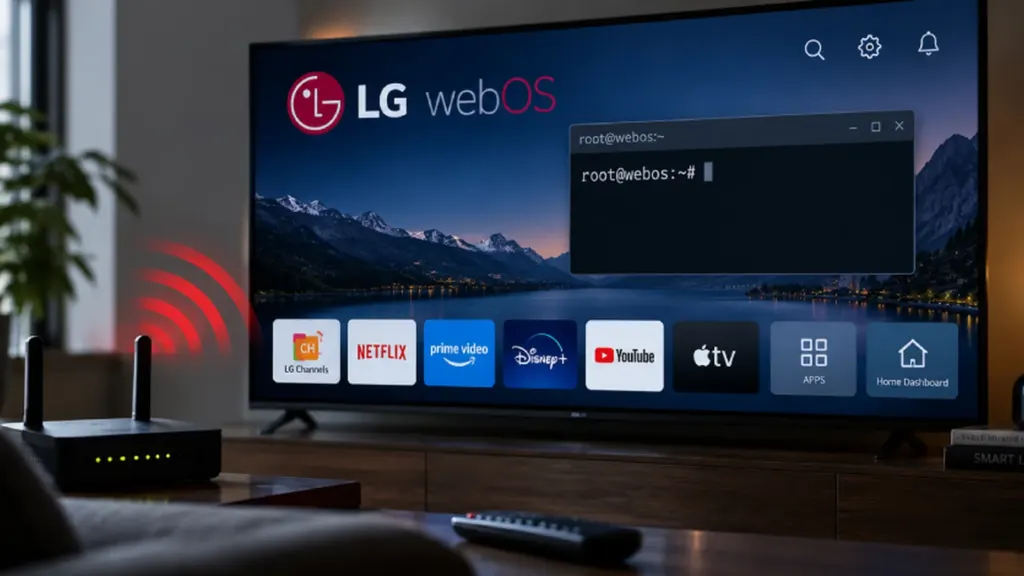
LG Smart TVs running webOS 7.5.7-25 have been shown to allow an attacker on the same local network to gain root access without a PIN or any user interaction. The vulnerability is a pre‑authentication root takeover that can be achieved by chaining three separate weaknesses in the operating system. The chain was demonstrated on the 32LQ636BPSA and the 27TQ600SW models, confirming that the flaw is not isolated to a single product line.
Local Network Attack Chain Exposed
The exploitation sequence begins with a denial‑of‑service condition that can be triggered by sending a crafted packet to the TV’s webOS service. Once the service is destabilised, the attacker can exploit a privilege‑escalation flaw that bypasses the standard authentication guard. The final step in the chain leverages a buffer overflow in the media handling component, allowing arbitrary code execution with root privileges. Because all three steps can be performed from a device on the same local network, the attack requires no external connectivity or user credentials.
SSD Secure Disclosure issued an advisory on October 12 that confirms the chain and provides a patch for the affected firmware. LG’s response was swift: the company released an updated firmware image that closes the three identified weaknesses and restores proper authentication checks. The patch is available for all models running webOS 7.5.7-25, and LG has urged customers to install it immediately.
Today, Apple is holding its “Welcome Home” event, unveiling new smart‑home products that rely on local‑network connectivity. The juxtaposition of Apple’s focus on seamless home integration with LG’s recent vulnerability highlights a broader tension in the IoT space: the convenience of local‑network control often comes at the expense of robust isolation. While Apple’s ecosystem includes built‑in network segmentation and secure boot mechanisms, LG’s webOS design has historically placed less emphasis on protecting the local network perimeter.
From a competitive perspective, Samsung and Sony have implemented stricter network isolation in their recent TV models. Samsung’s Tizen OS, for instance, enforces a mandatory VPN tunnel for all remote‑control traffic, and Sony’s BRAVIA platform includes a hardened network stack that rejects unauthenticated packets by default. These design choices reduce the attack surface for local‑network adversaries, a safeguard that LG’s webOS currently lacks.
LG’s prompt patch demonstrates a willingness to address security findings, yet the existence of the flaw suggests deeper systemic issues. The chain of vulnerabilities indicates that webOS’s privilege model is not fully compartmentalised; a single local‑network intrusion can compromise the entire device. Even with the patch applied, the incident underscores the need for LG to re‑architect its network stack to enforce stricter isolation between the TV’s internal services and the external network.
Consumers who own affected LG models should verify that their firmware has been updated to the latest version. The update can be installed via the TV’s settings menu or by downloading the image from LG’s support site. In addition, users are advised to segment their home Wi‑Fi network: placing smart TVs on a separate VLAN or guest network can mitigate the risk of local‑network exploitation. While LG’s patch removes the specific chain, it does not eliminate the underlying design flaw that could be exploited by future vulnerabilities.
The incident is part of a growing pattern of IoT devices that expose critical services to the local network without sufficient safeguards. In 2026, the number of connected home appliances has surpassed 200 million, and the majority of them rely on legacy operating systems that were not designed with modern threat models in mind. The LG vulnerability serves as a reminder that local‑network security must be treated as a first‑class concern, not an afterthought.
In the broader context of smart‑home ecosystems, the LG incident may prompt regulators to revisit standards for network isolation in consumer devices. While no new legislation has been announced, industry groups are already drafting guidelines that require manufacturers to implement mandatory network segmentation for devices that can be accessed remotely. LG’s response, coupled with the visibility of the flaw, could accelerate the adoption of these guidelines across the sector.
Ultimately, the LG Smart TV vulnerability illustrates a critical gap in the design of consumer‑grade IoT operating systems. The chain of three pre‑authentication exploits, the swift patch, and the industry context together paint a picture of a market that is still learning how to balance convenience with security. As smart‑home devices become more integral to daily life, the pressure on manufacturers to adopt robust network isolation will only increase, and LG’s experience may serve as a cautionary tale for the rest of the industry.