
EPA Moves to Cloak Data Center Pollution Amid AI Boom
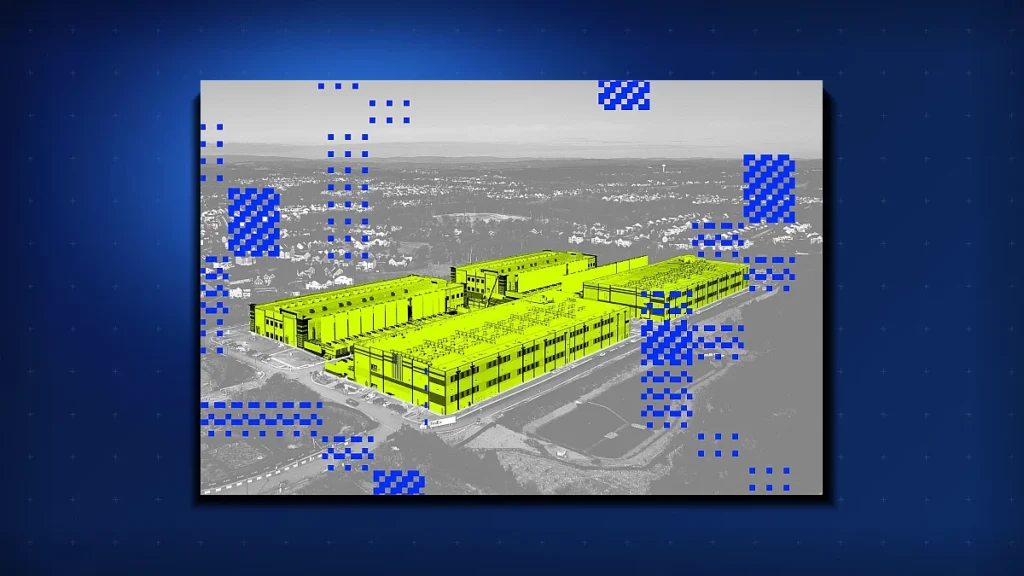
The EPA’s latest rule change threatens to silence community voices on data‑center emissions just as AI‑driven facilities multiply, raising questions about transparency, health, and politics.
Washington’s environmental watchdog is poised to rewrite the playbook for industrial emissions disclosure just as the United States races to become the world’s AI super‑power. A draft rule released in July 2026 would strip a long‑standing federal requirement that certain high‑impact facilities—most notably large‑scale data centers—post a public notice and invite community comment before construction or expansion.
Why Data Centers Matter in the Climate Equation
Modern AI workloads demand massive compute clusters that consume power at a scale once reserved for entire cities. The EPA estimates that U.S. data centers account for roughly 2% of national electricity use, translating to about 200 terawatt‑hours (TWh) per year. That energy draw produces an estimated 100 million metric tons of CO₂ annually, a footprint comparable to the entire aviation sector.
The Rule in Question
Since 2018, the EPA’s National Environmental Policy Act (NEPA) guidance has required facilities that exceed specific emission thresholds to publish a Notice of Intent (NOI) in the Federal Register, opening a 30‑day comment window for residents, NGOs, and local officials. The proposed 2026 revision would eliminate the NOI for “data center facilities” that meet a new definition of “low‑impact” based on power draw, effectively allowing them to bypass public scrutiny.
What the Draft Says
- Facilities under 5 MW of continuous power would be exempt from public notice.
- EPA claims the change reduces administrative burden and accelerates AI infrastructure rollout.
- Critics argue the exemption creates a loophole for “green‑washing” and undermines community health safeguards.
Political Backing and the Election Angle
President Trump, campaigning for the 2026 midterms, has publicly championed AI data centers as a “job‑creating, money‑making” engine for the American heartland. In a recent interview with The Star Democrat, he framed the EPA’s move as “cutting red tape so our factories can grow.” Meanwhile, KEYE highlighted the political calculus: a surge in AI‑related jobs could translate into voter turnout in swing districts.
Community Response
Neighborhood groups in North Texas, the Bay Area, and upstate New York have already filed lawsuits challenging the draft rule, citing health impacts from increased particulate matter and noise. Their legal briefs reference a 2023 study linking data‑center proximity to higher rates of respiratory ailments.
Regulatory Landscape: Current vs. Proposed
| Aspect | Current Rule (pre‑2026) | Proposed Rule (2026) |
|---|---|---|
| Public Notice Requirement | Mandatory NOI for facilities >1 MW | Exempt NOI for facilities ≤5 MW |
| Community Comment Period | 30 days (Federal Register) | None for exempted facilities |
| Transparency Score (EPA metric) | High (average 8.2/10) | Reduced (average 5.6/10 for exempted sites) |
Technical Implications for AI Infrastructure
AI developers have long complained about “site‑selection latency” caused by lengthy permitting processes. The rule could shave weeks off the rollout of new GPU farms, potentially accelerating model training cycles. However, the trade‑off is a less transparent emissions profile, which could complicate corporate ESG reporting and cloud‑provider sustainability pledges.
Industry Reaction
Major cloud operators—Amazon Web Services, Microsoft Azure, and Google Cloud—issued cautious statements. AWS noted that “environmental compliance remains a priority,” while Azure’s spokesperson emphasized “ongoing engagement with regulators.” Google Cloud’s chief sustainability officer warned that “any reduction in public oversight could erode trust among our enterprise customers.”
Legal and Environmental Stakes
The proposed rule sits at the intersection of federal authority, state environmental law, and local zoning ordinances. If the EPA proceeds, affected states may invoke the Clean Air Act to enforce stricter standards, creating a patchwork of compliance regimes. Environmental NGOs predict a potential increase of up to 15 % in regional CO₂ emissions if the exemption leads to a surge in sub‑5 MW data centers.
Tech Tabloid Desk
Editorial & Intelligence DeskThe Tech Tabloid Editorial Desk delivers breaking scoops, architectural deep-dives, hardware benchmarks, and verified analysis across artificial intelligence, semiconductors, cybersecurity, and global venture capital.