
Nvidia Builds Political Muscle, Forms PAC to Shape AI Policy
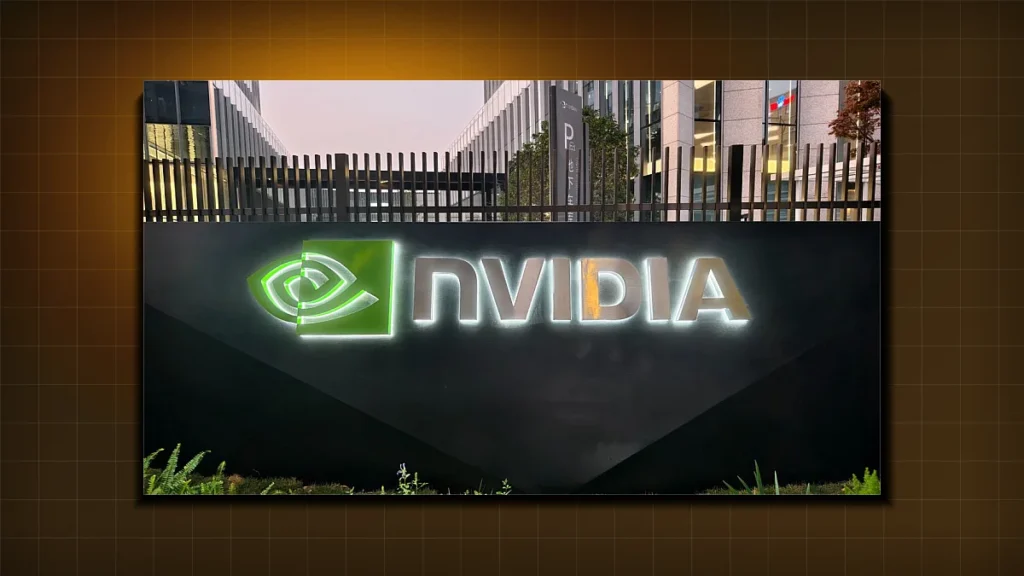
Nvidia’s latest political move could reshape the AI landscape, as the company forms a PAC to influence congressional decisions that could affect everything from chip exports to AI server access.
Nvidia’s Political Playbook: A New PAC in the House of Power
On a brisk August day in 2026, Nvidia announced it had established a federal political action committee (PAC) to bankroll lawmakers who champion policies favorable to the company’s interests. The move follows a broader industry trend in which tech giants use PACs to shape legislation on everything from data privacy to export controls. Nvidia’s employees were briefed that congressional decisions over the next few years could have “substantial consequences” for the AI industry, according to internal communications.
Why a PAC Matters for AI
Artificial‑intelligence hardware sits at the intersection of cutting‑edge science and national security. Congress’s policy choices on export controls, research funding, and cloud‑compute access directly influence which companies can build and deploy AI at scale. By funding pro‑Nvidia candidates, the company hopes to secure a legislative environment that keeps its GPUs—especially the flagship H100—at the forefront of the market while limiting competitors’ access to critical technologies.
Export Controls Tighten, China’s Remote AI Access Shrinks
The new PAC comes at a time when the U.S. Treasury has announced a set of export controls aimed at restricting Chinese access to remote AI servers. These rules, rolled out by the former Trump administration, are expected to limit the ability of Chinese firms to lease or run high‑performance GPUs in the cloud. The restrictions mirror the earlier “AI diffusion” rule, but now target remote server usage, a key revenue stream for cloud providers. Nvidia’s leadership sees the PAC as a way to influence how these controls are refined and enforced.
Hardware Power Behind the Lobby
At the heart of Nvidia’s lobbying effort is its Hopper architecture. The H100 GPU delivers 80 TFLOPS of FP32 performance and 1,600 TFLOPS of FP16 throughput—double the compute of its predecessor, the A100. In 2025, Nvidia shipped roughly 3 million GPUs worldwide, a figure that underscores the company’s dominance in the AI hardware space.
Competitive Landscape: Nvidia vs. AMD and Intel
While Nvidia’s GPUs remain the benchmark for high‑performance AI, competitors have been catching up. AMD’s MI300 series offers 25 TFLOPS FP32, and Intel’s Xe-HPG platform claims 18 TFLOPS. The table below shows the raw compute headroom for the top three vendors.
| Vendor | Model | FP32 TFLOPS | FP16 TFLOPS |
|---|---|---|---|
| Nvidia | H100 | 80 | 1,600 |
| AMD | MI300 | 25 | 200 |
| Intel | Xe‑HPG | 18 | 144 |
Policy Implications for Cloud‑Based AI Services
Cloud providers that host AI workloads will feel the impact of tighter export controls. If Chinese firms lose the ability to lease Nvidia GPUs, they may pivot to domestic solutions or shift to other hardware ecosystems. This could fragment the global AI market and push China to accelerate its own chip development, potentially shortening the U.S. lead in AI hardware.
Industry Reactions and the Road Ahead
Industry analysts warn that the PAC could intensify the already heated debate over AI regulation. Some lawmakers view the move as a necessary check on unchecked corporate influence, while others see it as a strategic push to protect U.S. technological superiority. The real test will be whether Nvidia’s lobbying efforts translate into policy that balances innovation with security.
Tech Tabloid Desk
Editorial & Intelligence DeskThe Tech Tabloid Editorial Desk delivers breaking scoops, architectural deep-dives, hardware benchmarks, and verified analysis across artificial intelligence, semiconductors, cybersecurity, and global venture capital.