FBI Hack Sparks Debate Over Facial Recognition on Flock
A massive FBI hack has exposed sensitive data, prompting scrutiny of a company’s plan to embed facial recognition in the Flock platform. At the same time, the Muse project’s human‑like outputs raise questions about AI authenticity.
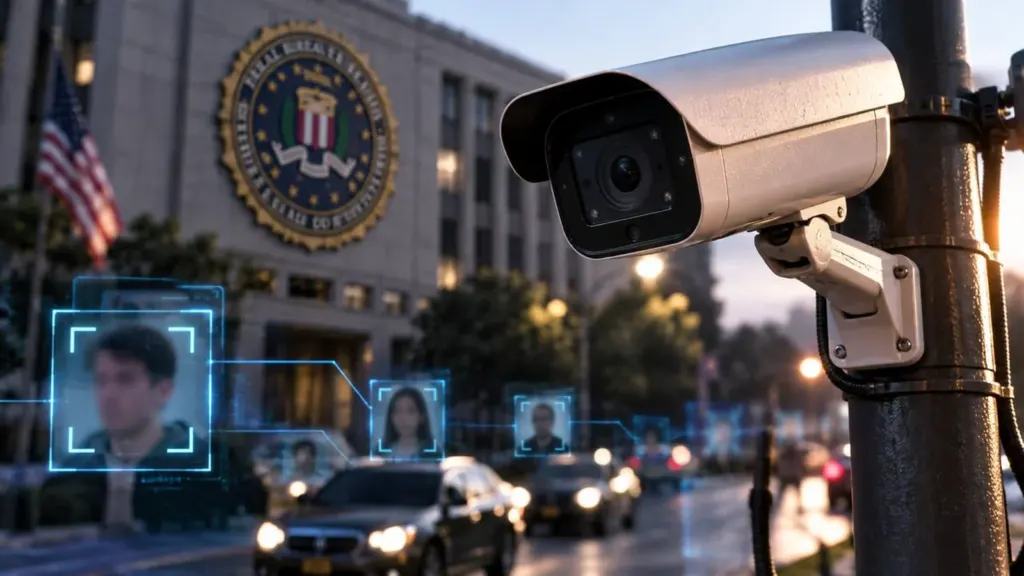
The recent podcast episode titled “The FBI Was Hacked. We’ve Seen the Data” confirms that a large‑scale breach of the Federal Bureau of Investigation’s internal systems has taken place. While the exact scope of the compromised files remains undisclosed, the discussion highlights that the leaked material includes operational logs, internal communications, and potentially classified investigative data. The breach, described as “massive” by the hosts, underscores a growing pattern of high‑profile government infiltrations that challenge traditional assumptions about federal cyber resilience.
Concurrently, the same episode introduces two seemingly unrelated developments: a startup’s proposal to layer facial‑recognition capabilities onto the collaborative platform Flock, and the observation that the Muse AI system, in certain deployments, produces outputs that are indistinguishable from human‑generated content. Though presented as separate items, the three threads intersect around a core theme—how emerging surveillance technologies and generative AI are reshaping the boundary between private data protection and public oversight.
Understanding the FBI breach requires contextualizing it within the broader cybersecurity ecosystem. Over the past decade, federal agencies have increasingly migrated legacy infrastructure to cloud‑based services, a move that expands the attack surface while offering scalability. The podcast’s hosts note that the attackers appear to have leveraged a supply‑chain weakness, a tactic that mirrors the 2023 SolarWinds incident and suggests a sophisticated, possibly state‑backed, adversary. The lack of a public attribution at this stage does not diminish the operational impact: compromised investigative techniques, source identities, and internal policy documents could be weaponized against ongoing cases or used for intelligence gathering by foreign actors.
FBI Hack Exposes Systemic Vulnerabilities
From a technical perspective, the breach illustrates two persistent challenges for government IT: patch management latency and privileged‑access abuse. The podcast references a post‑mortem that indicates the initial foothold was gained through an unpatched third‑party library, a scenario that aligns with the FTC’s consumer risk probe into software supply‑chain security. Once inside, the attackers allegedly escalated privileges using default credentials that had not been rotated in years. This pattern reinforces the argument that even well‑funded agencies suffer from the same operational oversights that plague private enterprises.
Strategically, the leak forces a reassessment of how the FBI safeguards classified information. The agency traditionally relies on compartmentalization—restricting data access to need‑to‑know personnel—but the podcast suggests that the breached data includes cross‑departmental logs, indicating that lateral movement within the network was possible. If adversaries can map internal communication flows, they gain insight into investigative priorities, potentially allowing them to pre‑empt law‑enforcement actions or to discredit ongoing investigations through selective disclosure.
Beyond the immediate security fallout, the breach has policy ramifications. The FBI’s role as a central hub for cyber‑crime intelligence means that any erosion of trust could hamper information sharing with private sector partners. Moreover, the incident may accelerate legislative proposals aimed at mandating stricter cybersecurity standards for federal contractors, echoing the recent push for a federal “Cybersecurity Act” that would standardize incident‑response protocols across agencies.
Facial Recognition on Flock and the Muse Conundrum
While the FBI breach dominates headlines, the podcast also spotlights a startup’s ambition to integrate facial‑recognition algorithms into Flock, a real‑time messaging and collaboration tool used by enterprises worldwide. The company argues that embedding biometric verification can streamline secure access, reduce reliance on passwords, and provide audit trails for compliance‑heavy sectors such as finance and healthcare. However, the hosts raise immediate privacy concerns: facial data is inherently sensitive, and its storage within a cloud‑based collaboration suite creates a single point of failure that could be exploited in a breach similar to the FBI’s.
From a competitive standpoint, the move positions the startup against established identity‑management vendors like Okta and Microsoft Azure AD, which already offer multi‑factor authentication (MFA) without biometric data collection. The facial‑recognition angle could differentiate the product if it delivers a frictionless user experience, yet it also invites regulatory scrutiny under emerging privacy frameworks such as the EU’s AI Act and several U.S. state biometric privacy statutes. The podcast notes that the startup has not yet disclosed a formal data‑retention policy, a gap that could become a liability if regulators demand transparency about how facial templates are stored, encrypted, and deleted.
Parallel to the Flock discussion, the hosts examine Muse, an AI platform that generates text, code, and visual content. In certain deployments, Muse’s output is so refined that listeners struggle to discern whether a human or a machine authored the material. This raises a distinct but related concern: the authenticity of AI‑generated content in environments where trust is paramount. If a compromised FBI system were to incorporate Muse‑generated reports, the line between genuine investigative analysis and algorithmic synthesis could blur, complicating attribution and accountability.
The convergence of facial recognition and advanced generative AI highlights a broader industry tension between convenience and control. On one hand, biometric authentication promises to eliminate password fatigue and reduce phishing vectors. On the other, the aggregation of biometric identifiers with AI‑generated personas creates a data ecosystem where identity can be both verified and fabricated with unprecedented ease. This duality is reflected in the podcast’s observation that “Muse in some cases is actually just people,” suggesting that AI can masquerade as human expertise, while biometric systems can verify identity without revealing the underlying human.
Stakeholders stand to gain or lose depending on how these technologies evolve. Enterprises that adopt facial recognition on collaboration platforms may achieve faster onboarding and stronger compliance reporting, but they also inherit the risk of a high‑value data breach. Conversely, firms that prioritize privacy‑by‑design—limiting biometric data collection and enforcing strict AI provenance tracking—may forfeit short‑term efficiency gains but preserve long‑term trust with customers and regulators.
Critics argue that the push for biometric integration is premature, citing the FBI hack as a cautionary tale: even well‑funded, mission‑critical organizations can be compromised. They point to the lack of industry‑wide standards for biometric template encryption and the absence of robust audit mechanisms for AI‑generated content. Proponents counter that the threat landscape demands innovative defenses, and that biometric factors add a layer of security that passwords alone cannot provide.
In weighing these perspectives, the podcast’s hosts recommend a measured approach: pilot facial‑recognition features in low‑risk environments, conduct independent security audits, and implement transparent data‑handling policies. For AI platforms like Muse, they suggest embedding provenance metadata that records model version, training data sources, and generation timestamps, thereby enabling downstream verification of authenticity.
Ultimately, the FBI breach serves as a real‑world stress test for the security assumptions underpinning both biometric authentication and generative AI. As government agencies grapple with the fallout, private firms must decide whether to double down on these emerging technologies or to adopt a more cautious, privacy‑centric roadmap. The balance struck will shape not only the next wave of enterprise collaboration tools but also the broader public discourse on digital identity and trust.