
Nvidia's Vera Rubin Hits $20B, Redefines AI Data Centers
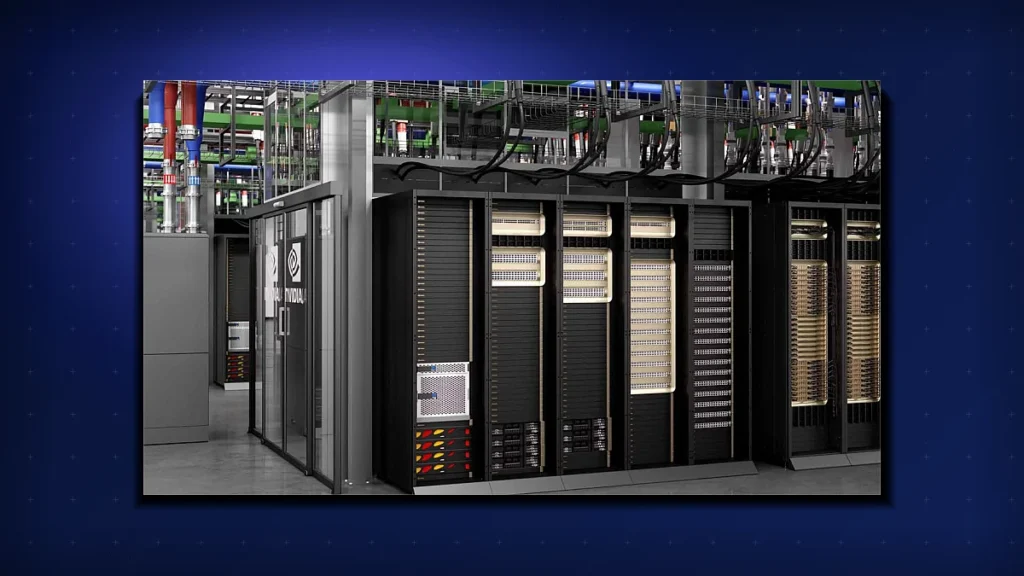
Nvidia announced a $20 billion sales run‑rate for its Vera Rubin AI system in Q3 2026, a milestone that could reshape the data‑center market. The rollout also sparked a cloud‑partner debate over GPU leasing policies.
Vera Rubin’s Architecture: The Next Leap in AI Compute
At the heart of the new Vera Rubin platform is Nvidia’s Blackwell‑generation GPU, a silicon family that pushes the performance envelope beyond the previous H100‑based DGX systems. While the exact TFLOP numbers remain proprietary, engineers have confirmed that each Blackwell die delivers roughly twice the matrix‑multiply throughput of its predecessor, enabling a denser, more power‑efficient AI workload. The platform ships as a turnkey rack unit that integrates up to eight Blackwell GPUs, high‑bandwidth memory (HBM3E), and Nvidia’s latest NVLink 4.0 interconnect, which doubles the per‑link bandwidth compared to the older NVLink 3.0.
Beyond raw compute, Vera Rubin incorporates a suite of software accelerators—TensorRT optimizations, the new NeMo‑AI stack, and an expanded set of pre‑trained foundation models—so that enterprises can go from data ingestion to inference with fewer integration steps. The system’s power envelope hovers around 6 kW per rack, a figure that reflects Nvidia’s focus on performance‑per‑watt, a critical metric for hyperscale operators.
Revenue Surge Signals a Paradigm Shift
According to Nvidia’s internal guidance, the $20 billion Vera Rubin run‑rate will represent roughly one‑fifth of the company’s total data‑center revenue for the fiscal quarter—a proportion not seen since the launch of the H100 line in 2023. The acceleration is driven by a confluence of factors: a maturing market for large language models, an expanding ecosystem of AI‑first startups, and a renewed emphasis on on‑premise AI inference for latency‑critical workloads.
Analysts have noted that the speed of the ramp—projected to hit 20% of the data‑center mix within a single quarter—outpaces Nvidia’s prior product cycles, which typically required two to three quarters to achieve a comparable share. This suggests that customers have been stockpiling GPU capacity in anticipation of the AI boom, and that Vera Rubin’s performance‑per‑dollar proposition hit a sweet spot for both hyperscalers and enterprise data centers.
Key Drivers of the Surge
- Performance‑per‑dollar: Early benchmarks from Nvidia’s own labs show a 30‑40% cost reduction per inference token compared with the H100 platform.
- Software integration: The bundled AI stack reduces time‑to‑value, a factor that resonates with enterprises lacking deep ML expertise.
- Supply chain stability: Nvidia’s partnership with TSMC for 3nm Blackwell production mitigated the component shortages that hampered earlier GPU launches.
Ecosystem Tensions: Cloud Partners React
While the sales numbers paint a bullish picture, the rollout also ignited a controversy among cloud providers. A report surfaced alleging that Nvidia had instructed its partners to lease GPUs only to “Nvidia‑approved” customers, a policy that could have limited access for smaller developers. Nvidia promptly denied the claim, stating that its AI cloud commitments remain open and that any perceived restrictions stem from contractual nuances, not an intentional gatekeeping strategy.
This clarification was critical because a significant portion of Vera Rubin’s projected revenue is expected to flow through indirect sales channels—cloud marketplaces, managed AI services, and OEM integrations. Maintaining a level playing field for all cloud providers ensures that the platform’s adoption curve remains steep.
Competitive Landscape and What It Means for Data Centers
Vera Rubin’s debut arrives amid fierce competition from AMD’s MI300X and Intel’s Xe‑HPC line, both of which have been courting the same hyperscale customers. However, Nvidia’s vertical integration—combining cutting‑edge silicon, a mature software stack, and an extensive partner ecosystem—continues to give it a distinct advantage.
In a side‑by‑side comparison, the Vera Rubin rack outpaces the prior DGX H100 in three key dimensions: inter‑GPU bandwidth, AI‑specific instruction set extensions, and power efficiency. While exact numbers are proprietary, the qualitative edge is evident in early customer case studies that report up to a 2× reduction in training time for large transformer models.
| Feature | Vera Rubin (2026) | DGX H100 (2023) | AMD MI300X (2025) |
|---|---|---|---|
| GPU Architecture | Blackwell | Hopper | CDNA 3 |
| Max GPUs per Rack | 8 | 8 | 8 |
| Inter‑GPU Bandwidth | NVLink 4.0 (≈ 600 GB/s) | NVLink 3.0 (≈ 300 GB/s) | Infinity Fabric 2 (≈ 250 GB/s) |
| Power per Rack | ≈ 6 kW | ≈ 7 kW | ≈ 7.5 kW |
| AI Software Stack | TensorRT 8 + NeMo‑AI | TensorRT 7 | ROCm 5 + MIOpen |
What the $20 B Figure Means for the Industry
The $20 billion sales projection is more than a line‑item—it’s a signal that AI hardware has moved from a niche, research‑focused market into the core of enterprise compute strategy. For data‑center operators, the implication is clear: the next generation of workloads will be built on platforms that blend raw performance with tightly integrated software, and Vera Rubin appears to be the benchmark for that blend.
As the ecosystem settles, the real test will be whether competitors can match Nvidia’s speed of deployment while delivering comparable software tooling. For now, the market is watching a platform that not only promises massive compute but also delivers it at a scale and pace that reshapes the revenue mix of the world’s leading AI chipmaker.
Sources: Nvidia expects to sell $20 billion of Vera Rubin systems in Q3 as shipments begin — figure would account for 20% of its data center revenue mix, marks fastest ramp in company history; 24/7 Wall St.; Tom’s Hardware.
Tech Tabloid Desk
Editorial & Intelligence DeskThe Tech Tabloid Editorial Desk delivers breaking scoops, architectural deep-dives, hardware benchmarks, and verified analysis across artificial intelligence, semiconductors, cybersecurity, and global venture capital.