
Hugging Face Unleashes Microduck: The 10‑Inch Roller‑Skating AI Companion
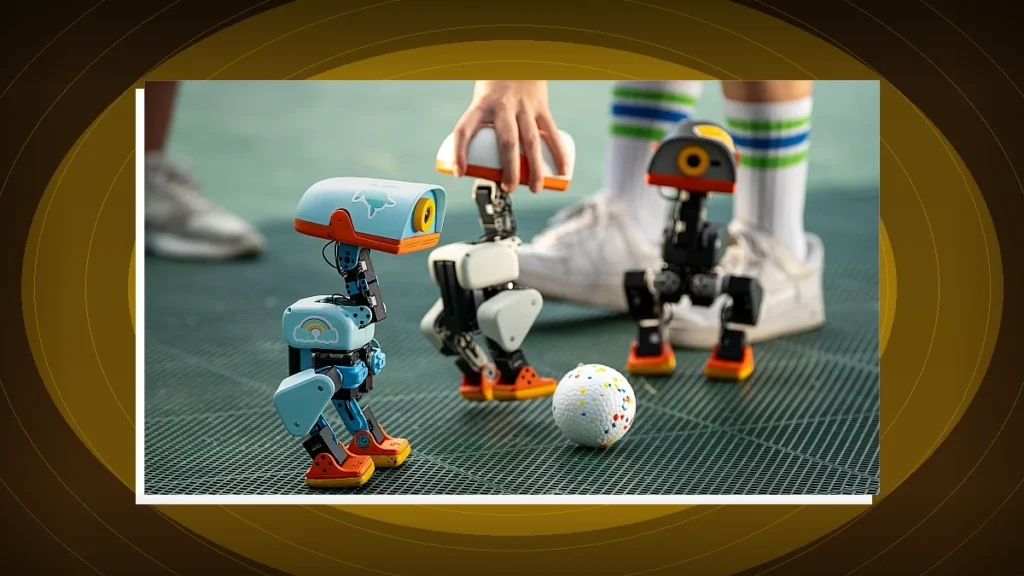
Hugging Face's Pollen Robotics just shipped a quirky, roller‑skating AI robot—Microduck—priced at $399. Here’s what makes the tiny ducky stand out and why it matters for the consumer‑robot market.
Hugging Face’s robotics arm, Pollen Robotics, has turned heads this fall with the launch of its second whimsical AI companion: the Microduck. Standing just under 10 inches tall, the one‑eyed biped rolls on miniature wheels, skates on tiny rollers, and offers conversational AI powered by the same models that run Hugging Face’s popular inference APIs. Pre‑orders opened at $399, with shipments slated for before Christmas 2026.
Why a Roller‑Skating Duck?
At first glance the Microduck feels like a playful novelty, but the design choices reveal a calculated strategy to broaden AI adoption beyond developers and into everyday homes. By marrying a recognizable animal form factor with motion that feels alive—rolling, then shifting into a smooth skate—the robot creates an emotional hook that encourages repeated interaction, a key metric for consumer‑grade AI assistants.
Form Factor Meets Function
The device is a compact biped with a single LED eye that conveys status, emotion, and basic facial expressions. Its chassis measures just under 10 inches in height, making it small enough to sit on a desk or a bookshelf while still being large enough to house a modest battery pack, speaker array, and on‑board compute.
Hardware Specs at a Glance
| Specification | Detail |
|---|---|
| Dimensions | Under 10 inches tall, 6 inches wide |
| Weight | ≈350 g |
| Power | Rechargeable Li‑Po battery (≈2 hours of active use) |
| Connectivity | Wi‑Fi 6, Bluetooth 5.2 |
| AI Engine | On‑device inference of Hugging Face’s lightweight transformer models (speech‑to‑text, text‑to‑speech, intent classification) |
| Mobility | Four silent micro‑wheels, dual‑mode: rolling & roller‑skating |
| Audio | Full‑range speaker, 2‑mic array with noise suppression |
| Colors | Cream, Graphite, Lavender, Sky Blue |
Technical Architecture: Tiny Transformers on the Edge
Microduck runs a stripped‑down version of Hugging Face’s Distil‑BERT family, optimized for ARM Cortex‑M55 cores. The model occupies roughly 12 MB of flash and 40 MB of RAM, fitting comfortably within the robot’s 256 MB RAM budget. On‑device inference eliminates latency spikes and protects user privacy—no audio is streamed to the cloud unless the user explicitly enables cloud‑enhanced mode.
Developer Ecosystem
Hugging Face has opened a public SDK that lets third‑party developers upload custom conversational flows, gesture‑based triggers, or even mini‑games. The SDK mirrors the company’s existing transformers Python library but is compiled to WebAssembly for the robot’s runtime, allowing rapid prototyping without deep embedded‑systems expertise.
Market Position: From Novelty to Everyday Companion
Consumer robotics has historically been dominated by high‑price, high‑capability devices (e.g., iRobot Roomba, Amazon Astro). Microduck’s sub‑$400 price point undercuts most of these offerings while delivering a genuine AI conversation layer. The robot’s playful aesthetics echo the success of earlier novelty bots like Anki’s Vector, but Microduck adds a robust language model that can answer factual queries, set reminders, and even narrate bedtime stories.
Competitive Landscape
- Amazon Astro: $1,099, 12‑inch height, full‑home navigation, Alexa‑centric.
- Lenovo Smart Companion: $699, 9‑inch height, limited AI (pre‑trained intents).
- Microduck: $399, sub‑10‑inch, open‑source‑friendly AI models.
By offering an open model ecosystem, Hugging Face positions Microduck as a platform rather than a closed‑box assistant, potentially attracting hobbyists, educators, and small‑scale developers who previously faced steep licensing fees for on‑device AI.
Real‑World Utility: Play, Learn, and Assist
Beyond its novelty factor, Microduck can serve concrete functions:
- Educational Aid: Kids can ask the duck to explain scientific concepts, with responses tuned to age‑appropriate language.
- Home Automation Bridge: Through its Wi‑Fi module, the robot can trigger smart lights, thermostats, or media playback via simple voice commands.
- Companion for Seniors: The rolling motion and friendly eye provide a low‑stress presence, while the AI can remind users of medication schedules.
Privacy‑First Design
All voice data is processed locally by default. Users can toggle a physical mute switch that disables the microphone, a feature that addresses privacy concerns raised by earlier voice‑assistant devices.
Production and Availability
Pollen Robotics announced that pre‑orders begin today, August 27 2026, with a target shipping window before Christmas 2026. The limited‑run color palette suggests a strategy to drive early‑adopter demand while the supply chain stabilizes for larger volumes in 2027.
Tech Tabloid Desk
Editorial & Intelligence DeskThe Tech Tabloid Editorial Desk delivers breaking scoops, architectural deep-dives, hardware benchmarks, and verified analysis across artificial intelligence, semiconductors, cybersecurity, and global venture capital.