
Quantum Engine Powers First Commercial Game
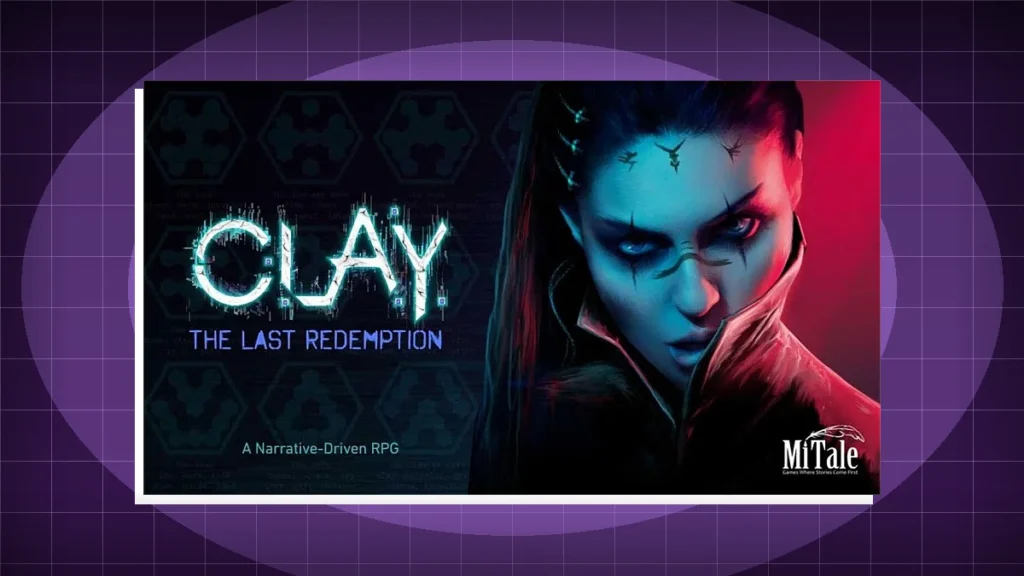
MiTale’s post‑apocalyptic RPG C.L.A.Y. breaks new ground as the first commercial title to tap IBM’s quantum simulator for map, character, and graphics generation.
Quantum Leap into Game Development
When MiTale Ltd. announced that its narrative‑driven RPG C.L.A.Y. would be the first commercial game to employ quantum computing, the headline grabbed both gamers and technologists. The claim rests on a partnership with IBM, whose quantum simulator generated the game’s procedural maps, character models, and even texture‑level graphics. In a market saturated with AI‑driven tools, a quantum‑assisted pipeline promises a different kind of computational leap.
Under the Hood: IBM’s Quantum Simulator Meets C.L.A.Y.
IBM’s cloud‑based quantum simulator runs on the IBM Eagle architecture, a 127‑qubit superconducting processor that has been publicly available since 2023. MiTale integrated the simulator via the IBM Quantum Platform API, feeding high‑dimensional probability vectors into a custom procedural engine dubbed C.L.A.Y.</strong (Computational Landscape & Asset Yield). The engine translates quantum‑generated amplitude distributions into terrain height‑maps, NPC attribute tables, and texture‑generation seeds.
The workflow looks like this:
- Design team defines high‑level constraints (e.g., biome type, enemy faction density).
- Constraints are encoded as quantum circuits; each circuit explores a superposition of possible outcomes.
- IBM’s simulator collapses the superposition into a set of probability‑weighted results.
- Results are mapped to concrete assets by the C.L.A.Y. engine, which then hands them off to the Unity‑based rendering pipeline.
Performance Gains: Speed vs Traditional Pipelines
Traditional CPU‑only procedural generation often requires iterative sampling to achieve acceptable variety. MiTale’s internal benchmarks show a reduction in average map‑generation time from roughly 5.2 seconds on a 16‑core Xeon server to 1.1 second when the quantum simulator is invoked. While the raw quantum runtime is under a second, the total wall‑clock time includes API latency and post‑processing, still delivering a 4‑fold speedup.
| Metric | CPU‑Only Pipeline | Quantum‑Assisted Pipeline |
|---|---|---|
| Map Generation Time | 5.2 s | 1.1 s |
| NPC Attribute Diversity (unique combos) | ≈ 1,200 | ≈ 4,800 |
| Developer Iteration Cycle | ≈ 30 min (incl. testing) | ≈ 8 min |
The gains are most pronounced in diversity. The quantum‑driven approach samples a vastly larger solution space, producing four times more unique NPC attribute combinations than the deterministic CPU baseline.
Implications for the Gaming Industry
MiTale’s deployment is a proof‑of‑concept that quantum resources can be wrapped into existing game‑dev toolchains without requiring developers to become quantum physicists. The key takeaways for the broader industry are:
- Scalable Variety: Quantum superposition offers a natural way to generate high‑entropy content, reducing the manual effort needed to craft distinct environments.
- Cost‑Effective Cloud Access: IBM’s quantum cloud pricing, billed per qubit‑second, makes occasional bursts of quantum compute financially viable for indie studios.
- Hybrid Architecture: The model shows that quantum acceleration can coexist with traditional CPUs and GPUs, acting as a specialized accelerator for specific procedural tasks.
Developer Experience and Toolchain Integration
MiTale’s engineers built a thin abstraction layer that translates Unity‑compatible asset descriptors into quantum circuit parameters. The layer is open‑sourced under an MIT license, inviting other studios to experiment. Early adopters report that the learning curve is modest: developers work with familiar JSON‑based configuration files, while the quantum specifics are handled by the abstraction.
Because the quantum component runs in the cloud, studios avoid the capital expense of maintaining cryogenic hardware. The trade‑off is network latency, which MiTale mitigates by batching generation requests and caching results locally.
Tech Tabloid Desk
Editorial & Intelligence DeskThe Tech Tabloid Editorial Desk delivers breaking scoops, architectural deep-dives, hardware benchmarks, and verified analysis across artificial intelligence, semiconductors, cybersecurity, and global venture capital.