
Apple Supercharges Mac mini with 165Hz Displays
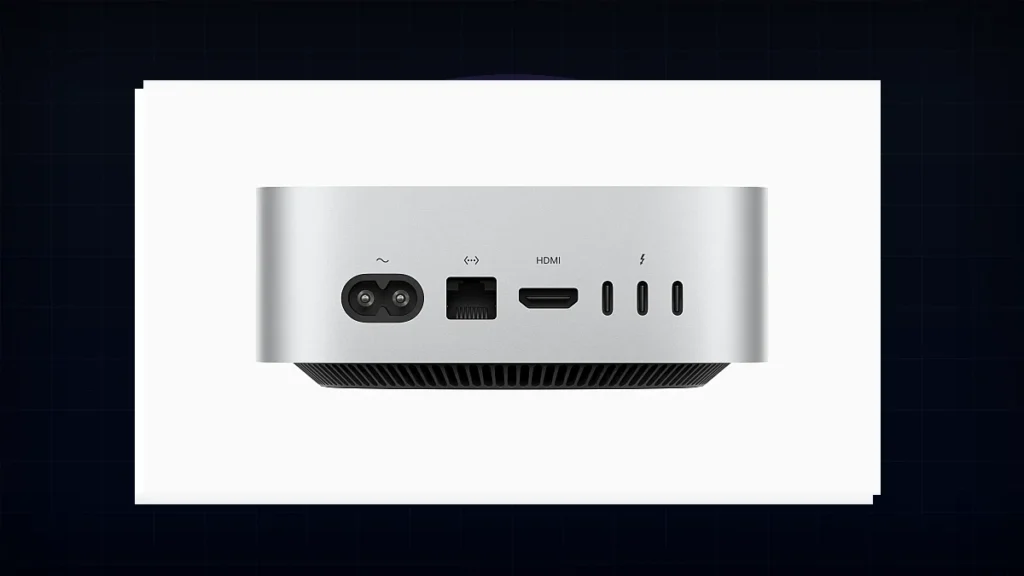
Apple's latest Mac mini models raise external display refresh rates to 165Hz and introduce Thunderbolt 5, reshaping the compact desktop’s role for creators and pros.
Why a Higher Refresh Rate Matters
For years the Mac mini has been the go‑to compact workstation for developers, designers, and home‑office power users. The bottleneck hasn’t been CPU or GPU—Apple’s silicon has been ahead of the curve—but the display pipeline. The previous M4‑based mini capped external monitors at 144 Hz, a figure that felt dated next to the 240 Hz panels now flooding the market. Moving to 165 Hz on 4K screens, and supporting 200 Hz on a secondary 4K in the M5 Pro, gives creators smoother cursor motion, less motion blur in fast‑moving video, and a more responsive feel when using high‑frame‑rate content such as gaming streams or VR previews.
M6 vs M5 Pro: Architecture and Port Evolution
Both chips sit on Apple’s 5‑nanometer process, but the M5 Pro adds a larger GPU cluster (up to 20 cores) and a dedicated media engine that accelerates ProRes and HEVC encoding. The real differentiator for display bandwidth is the port generation. The M6 retains Thunderbolt 4 (DisplayPort 1.4), which can push 8.1 Gbps per lane—enough for 4K 165 Hz but limited when you try to daisy‑chain multiple high‑resolution panels.
The M5 Pro upgrades to Thunderbolt 5 with DisplayPort 2.1, unlocking 80 Gbps of raw bandwidth. That translates to three simultaneous 6K 60 Hz streams, or a mixed‑mode setup of 6K 60 Hz + 4K 165 Hz + 4K 200 Hz without sacrificing color depth or HDR. Apple’s spec sheet confirms that the M5 Pro can drive a second screen at 5K 120 Hz or 4K 200 Hz—a jump that previously required a separate GPU.
Port Layout at a Glance
- M6: Two Thunderbolt 4 ports (DP 1.4) + HDMI 2.1 (4K 60 Hz max).
- M5 Pro: One Thunderbolt 5 port (DP 2.1) + HDMI 2.1 (4K 60 Hz).
- Both retain the classic 3.5 mm combo jack and Ethernet (2.5 GbE on M5 Pro).
| Feature | M6 (2026) | M5 Pro (2026) | M4 (2024) |
|---|---|---|---|
| CPU Cores | 8‑core (4P/4E) | 10‑core (6P/4E) | 8‑core (4P/4E) |
| GPU Cores | 10‑core | 20‑core | 10‑core |
| External Displays | 3 (max 6K 60 Hz) | 3 (max 6K 60 Hz) | 3 (max 6K 60 Hz) |
| Refresh Rate (4K) | 165 Hz | 165 Hz (200 Hz on 2nd screen) | 144 Hz |
| Thunderbolt Version | 4 (DP 1.4) | 5 (DP 2.1) | 4 (DP 1.4) |
| HDMI | 2.1 (4K 60 Hz) | 2.1 (4K 60 Hz) | 2.0 (4K 60 Hz) |
| Single‑Display Max | 8K 60 Hz / 5K 120 Hz / 4K 240 Hz | Same as M6 | Same as M6 |
| Launch Price (USD) | $799 | $1,199 | $699 (M4) |
| Availability | Pre‑order now, ships Sep 22 2026 | Pre‑order now, ships Sep 22 2026 | Discontinued |
Real‑World Impact for Creators
Video editors using Final Cut Pro or DaVinci Resolve will notice a tangible reduction in frame‑dropping when working with 4K 60 fps footage on a 165 Hz monitor. The higher refresh also benefits UI‑heavy workflows—think Photoshop brush strokes or CAD model rotations—where every millisecond of latency feels amplified on a 4K screen.
Gamers who prefer a macOS environment for streaming can finally pair the Mac mini with a 1440p 240 Hz panel and still enjoy the same frame‑rate ceiling, thanks to the 165 Hz ceiling on 4K and the underlying GPU headroom of the M5 Pro. While the Mac mini isn’t a dedicated gaming rig, the new bandwidth removes a previous choke point that forced many users to downgrade monitors.
Developers building AR/VR prototypes will benefit from the 5K 120 Hz capability on the second display of the M5 Pro. The extra headroom aligns with Apple’s Vision Pro requirements, allowing a Mac mini to act as a tethered rendering server without a separate eGPU.
Pricing, Availability, and Who Should Upgrade
The base M6 starts at $799, positioning it just $100 above the discontinued M4 launch price. For most current Mac mini owners, the upgrade path makes sense only if they already run a 4K monitor capable of 165 Hz or plan to add a second high‑refresh display. The M5 Pro, at $1,199, targets professionals who need the extra GPU cores and the Thunderbolt 5 port for multi‑monitor studios.
Apple’s pre‑order window opened this week, with shipments slated for September 22 2026. Existing Mac mini users will find a trade‑in program that offers $200 credit toward an M6, making the price jump less painful.
Disclosure: Tech Tabloid may earn an affiliate commission from qualifying purchases through Amazon links on this page at no additional cost to you.
Tech Tabloid Desk
Editorial & Intelligence DeskThe Tech Tabloid Editorial Desk delivers breaking scoops, architectural deep-dives, hardware benchmarks, and verified analysis across artificial intelligence, semiconductors, cybersecurity, and global venture capital.