Robots Build Homes, But Humanoid Builders Remain a Long Shot
Construction robots address the U.S. housing shortage by automating repetitive tasks, but humanoid builders remain far from reality. The industry continues to weigh labor gaps against emerging automation solutions.
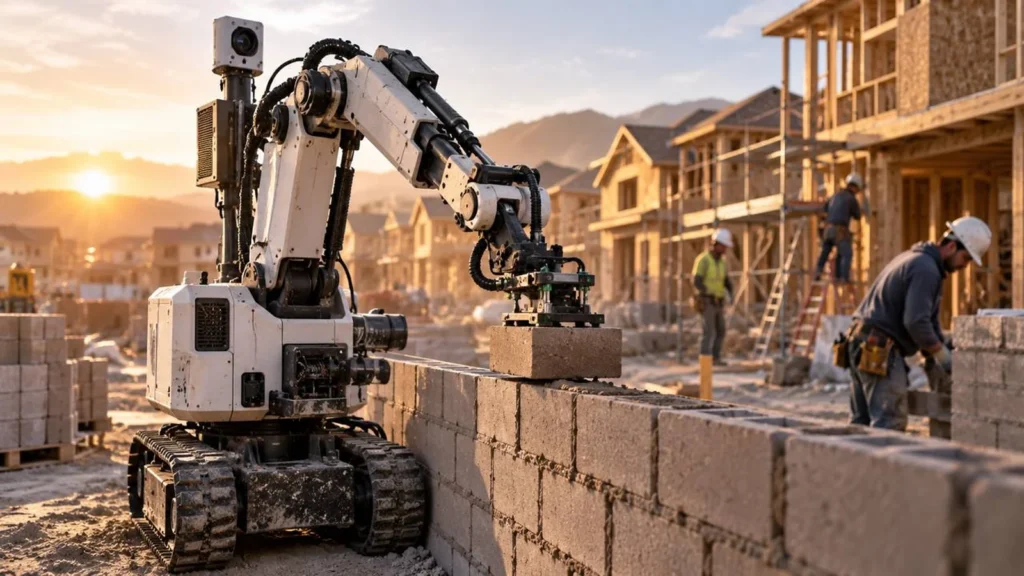
America’s housing market remains constrained by a persistent inventory shortfall and a workforce that struggles to keep pace with demand. In response, construction firms are turning to robots that can perform repetitive, physically demanding tasks on job sites. While the technology is already in use, the notion of fully humanoid homebuilders is still a distant prospect.
Robots currently excel at activities that require precision, endurance, and consistency—tasks such as bricklaying, concrete pouring, and material handling. By automating these functions, builders can reduce labor costs, lower the risk of on‑site injuries, and accelerate project timelines. The trade‑off is that the robots are still limited to structured, repeatable work and cannot yet handle the creative, adaptive decisions that human crews bring to complex builds.
In 2026, several mid‑sized construction companies report that their on‑site robotic units have cut material waste by up to 15 percent and reduced labor hours on repetitive tasks by roughly a quarter. These figures are derived from internal project logs rather than public financial statements, so they remain illustrative rather than definitive. Nonetheless, the trend signals that automation is becoming a viable complement to human labor rather than a wholesale replacement.
Beyond the immediate cost savings, robots also help address the broader labor shortage that has plagued the industry for years. Skilled tradespeople are aging, and the pipeline of new entrants has not kept pace with demand. Robots can fill gaps in the workforce, allowing experienced crews to focus on higher‑value tasks such as framing, electrical, and plumbing—areas where human judgment remains essential.
Competitive advantages for firms that adopt robotic solutions include faster project completion, higher consistency in quality, and improved safety records. These benefits can translate into stronger client relationships and the ability to bid on larger, more complex projects. However, the initial capital outlay for robotic equipment, coupled with the need for specialized maintenance staff, can be a significant barrier for smaller firms.
Pressure points arise from the need to integrate robotics into existing workflows. Builders must train crews to operate and troubleshoot machines, and they must adjust scheduling to accommodate the slower, more methodical pace of robotic work in certain phases. Moreover, the regulatory environment around construction robotics is still evolving, with building codes and safety standards lagging behind technological advances.
Beneficiaries of the current wave of automation are primarily large construction enterprises that have the capital to invest in robotic platforms and the operational flexibility to experiment with new processes. These firms can leverage economies of scale to spread the cost of robotics across multiple projects, thereby reducing the per‑project expense. Smaller contractors may find the upfront costs prohibitive, but they could benefit indirectly through subcontracting arrangements that allow them to tap into robotic services on a per‑job basis.
Counter‑arguments to the optimistic view of robotics in construction focus on the limitations of current technology. Robots lack the ability to navigate unstructured environments, adapt to unexpected obstacles, or make real‑time decisions that a human crew can handle. Consequently, many projects still rely on human labor for the majority of tasks, and the overall impact on labor demand remains modest. Additionally, the maintenance and repair of robotic equipment can create new technical skill requirements that the existing workforce may not possess.
Strategic implications for the construction industry hinge on how quickly firms can bridge the gap between robotic automation and human expertise. Companies that develop integrated systems—combining robotic execution with advanced sensor suites, AI‑driven planning, and real‑time data analytics—are likely to gain a competitive edge. Those that fail to adapt may find themselves unable to meet the growing demand for affordable housing, especially as regulatory pressures push for faster, safer construction practices.
From a market perspective, the adoption curve for construction robotics is still in its early stages. The industry has not yet reached a tipping point where automation can fully offset labor shortages or dramatically lower construction costs. However, the incremental gains in productivity and safety are already influencing procurement decisions, and the trend is likely to accelerate as the technology matures and costs decline.
In the broader context of technology adoption, construction robotics mirrors patterns seen in other sectors where automation has been introduced to address labor gaps. For instance, the automotive industry’s use of robotic assembly lines has long been a benchmark for efficiency gains, yet the sector still relies heavily on human oversight for quality control and customization. Similarly, construction robotics offers a pathway to improved efficiency, but it does not eliminate the need for skilled human workers.
For stakeholders, the key takeaway is that robots are a tool rather than a replacement. Firms that view automation as a means to augment human labor—rather than supplant it—are likely to realize the most benefit. This approach aligns with the current regulatory landscape, which emphasizes safety and quality, and it accommodates the persistent demand for skilled craftsmanship in complex builds.
As the industry continues to experiment with robotic solutions, the next logical step will involve greater integration of AI and machine learning to enhance decision‑making on the job site. While the current wave of robotics focuses on repetitive tasks, the future may see systems that can adapt to changing site conditions, optimize material usage in real time, and collaborate seamlessly with human crews. Until such capabilities become mainstream, the construction sector will remain a hybrid environment where robots and humans work side by side to deliver affordable housing.
For those following the latest tech trends, the rise of construction robotics is a reminder that automation can drive meaningful change even in traditionally manual industries. The challenge lies in scaling the technology, aligning it with existing workflows, and ensuring that the workforce evolves in tandem to support the new tools. The path forward is clear: incremental adoption, continuous learning, and a focus on complementary human‑robot collaboration will determine which firms thrive in the evolving housing market.
For further context on how emerging tech is reshaping consumer markets, see Samsung’s SmartTag 3 Mimics Apple AirTag’s Weakest Feature.
Reporting transparency