
CD Projekt Red Unveils Witcher 3 Remaster—Free Upgrade Hits Sep 29
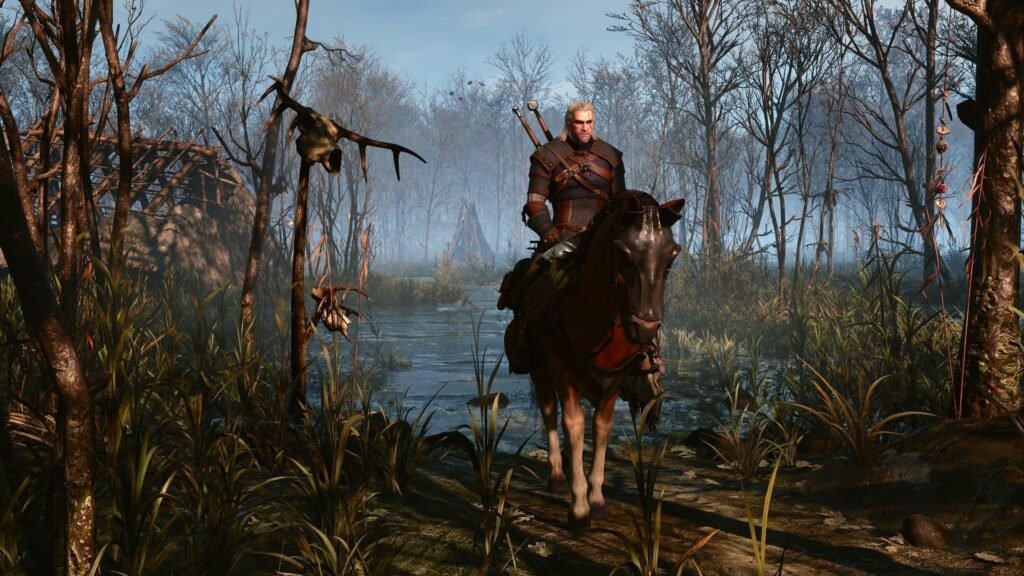
CD Projekt Red announced a full‑scale Witcher 3: Wild Hunt remaster arriving Sep 29, 2026, promising 4K graphics, a reimagined skill tree and free access for current owners. The upgrade bundles the two acclaimed expansions, reshaping the classic RPG for modern hardware.
Polish developer CD Projekt Red has confirmed that the landmark 2015 RPG The Witcher 3: Wild Hunt will receive a full‑scale remaster, slated for release on September 29, 2026. Marketed as a “complete overhaul,” the update promises visual fidelity on par with current‑generation consoles and PCs, a reworked combat system, and a redesigned skill tree. Existing owners will receive the upgrade at no extra cost, and the package will bundle the two major expansions—Hearts of Stone and Blood and Wine—into a single download.
What’s New Under the Hood?
Visual Overhaul for 4K and Beyond
The most headline‑grabbing change is the leap to native 4K resolution on supported platforms, coupled with optional ray‑traced lighting and reflections. CD Projekt Red’s engineers rebuilt the rendering pipeline to leverage DirectX 12 Ultimate, allowing higher texture streaming rates and more efficient GPU utilisation. Early benchmark screenshots show a 30‑40% increase in polygon count for character models, finer foliage detail, and a richer colour palette that brings the war‑torn landscapes of the Northern Kingdoms into sharper focus.
Combat Rebalanced for Modern Playstyles
Combat in the original release was praised for its tactical depth but criticized for occasional clunkiness. The remaster introduces a “dynamic stamina” system that better syncs with the new animation layers, reducing input lag and enabling smoother parries. Enemy AI has been tweaked to react to player timing, making fights feel less scripted and more responsive to skill‑tree choices.
Reimagined Skill Tree
Perhaps the most controversial overhaul is the skill tree. CD Projekt Red has reorganised the three classic branches—Combat, Signs, and Alchemy—into a modular grid that lets players allocate points across hybrid nodes. This design aims to reduce the “lock‑in” effect that forced early‑game specialization, while preserving the depth that long‑time fans expect. The new layout also introduces “mastery tiers” that unlock only after meeting specific combat or exploration milestones, encouraging a more organic progression.
Technical Comparison: Original vs. Remaster
| Feature | Original (2015) | Remaster (2026) |
|---|---|---|
| Resolution | 1080p (up‑scaled) | Native 4K (3840×2160) |
| Ray Tracing | None | Optional DXR 1.1 |
| Texture Detail | 2K | 4K‑plus with streaming |
| Frame Rate Target | 30 fps (console) | 60 fps (PC/Next‑gen) |
| Combat Latency | ~80 ms input lag | ~45 ms input lag |
| Skill Tree | Linear three‑branch | Modular grid with mastery tiers |
Impact on the RPG Landscape
The Witcher 3 set a benchmark for open‑world storytelling and depth. By delivering a technically modern version, CD Projekt Red not only revitalises its flagship IP but also pressures competitors to revisit legacy titles. Titles like Skyrim and Red Dead Redemption 2 have already seen community‑driven visual mods; a studio‑backed remaster raises the bar for official post‑launch support.
From a consumer perspective, the free upgrade policy eliminates a common pain point—having to repurchase a game they already own. This move could reinforce CD Projekt Red’s reputation for player‑centric policies after the controversial Cyberpunk 2077 launch, potentially translating into higher engagement metrics for the upcoming Witcher 4 roadmap.
Sources: Primary announcement (CD Projekt Red), Notebookcheck analysis, Hypebeast coverage.
Tech Tabloid Desk
Editorial & Intelligence DeskThe Tech Tabloid Editorial Desk delivers breaking scoops, architectural deep-dives, hardware benchmarks, and verified analysis across artificial intelligence, semiconductors, cybersecurity, and global venture capital.