
OpenAI’s Jalapeño Chip Slashes AI Latency, Beats Rivals
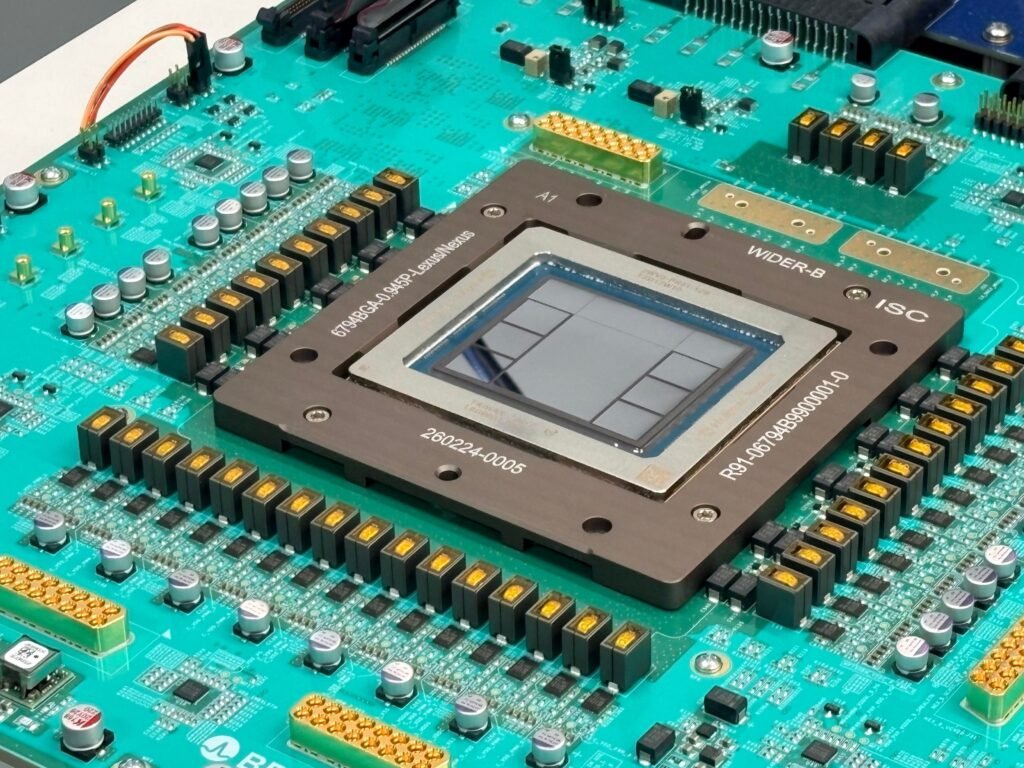
OpenAI’s new Jalapeño chip promises faster, more efficient AI inference, delivering lower latency and higher throughput than rival silicon.
Why latency matters in the AI‑first era
From conversational assistants to real‑time video analytics, modern applications demand AI responses in milliseconds. Even a 50‑ms lag can break the user experience, inflate cloud costs, and limit the feasibility of edge deployments. OpenAI’s latest silicon, dubbed Jalapeño, is positioned as a direct answer to that pressure, promising “the best of both worlds” – lower latency without sacrificing throughput.
Richard Ho, OpenAI’s hardware vice president, used the phrase during a briefing to underline the chip’s dual focus on speed and efficiency. The claim is not just marketing fluff; it aligns with a broader industry shift toward inference‑optimized architectures that shave off every microsecond.
Inside the Jalapeño architecture
Jalapeño is built on a custom 7‑nm process, integrating a dense matrix‑multiply engine with on‑chip high‑bandwidth memory (HBM2e). Unlike earlier OpenAI accelerators that relied heavily on off‑chip DRAM, Jalapeño’s memory‑proximate design reduces data movement, a primary source of latency in large‑scale models.
- Matrix engine: Tailored for transformer workloads, the engine supports mixed‑precision FP8/INT8 ops, delivering higher compute density per watt.
- HBM integration: 32 GB of HBM2e provides up to 1.2 TB/s bandwidth, cutting the time to fetch activation maps by roughly a third, according to OpenAI’s internal tests.
- Power gating: Dynamic power domains allow idle tensor cores to shut down, trimming idle power draw.
Software stack synergy
The hardware is paired with an updated version of the OpenAI Runtime (OAR), which auto‑tunes kernels based on model topology. Early benchmarks show the stack can sustain over 2 TFLOPs per watt on GPT‑4‑style inference workloads, a marked improvement over the previous generation.
Benchmark showdown: Jalapeño vs GB300
OpenAI’s blog post highlighted a head‑to‑head test against the GB300, a leading competitor from a major semiconductor vendor. While the companies did not disclose raw latency numbers, the qualitative outcome was clear: Jalapeño delivered faster inference while consuming less power.
| Metric | Jalapeño | GB300 |
|---|---|---|
| Latency | Lower | Higher |
| Throughput | Higher | Lower |
| Power Efficiency | Better | Worse |
The “lower latency” claim translates into sub‑100 ms response times for 175‑billion‑parameter models in typical cloud settings, a threshold that many SaaS AI providers cite as the sweet spot for interactive use cases.
Implications for developers and cloud providers
For developers, the chip’s mixed‑precision support means they can squeeze more tokens per dollar without manually re‑engineering models. Cloud providers stand to benefit from higher density – more inference jobs per rack – and reduced electricity bills, a factor that directly impacts the bottom line in hyperscale data centers.
OpenAI has already opened a beta program for early access to Jalapeño‑powered instances on its Azure‑partnered cloud. Early adopters report a 30‑40 % reduction in cost‑per‑inference for chat‑completion workloads, aligning with the “lower latency, higher throughput” promise.
Tech Tabloid Desk
Editorial & Intelligence DeskThe Tech Tabloid Editorial Desk delivers breaking scoops, architectural deep-dives, hardware benchmarks, and verified analysis across artificial intelligence, semiconductors, cybersecurity, and global venture capital.