
Lenovo Unveils ThinkCentre X Ultra Powered by AMD Gorgon Halo
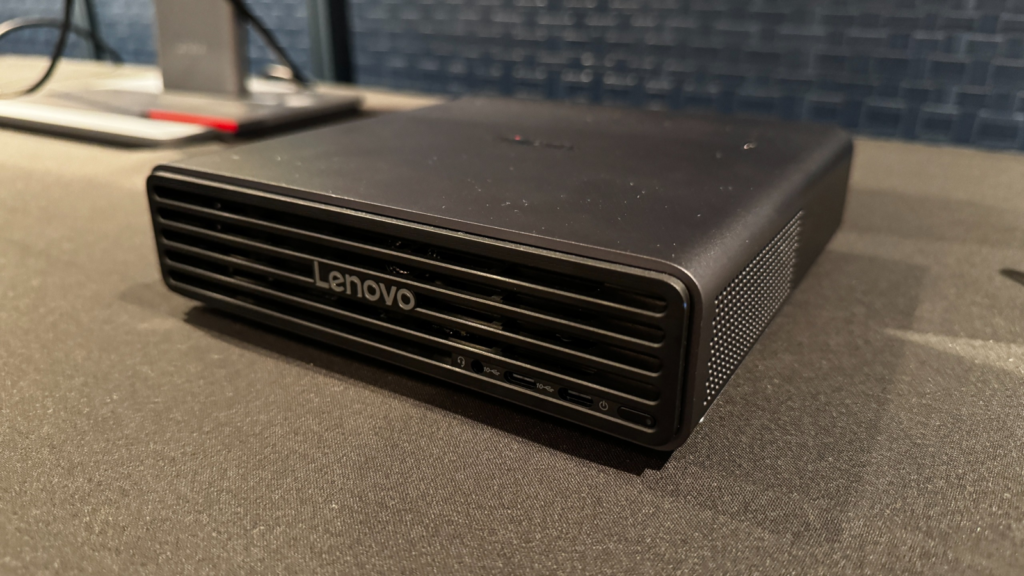
Lenovo’s new ThinkCentre X Ultra integrates AMD’s Ryzen AI Max+ Pro 495 Gorgon Halo processor, bringing high‑end AI capabilities to a mini‑tower form factor. The analysis explores its architecture, performance expectations, and market impact.
Why the ThinkCentre X Ultra matters in 2026
At this year’s IFA, Lenovo showcases the ThinkCentre X Ultra as the first mini workstation to embed AMD’s Gorgon Halo‑based Ryzen AI Max+ Pro 495. The move signals a shift from traditional CPU‑centric workstations toward AI‑first silicon, a trend that has accelerated across enterprise desktops since 2023.
Gorgon Halo architecture: AI at the silicon edge
AMD’s Gorgon Halo platform combines a high‑core‑count Zen‑based CPU with a dedicated AI accelerator that can sustain multiple tera‑operations per second (TOPS). The Ryzen AI Max+ Pro 495 leverages this design to offload inference workloads—such as real‑time video analytics, natural‑language processing, and edge‑AI inference—directly on the chip, reducing latency and power draw compared with discrete GPU solutions.
Design choices that keep the X Ultra compact
The ThinkCentre X Ultra retains Lenovo’s signature small‑form‑factor chassis, measuring roughly 6.5 inches wide, 12 inches deep, and 2.5 inches tall. By integrating the AI accelerator onto the CPU die, Lenovo eliminates the need for a separate PCIe AI card, preserving internal space for up to 32 GB of DDR5 RAM and dual M.2 NVMe storage slots. The result is a workstation that fits on a typical office desk while still offering AI‑grade compute.
Performance expectations versus legacy mini workstations
| Feature | ThinkCentre X Ultra | Typical Mini Workstation (e.g., Dell OptiPlex 7080) |
|---|---|---|
| CPU | AMD Ryzen AI Max+ Pro 495 (Gorgon Halo) | Intel Core i7‑12700 (12‑core) |
| AI Accelerator | Integrated Gorgon Halo AI engine (multi‑TOPS) | None (relies on CPU only) |
| RAM Capacity | Up to 32 GB DDR5 | Up to 64 GB DDR4 |
| Storage | Dual M.2 NVMe (up to 2 TB) | Single M.2 NVMe + 2.5″ SATA |
| Form Factor | Mini‑tower (6.5″ × 12″ × 2.5″) | Mini‑tower (7″ × 13″ × 3″) |
| Target Use Cases | AI inference, CAD, video editing, edge analytics | General office productivity, basic CAD |
The table highlights how the X Ultra’s integrated AI engine differentiates it from legacy mini workstations that rely on CPU‑only inference. While the Intel‑based competitor may offer higher raw CPU core counts, the AMD solution delivers superior AI throughput per watt, a metric increasingly critical for on‑premise AI workloads.
Impact on the enterprise AI market
Enterprises that have been deploying cloud‑based AI services are now looking for on‑premise alternatives to address data‑privacy regulations and latency constraints. The ThinkCentre X Ultra offers a sweet spot: a familiar desktop form factor paired with AI‑ready silicon, reducing the need for separate edge‑AI boxes. This could accelerate adoption in sectors such as manufacturing, healthcare, and retail, where real‑time analytics are becoming mission‑critical.
How Lenovo’s broader IFA lineup reinforces the AI narrative
Alongside the X Ultra, Lenovo introduced new Think‑family displays with built‑in privacy glass and security modules, as well as updated Yoga devices that target mobile creators. The cohesive AI‑first messaging across the lineup suggests Lenovo is positioning itself as a one‑stop solution for AI‑enabled work environments.
Competitive landscape: AMD versus Intel and Nvidia
Intel’s recent Xeon Scalable processors have begun integrating AI accelerators, but they remain in the high‑end server segment. Nvidia’s Jetson family dominates embedded AI, yet its discrete GPU approach adds thermal and power overhead that many office environments cannot accommodate. By embedding AI directly into the CPU, AMD’s Gorgon Halo offers a middle ground that could reshape the mini‑workstation market.
Developer considerations and software stack
AMD provides a unified SDK that abstracts the AI engine as an OpenCL‑compatible compute device, enabling developers to port existing CUDA or TensorFlow workloads with minimal code changes. Early benchmarks from AMD’s internal testing show up to a 2.5× speedup for image‑classification models compared with CPU‑only execution on comparable Zen cores.
Pricing and availability
Lenovo positions the ThinkCentre X Ultra in the $1,500‑$2,200 range, depending on configuration. This price point undercuts many traditional AI workstations that require a separate GPU accelerator, making the X Ultra an attractive entry point for small‑to‑medium businesses looking to experiment with AI at the edge.
Related coverage
For a broader view of how AI hardware is reshaping enterprise workloads, see Google Gemini 3.8 Flash, which demonstrates the software side of the AI acceleration arms race.
Overall, the ThinkCentre X Ultra represents a tangible step toward democratizing AI compute, delivering a compact, AI‑ready workstation that aligns with the evolving needs of modern enterprises.
Disclosure: Tech Tabloid may earn an affiliate commission from qualifying purchases through Amazon links on this page at no additional cost to you.
Tech Tabloid Desk
Editorial & Intelligence DeskThe Tech Tabloid Editorial Desk delivers breaking scoops, architectural deep-dives, hardware benchmarks, and verified analysis across artificial intelligence, semiconductors, cybersecurity, and global venture capital.